Search CooLWJ

选择搜索范围,输入关键词后按回车。

Language

Poems echo · Stories find a melody

Poetry, set to song

Begin with a poem and meet it again in music. Listen, read the poem and explore the stories it inspires.

Music library 233 songs

Classical Chinese-style Ballad

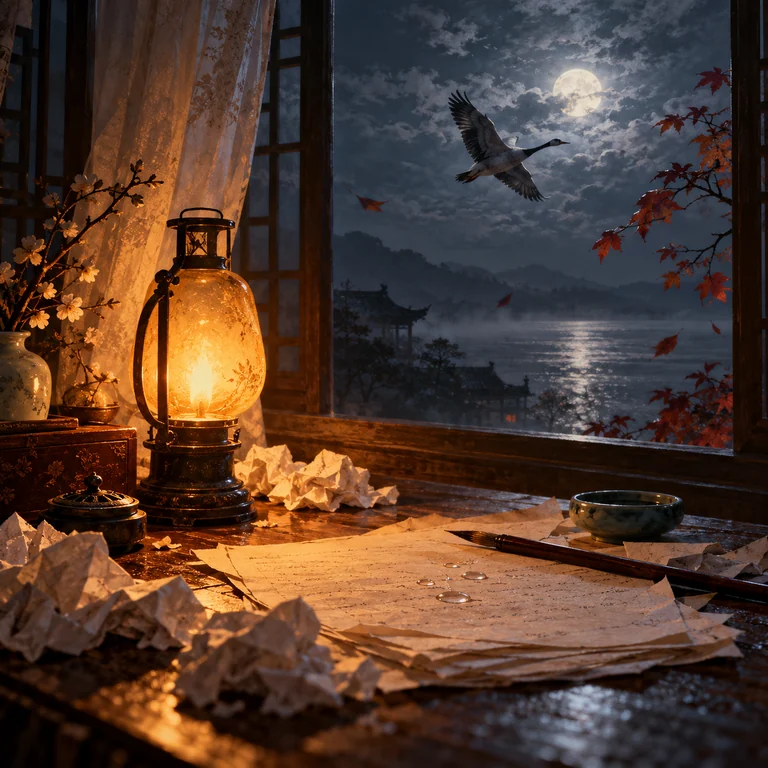
Tears from Both Eyes Fall Before the Lamp

Ku Wuji · AI Music

Inspired by Nalan Xingde's “临江仙·孤雁” (Immortal by the River · A Lone Wild Goose). “霜冷离鸿惊失伴,有人同病相怜;拟凭尺素寄愁边,愁多书屡易,双泪落灯前。莫对月明思往事,也知消减年年;无端嘹唳一声传,西风吹只影,刚是早秋天。” (In the cold frost, a separated wild goose starts at the loss of its companion; someone shares its sorrow. I would send a letter to sorrow's distant edge, but grief is so great that I revise it again and again, tears falling from both eyes before the lamp. Do not face the bright moon and dwell on the past, though I know I fade year by year; suddenly a piercing cry rings out, the west wind blows upon a solitary shadow, and it is only early autumn.) A lone goose and a solitary person mirror each other across a window; a letter revised over and over is addressed to someone just as alone. Male and female voices sing the same lyrics.

Listen · Read lyrics →

Classical Chinese-style Ballad

What Can Comfort a Faraway Traveler?

Ku Wuji · AI Music

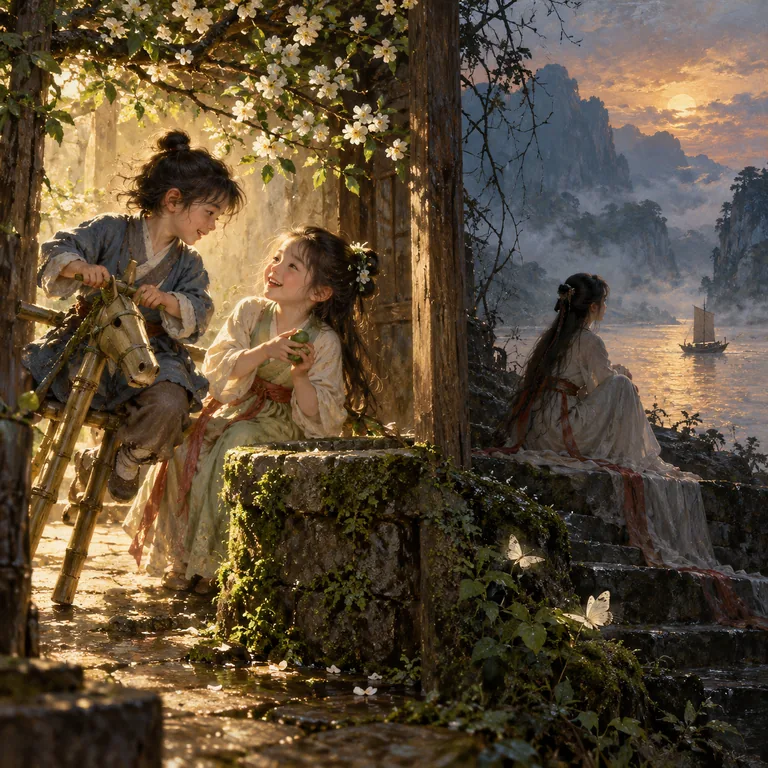
Inspired by Liu Zongyuan’s “早梅” (Early Plum Blossoms). “早梅发高树,迥映楚天碧;朔吹飘夜香,繁霜滋晓白。欲为万里赠,杳杳山水隔;寒英坐销落,何用慰远客。” Early plum blossoms open high in the tree, shining against Chu’s distant blue sky; the north wind carries their nighttime fragrance, and heavy frost nourishes their dawn whiteness. I wish to send a branch ten thousand li away, but vast mountains and waters stand between us; as the cold blossoms fade and fall, what can comfort the distant traveler? The early plum is pure and noble: one longs to break off a branch for an old friend far away, yet mountains and rivers divide them. Watching the cold blossoms fall, what can a wanderer find to console themselves? Male and female vocal versions use the same lyrics.

Listen · Read lyrics →
Classical Chinese-style Ballad

Deep Moss in Changgan

Ku Wuji · AI Music

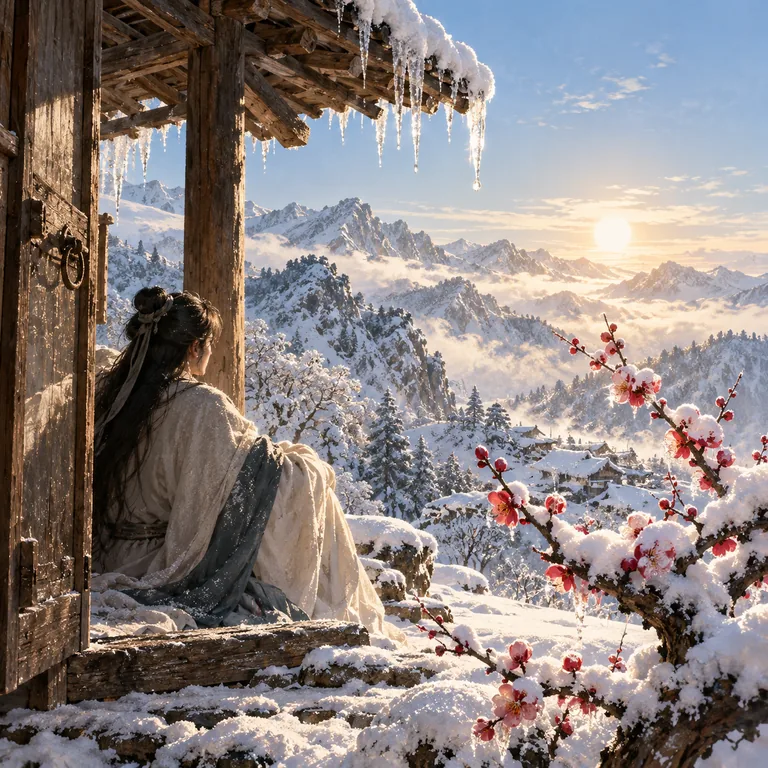
Inspired by Li Bai's “Two Songs of Changgan.” 妾发初覆额,折花门前剧;郎骑竹马来,绕床弄青梅。十四为君妇,羞颜未尝开;十五始展眉,愿同尘与灰。十六君远行,瞿塘滟滪堆;门前足迹生绿苔,苔深不能扫。八月蝴蝶双飞,感此伤妾心,坐愁红颜老;相迎不道远,直至长风沙。 My hair barely covered my forehead as I played at picking flowers by the door; you came riding a bamboo horse, circling the well frame with green plums. At fourteen I became your wife, too shy to smile; at fifteen my brow relaxed, wishing to become dust and ashes with you. At sixteen you traveled far, past Yanyu Reef in Qutang Gorge; green moss grew over your footprints by the door, too thick to sweep away. In the eighth month butterflies fly in pairs, wounding my heart as I sit fearing my beauty will fade; I would travel any distance to meet you, all the way to Changfengsha. Half a lifetime of a merchant's wife watching the winds and awaiting his return. Male and female vocal versions share the same lyrics.

Listen · Read lyrics →
Classical Chinese-style Ballad

Pure Solitude Is No Ordinary Thing

Ku Wuji · AI Music

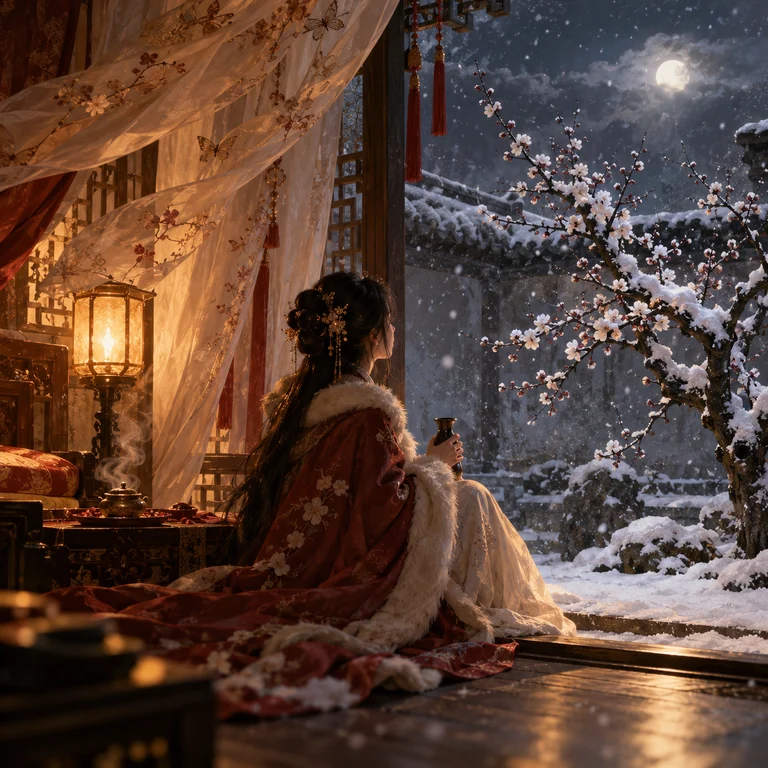
Drawn from Zheng Xie's “After Snow in the Mountains.” 晨起开门雪满山,雪晴云淡日光寒;檐流未滴梅花冻,一种清孤不等闲。 Rising at dawn, I open the door to mountains full of snow; the snow has cleared, clouds are pale, and sunlight is cold; the eaves have yet to drip and plum blossoms are frozen, a purity and solitude far from ordinary. The chill and integrity of a mountain dwelling after snow: cold light polishes the world, icicles hang in solemn dignity, and frozen plum blossoms clench little fists, waiting for clear skies—this pure solitude is a lone courage that refuses to settle. Male and female vocals sing the same lyrics.

Listen · Read lyrics →
Classical Chinese-style Ballad

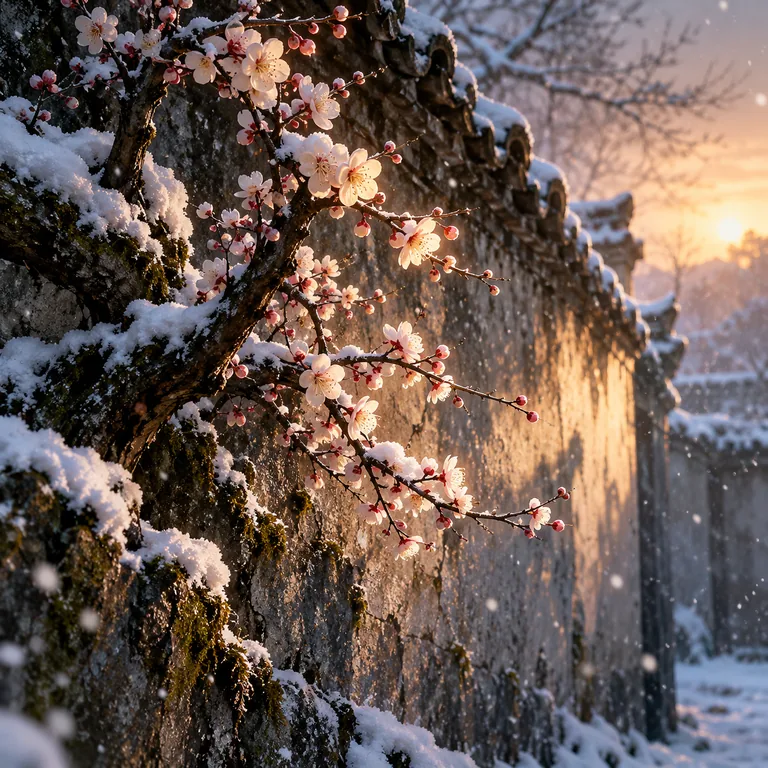
Sparse Plum Blossoms in the Rear Courtyard

Ku Wuji · AI Music

Inspired by Mao Pang's “上林春令·十一月三十日见雪” (Spring Command at Shanglin · Seeing Snow on the Thirtieth Day of the Eleventh Month). “蝴蝶初翻帘绣,万玉女、齐回舞袖;落花飞絮蒙蒙,长忆著、灞桥别后。浓香斗帐自永漏,任满地、月深云厚;夜寒不近流苏,只怜他、后庭梅瘦。” (Butterflies first flutter across the embroidered curtain, ten thousand jade maidens turn their dancing sleeves together; fallen petals and flying catkins blur the air, and I keep remembering the time since our parting at Ba Bridge. Rich fragrance fills the small bed canopy through the long night watches, while moonlight lies deep upon the ground and clouds gather thick; the night's cold does not reach the tassels, and I pity only the slender plum in the rear courtyard.) The two worlds of warm fragrance within the bed canopy and the slender courtyard plum finally meet as the speaker puts on a robe and takes wine out to keep the plum company. Male and female voices sing the same lyrics.

Listen · Read lyrics →
Classical Chinese-style Ballad

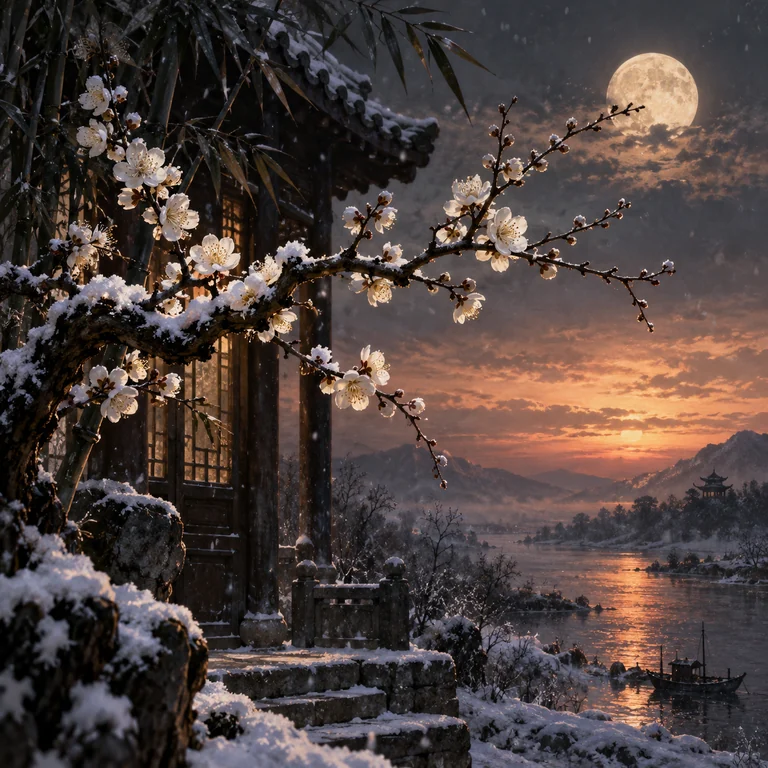
For a Hidden Fragrance Comes

Ku Wuji · AI Music

Inspired by Wang Anshi's “Plum Blossoms.” “墙角数枝梅,凌寒独自开;遥知不是雪,为有暗香来。” — A few plum branches at the corner of a wall bloom alone, defying the cold; from afar I know they are not snow, for a subtle fragrance reaches me. Whiteness and fragrance at the corner of an old wall: snow can pretend to be flowers in bloom, but it cannot imitate their subtle scent; the blossoms bloom earnestly where no one applauds, and the cold has never stood in their way. Male and female vocals sing the same lyrics.

Listen · Read lyrics →
Classical Chinese-style Ballad

A Lifetime of Solitary Fragrance

Ku Wuji · AI Music

Inspired by Cao Zu’s “Mo Shan Xi · Plum Blossoms.” 洗妆真态,不作铅花御;竹外一枝斜,想佳人,天寒日暮。 With makeup washed away, its true beauty shows, needing no lead-white powder; a branch leans beyond the bamboo, recalling a beautiful woman as the day turns cold and dusk falls. 黄昏院落无处著清香,风细细,雪垂垂,何况江头路。 In the courtyard at dusk, its pure fragrance has nowhere to settle; the wind is faint, the snow hangs heavy—how much more so on the riverside road. 月边疏影,梦到消魂处;梅子欲黄时,又须作廉纤细雨。 Sparse shadows beside the moon lead dreams to a place of soul-piercing longing; when the plums are about to yellow, fine, lingering rain must fall again. 孤芳一世,供断有情愁,消瘦损,东阳也,试问花知否? A lifetime of solitary fragrance brings endless sorrow to tender hearts; wasting away like the poet Shen Yue of Dongyang—tell me, do the blossoms know? Male and female voices sing the same lyrics.

Listen · Read lyrics →
Classical Chinese-style Ballad

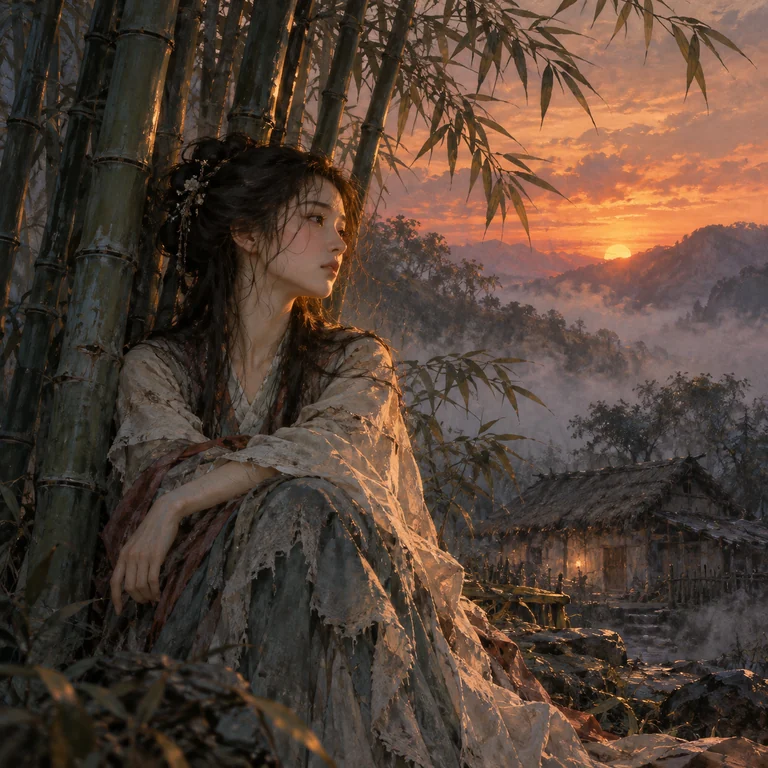
日暮倚修竹 — Leaning Against Tall Bamboo at Dusk

Ku Wuji · AI Music

Inspired by Du Fu's “The Beautiful Woman.” “绝代有佳人,幽居在空谷” — a woman of peerless beauty lives secluded in an empty valley. War ravaged Guanzhong, and her brothers were killed; what use were their high offices, when she could not even recover her family's remains? The world despises those whose fortunes decline, and everything changes like a candle flame turning in the wind. Her husband is faithless, his new love lovely as jade. “但见新人笑,那闻旧人哭” — he sees only his new love smiling, never hears the old love weeping. “在山泉水清,出山泉水浊” — spring water is clear within the mountain, muddy once it leaves. She sells pearls to repair her roof and gathers handfuls of cypress sprigs. “天寒翠袖薄,日暮倚修竹” — in the cold, her emerald sleeves are thin; at dusk she leans against tall bamboo. Male and female voices sing the same lyrics.

Listen · Read lyrics →
Classical Chinese-style Ballad

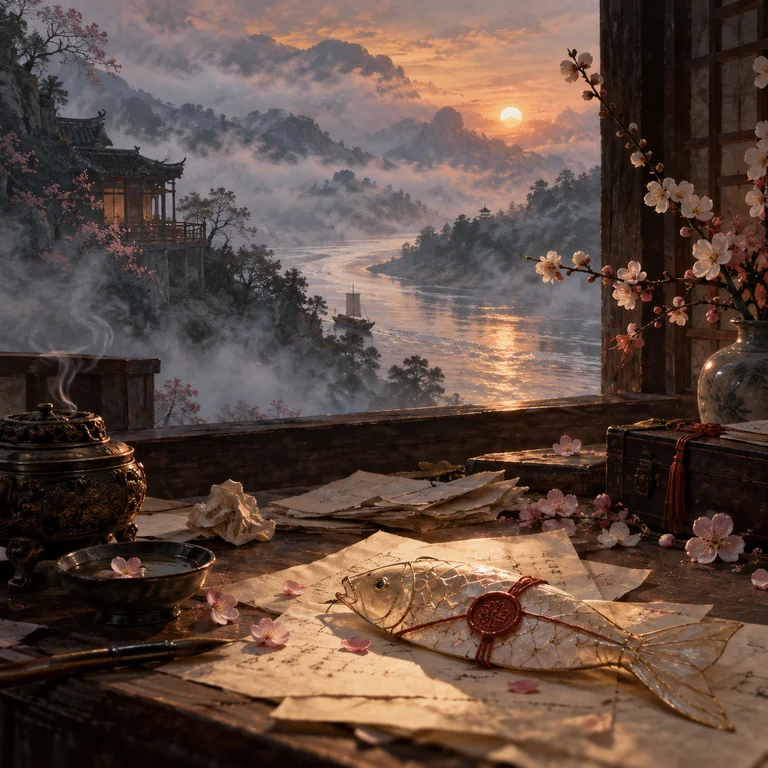
A Fish Bears a Letter

Ku Wuji · AI Music

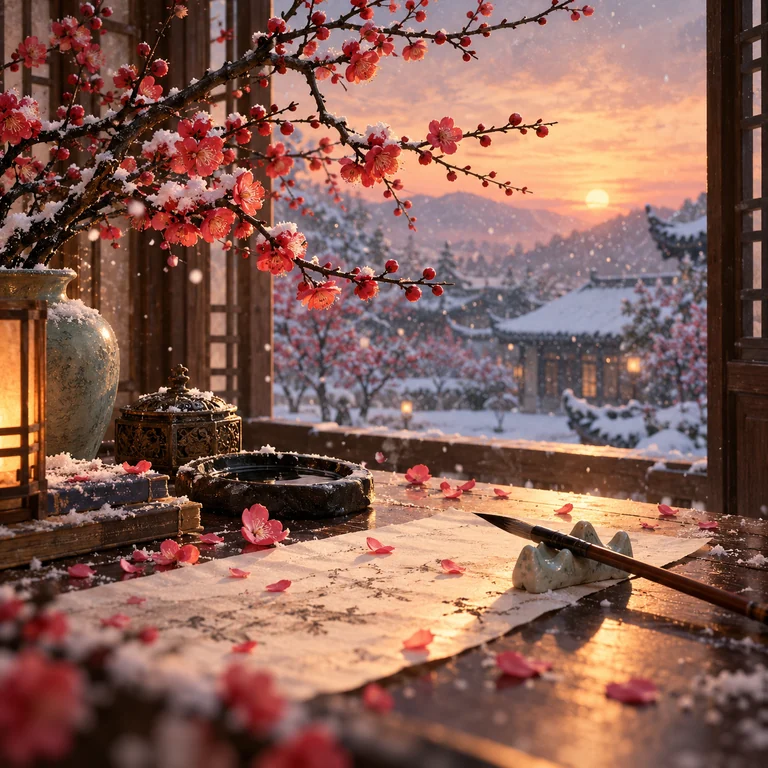
Inspired by Qin Guan's 《踏莎行·郴州旅舍》 (Treading on Grass: A Travelers' Lodge in Chenzhou). 雾失楼台,月迷津渡,桃源望断无寻处;可堪孤馆闭春寒,杜鹃声里斜阳暮。驿寄梅花,鱼传尺素,砌成此恨无重数;郴江幸自绕郴山,为谁流下潇湘去。Towers vanish in fog, ferry crossings blur beneath the moon, and I gaze in vain for the Peach Blossom Spring, nowhere to be found; how can I bear the lonely lodge shut against spring's chill, as the sun sets to the cuckoo's cries? Plum blossoms sent by post, letters borne by fish, build this sorrow layer upon countless layer; the Chen River was content to wind around Mount Chen—for whom does it flow down toward the Xiao and Xiang? This song follows the thread of letters: unfinished letters home, confessions that cannot be sent, and questions carried away by the river. Male and female vocals sing the same lyrics.

Listen · Read lyrics →
Classical Chinese-style Ballad

Spring in Full Measure

Ku Wuji · AI Music

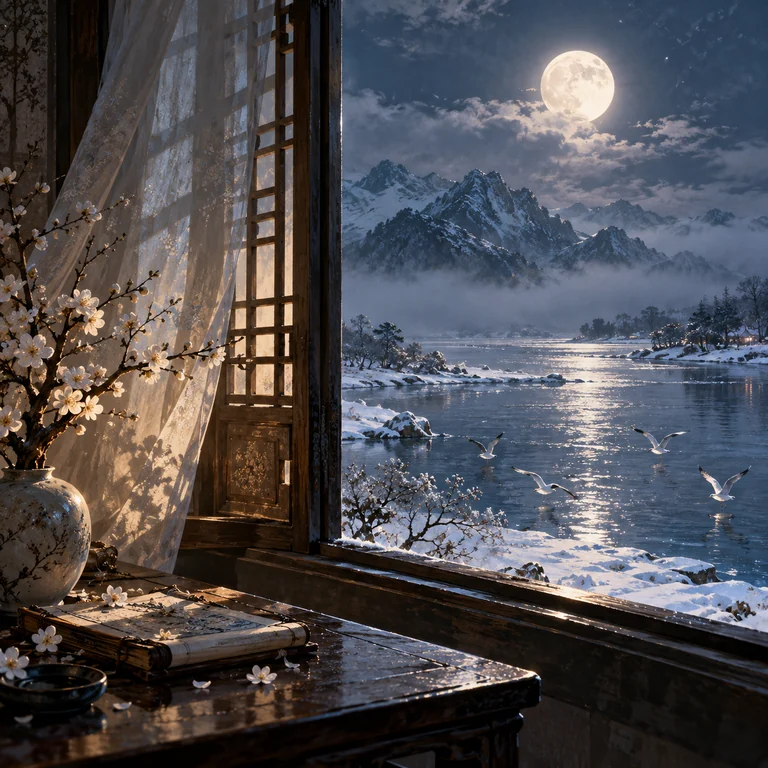
Draws on Lu Meipo's “Snow and Plum Blossoms · II.” 有梅无雪不精神,有雪无诗俗了人;日暮诗成天又雪,与梅并作十分春。 Plum blossoms without snow lack spirit; snow without poetry leaves one mundane. At dusk, the poem is finished and snow falls again, joining the plum blossoms to make spring complete. Plum fragrance, white snow, and poetic rhythm are all essential; only together do they make a perfect spring scene. A light, bright little song in praise of plum blossoms. Male and female vocals sing the same lyrics.

Listen · Read lyrics →
Classical Chinese-style Ballad

Swirling Snow on a Sunlit River

Ku Wuji · AI Music

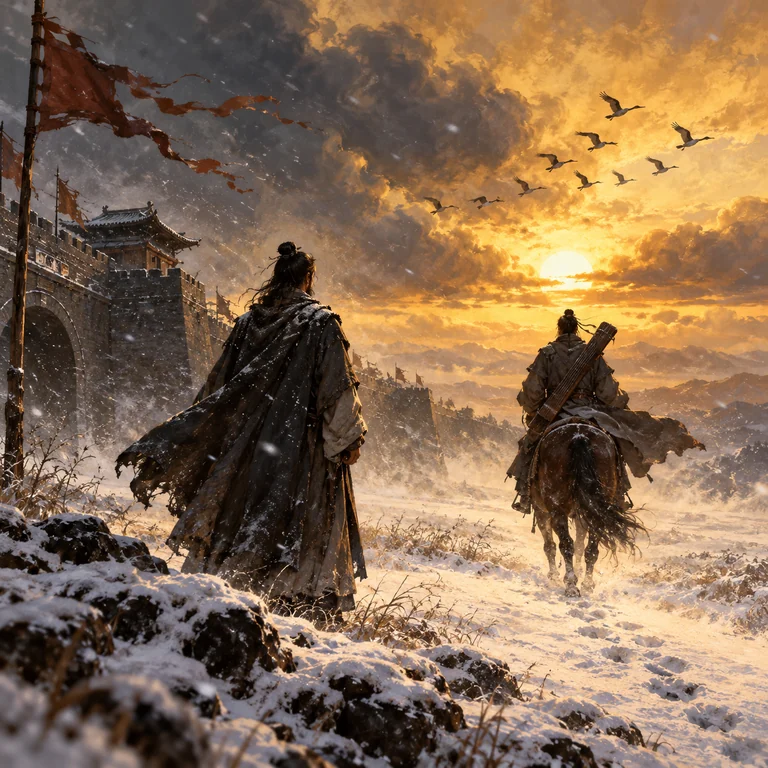
Inspired by Dong Yining's 《卜算子·雪江晴月》 (Divining Rod: A Clear Moon over a Snowy River), a reversible poem that reads backward to the tune of 《巫山一段云》 (A Wisp of Cloud over Mount Wu). 明月淡飞琼,阴云薄中酒;收尽盈盈舞絮飘,点点轻鸥咒。晴浦晚风寒,青山玉骨瘦;回看亭亭雪映窗,淡淡烟垂岫。The bright moon pales the drifting snow, thin dark clouds veil a tipsy haze; graceful dancing flakes gather in, scattered light gulls murmur their spells. On the clear shore the evening wind is cold, green mountains show lean jade bones; turning back, I see tall snow gleaming at the window, faint mist hanging over mountain hollows. The serene beauty of a snowy river on a moonlit night becomes poetry whether read forward or backward. Male and female vocals sing the same lyrics.

Listen · Read lyrics →

Classical Chinese-style Ballad

A Farewell Song Beneath Yellow Clouds

Ku Wuji · AI Music

Inspired by Gao Shi’s “Two Farewell Poems to Dong Da.” 千里黄云白日曛,北风吹雁雪纷纷;莫愁前路无知己,天下谁人不识君。 Yellow clouds stretch a thousand miles, dimming the sun; the north wind drives the geese through swirling snow. Do not fear finding no kindred soul on the road ahead—who under heaven does not know you? 六翮飘飖私自怜,一离京洛十余年;丈夫贫贱应未足,今日相逢无酒钱。 Like a bird drifting on its six flight feathers, I pity myself; more than ten years have passed since I left the capital region. A man should not be content with poverty and low station, yet meeting you today, I have no money for wine. Outside the city in wind and snow, a farewell to the musician Dong Da: an impoverished friend offers snow in place of wine and sends the departing traveler off with encouragement among the most stirring of all time. Male and female voices sing the same lyrics.

Listen · Read lyrics →

Choose your theme

Your theme applies across the site.