
Autumn Dusk at a Mountain Dwelling
Tang dynasty・Wang Wei

Tang dynasty・Wang Wei
After fresh rain in the empty mountains, the evening air turns autumnal.
The bright moon shines among the pines,a clear spring flows over stones。
Bamboo stirs with the chatter of washerwomen returning; lotuses sway as a fishing boat glides downstream.
Let spring's fragrant blossoms fade as they will; the noble wanderer may still remain.
The animation remains in its original Chinese.
The animation is ready.
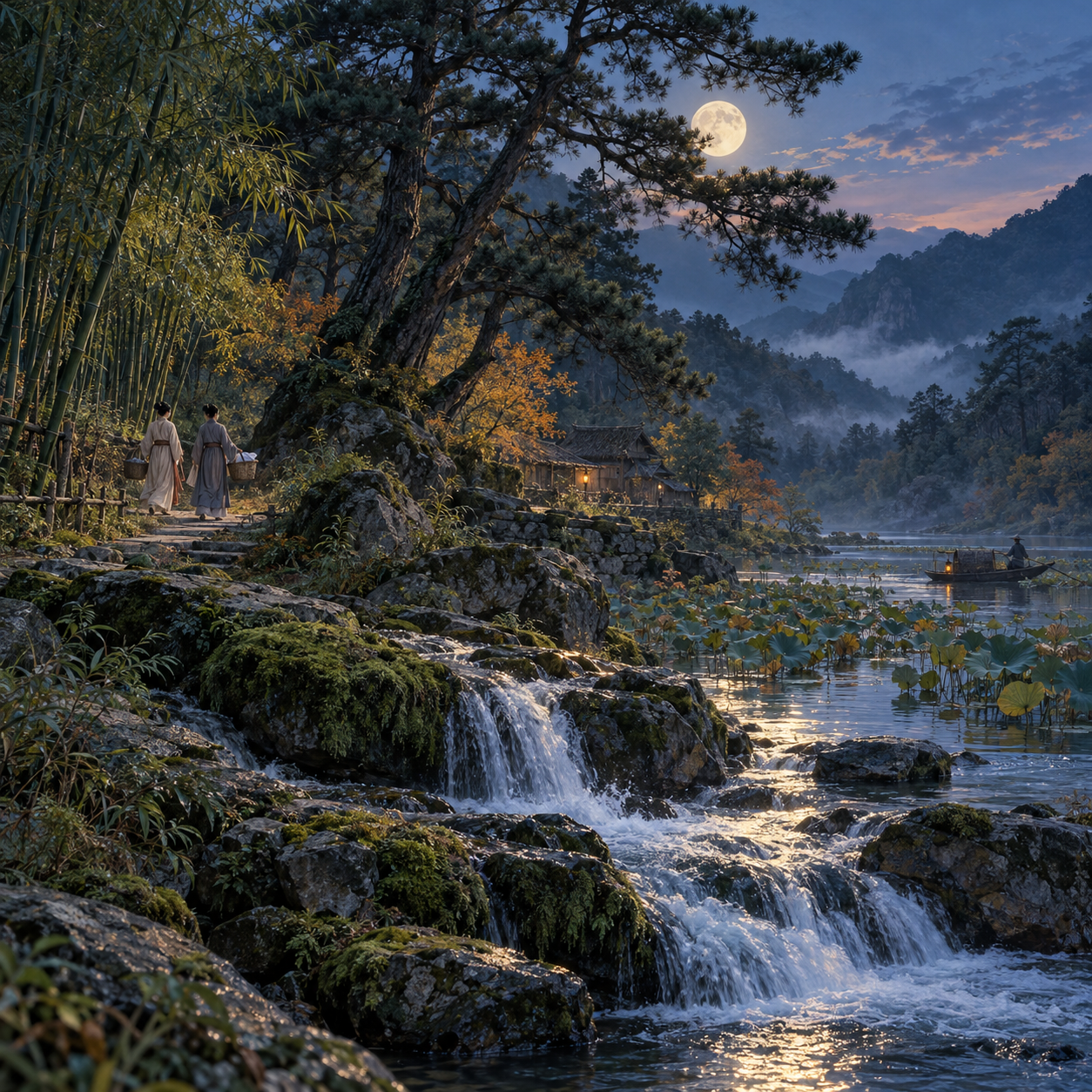
Rain has just fallen in the quiet mountains, and the evening air already carries autumn's feel. The bright moon shines between pine branches; a clear spring flows over stone. Voices rise in the bamboo grove as the washerwomen return; lotus leaves stir as a fishing boat moves downstream. Let spring's flowers and grasses fade—these autumn mountains are still worth remaining in.
暝 (míng): Evening. 空山: Quiet mountains, not necessarily entirely uninhabited. 新雨: Rain that has just fallen. 浣 (huàn) 女: Women washing clothes.
下渔舟: fishing boats moving downstream. 随意: let it; as it will. 歇: to wither or fade away. 王孙: originally a young nobleman; here it refers to a recluse and may also refer to the poet himself.
The final couplet reverses the appeal in “招隐士” (Summoning the Recluse) from the Songs of Chu, which urges the noble young man to return because the mountains are no place to linger. Here it emphasizes that the autumn mountains possess a beauty worth staying for.
Reading guide: Wang Wei depicts an evening in autumn mountains after rain, bringing together the bright moon, clear springs, and the work of a mountain village. The poem's stillness is a serene realm where people and landscape can live peacefully together, rather than a withdrawal from life.
The two middle couplets each have their own ingenuity: moonlight and flowing spring water pair stillness with movement; the rustling bamboo and stirring lotuses first present changes heard and seen, then reveal the washerwomen and fishing boat. The figures thus seem to emerge naturally from the scenery.
The ending acknowledges that spring's fragrance has faded, yet does not grieve over autumn's arrival. The poet chooses to stay because the landscape and life before him are already beautiful enough; the concrete scenes earlier in the poem give substance to that feeling.
Let words find a melody
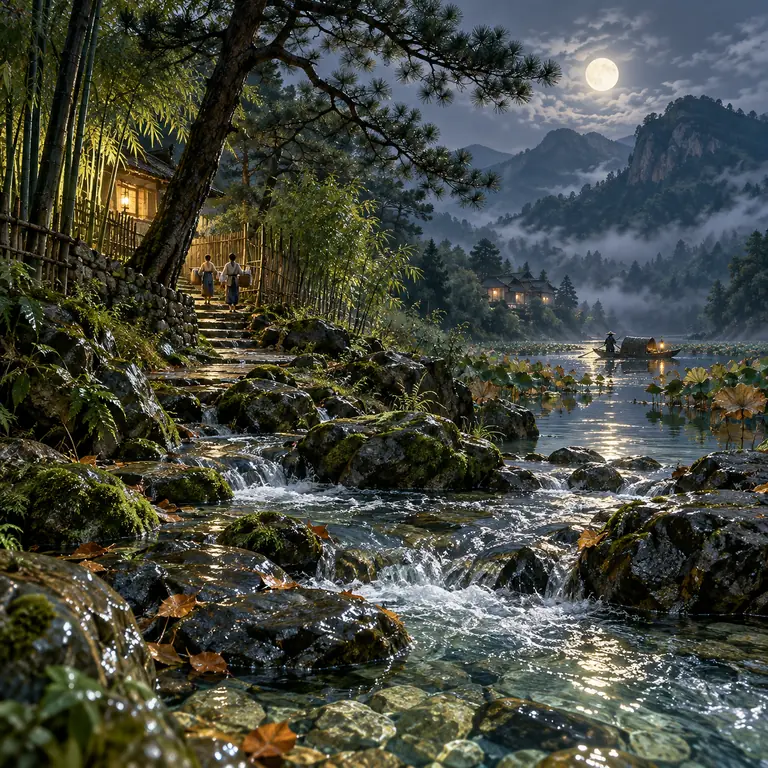
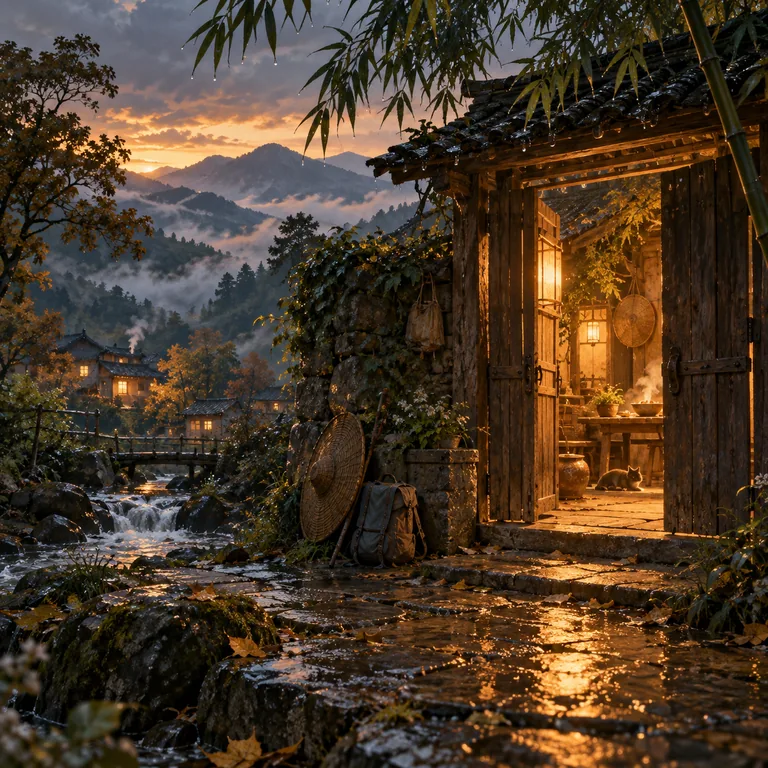
From a poem into a story
After the autumn rain, Yu Cheng follows the sound of clothes being washed into a bamboo grove, hoping an illicit ferrying case will secure his position at the county office, only for the injured woman hiding in a basket to bite him first. The small boat deep among the lotus leaves asks no questions about where people come from, and the old woman will not readily trust his official badge. He remembers a petition dismissed as a family matter, then sees the child beside the boat, whose head someone is holding down to keep the child from speaking.
Start readingAI-assisted writing · Fictional characters and events
