
Lodging at Old Madam Xun's Home beneath Wusong Mountain
Tang dynasty・Li Bai

Tang dynasty・Li Bai
I lodge beneath the Five Pines, lonely, with nothing to bring me joy.
Farm families toil through autumn's labors; the girl next door pounds grain in the cold of night.
Kneeling, she offers wild rice; moonlight brightens the plain white plate.
It makes me feel ashamed before the washerwoman; thanking her repeatedly, I cannot eat.
The animation remains in its original Chinese.
The animation is ready.
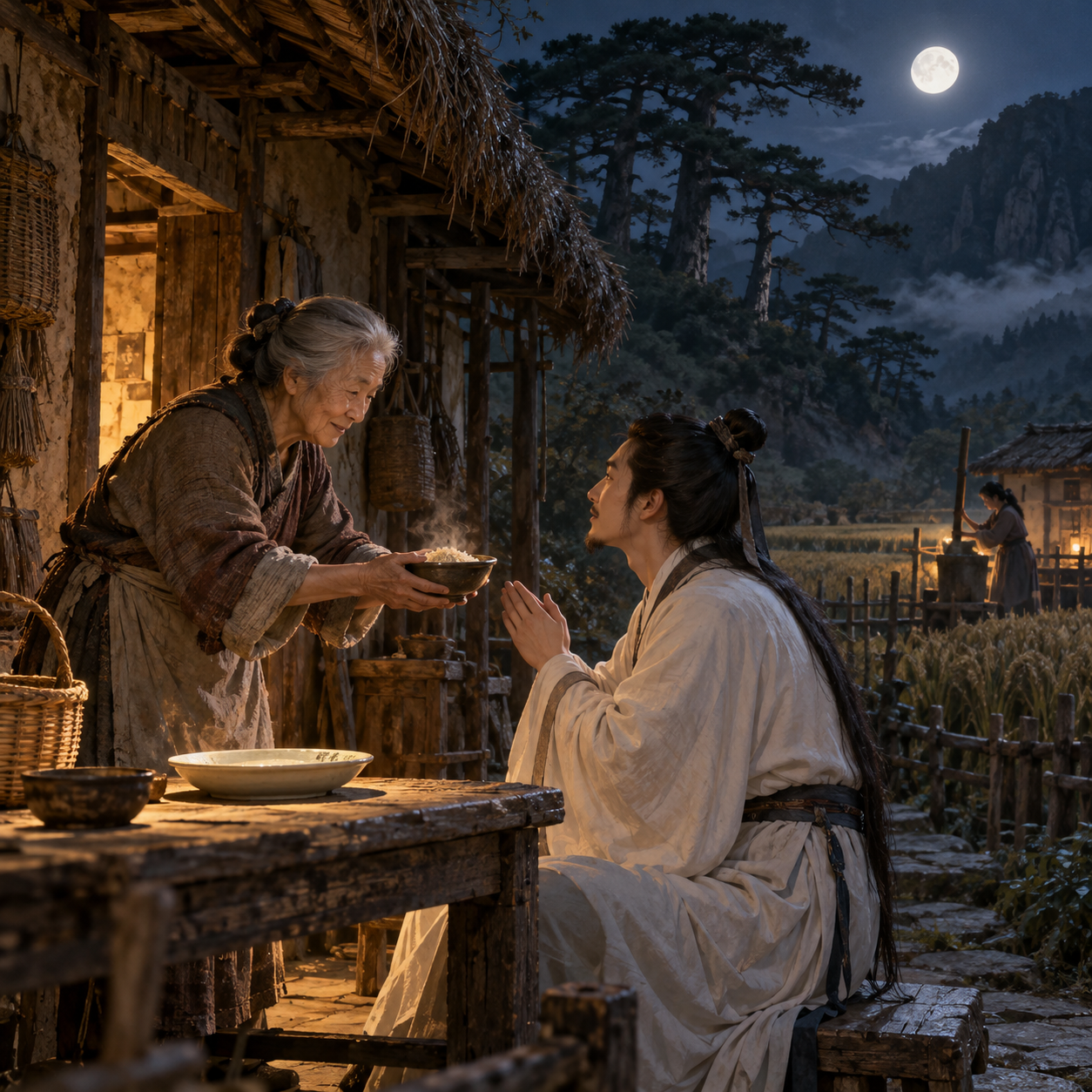
I lodge below Wusong Mountain, lonely at heart and with little joy. The farming families toil hard at the autumn harvest; a neighboring woman still pounds rice in the night's cold. My host kneels respectfully to offer wild-rice grain, and moonlight makes the plain white dish shine. This hospitality recalls the washerwoman who helped Han Xin and leaves me deeply ashamed; thanking my host again and again, I am too moved to lift my chopsticks.
Wusong Mountain: in the area of present-day Tongling, Anhui. 荀媪 (ǎo): an elderly woman surnamed Xun. 秋作: autumn farm work. 舂: to remove grain husks by pounding with a pestle and mortar.
跪进: to present something while kneeling, an ancient form of etiquette. 雕胡: wild rice, the grain of an aquatic plant. 素盘: a plain-colored plate.
漂母: an elderly woman washing silk floss by the water, who once fed Han Xin when he was poor. 三谢: thanking repeatedly; “三,” three, need not be taken as an exact count. 不能餐: unable to swallow because of emotion and shame.
Reading guide: The poem recounts Li Bai's stay at a farmhouse, where an elderly woman treated him hospitably. Though brief, it presents in turn the traveler's loneliness, the hardships of farming, and the host's generosity. The allusion to the washerwoman connects a simple home-cooked meal with gratitude and self-examination.
“苦,” hardship, and “寒,” cold, first establish how hard the grain was to obtain; only afterward does the act of serving the meal appear. The food on the plate thus holds both hospitality and the weight of labor.
The image of moonlight falling on the plate is simple and pure, complementing the host’s solemn courtesy. Rather than boasting of his talent or reputation, the speaker ends with his embarrassment at receiving the gift, grounding the poem’s feeling in respect for ordinary laborers.
Let words find a melody
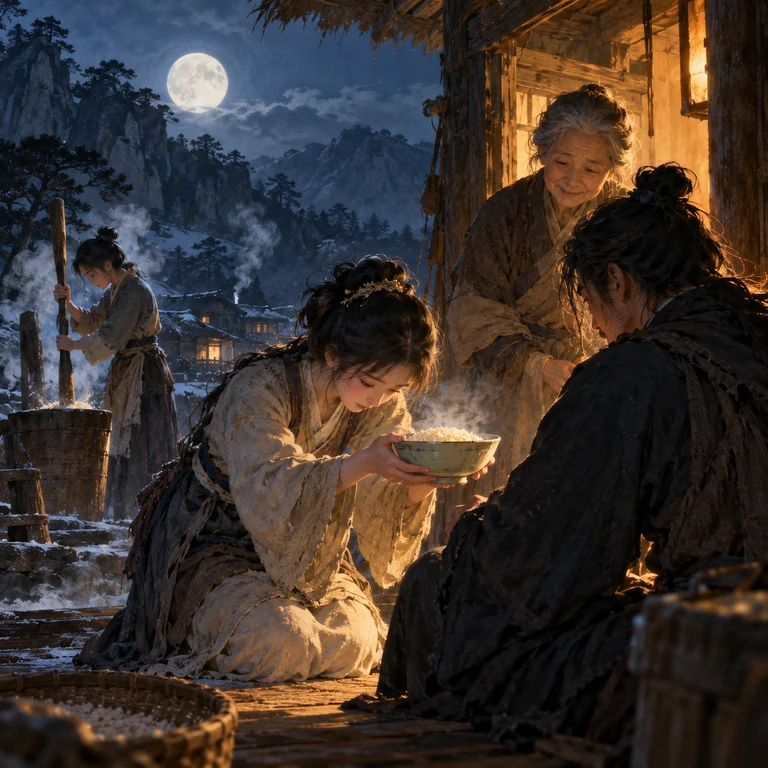
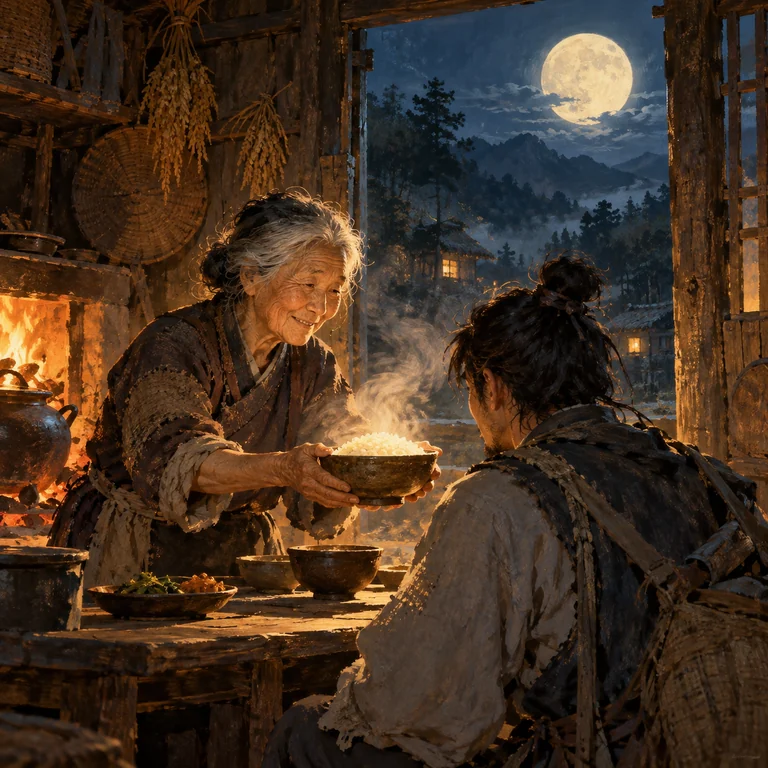
From a poem into a story
A bowlful is missing from the new rice Shen Qiuniang hid atop the cupboard for New Year. Her daughter A-He says she gave that bowl of rice to the gentleman repairing the bridge in exchange for learning to write her full name. Her mother takes the empty bowl to find him, but beside the bridge there are only wooden pieces, hemp thread, and an impoverished scholar who keeps delaying the work. With the autumn harvest approaching, a bridge and a few characters have both become obstacles mother and daughter cannot get past.
Start readingAI-assisted writing · Fictional characters and events
