
Ruan Lang Gui · Spring Wind Drives Rain around the Remaining Branches
Song dynasty・Anonymous

Song dynasty・Anonymous
Spring winds drive rain around the remaining branches; fallen blossoms can fly no more. The small pond’s cold green water is about to ripple; the rain clears, and again the sun is in the west.
The curtain half rolled up, paired swallows return. She hides her sorrow, but cannot master her brows. Turning, she sets the unfinished Go game in order; lost in thought, she is slow to answer the ko.
The animation remains in its original Chinese.
The animation is ready.
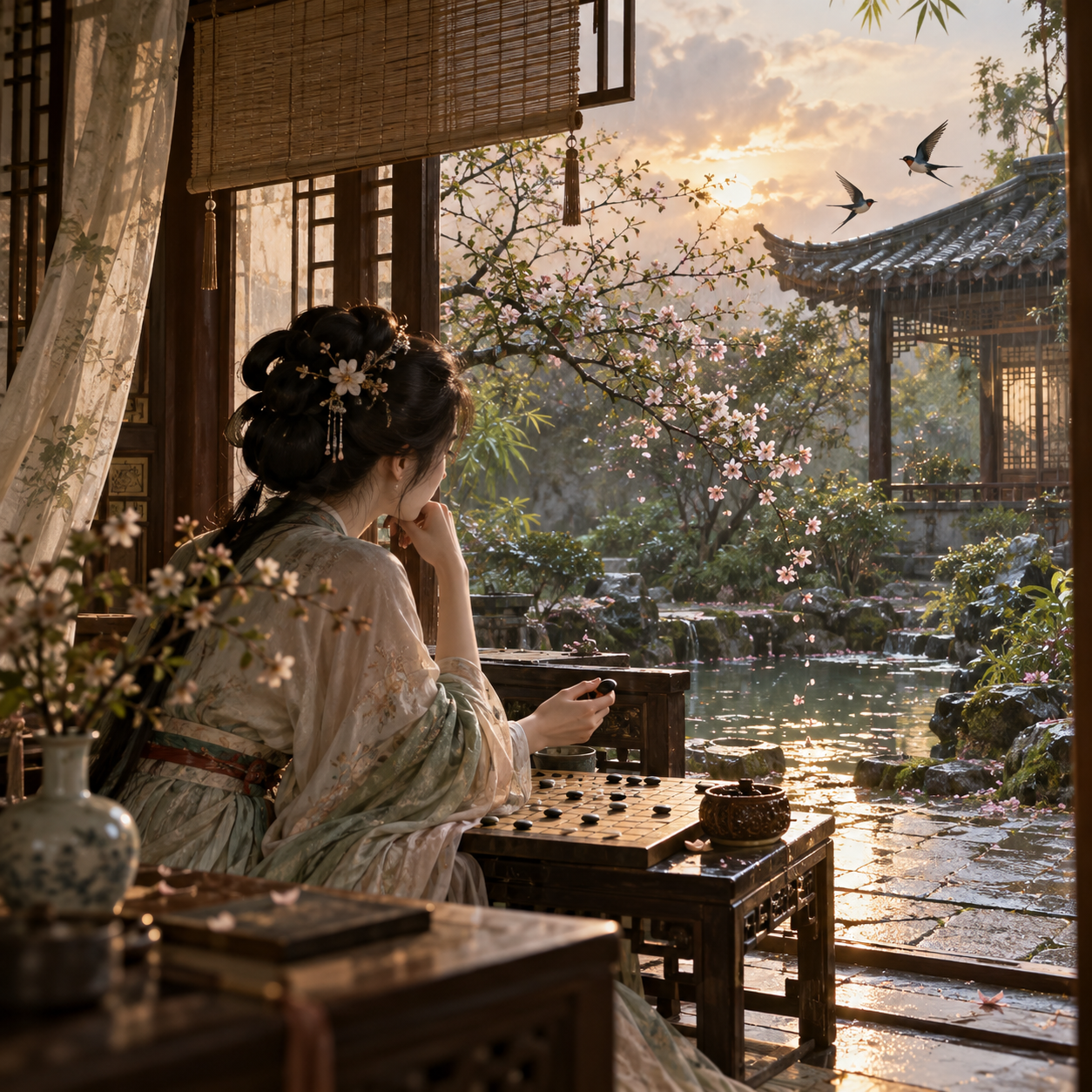
The spring wind sweeps rain around the remaining branches; the blossoms have fallen, leaving few petals still to be blown away. The little pond is cold green, seemingly about to ripple; when the rain stops and the sky clears, the sun is already in the west.
The curtain is half rolled up, and a pair of swallows returns. She tries to conceal her sorrow, but the expression between her brows will not obey. Turning around, she puts the unfinished game of Go in order, hoping to ease her thoughts by playing; yet at a ko fight she hesitates in thought, unable to respond in time.
阮郎归 (Ruan Lang Gui): The name of a ci tune pattern. Attribution of this work varies, and it is also included among Qin Guan's lyrics. This site originally credited it to “Anonymous”; that attribution is retained here, with the alternative noted.
残枝、落花无可飞: bare, spent branches and no more fallen blossoms to flutter, describing the end of the flowering season in late spring. 漪 (yī): small ripples. 日西: the sun has moved westward.
讳愁: concealing sorrow. 无奈眉: sorrow still shows in the brows. 着(zhuó)棋: playing a board game. 残棋: an unfinished game.
应劫: responding to a ko fight in Go, rather than responding to a calamity. 沉吟: pondering hesitantly.
Introduction: The lyric moves from wind and rain in late spring to a game of chess behind the curtain, conveying a secluded loneliness that is hard to dispel. The figure’s identity and specific experiences are not stated; interpretation should rest on such details as the sorrow between the brows, the returning pair of swallows, and hesitation over the chessboard. Transmitted versions differ in attribution: some name no author, while others attribute it to Qin Guan.
Clearing rain might promise brightness, but “还日西” (yet the sun is already in the west) immediately marks the day's decline; swallows returning to their nests in pairs further contrast with the feelings of the person behind the curtain. Successive changes in the scenery narrow the space in which that person can find comfort.
The second stanza does not explain the source of sorrow, but lets it emerge through the brows and through gestures. Resetting the unfinished game seems to redirect attention, yet “应劫迟,” “slow to answer the ko threat,” shows that the mind remains preoccupied. The ending pauses at a moment when the next stone still cannot be placed, conveying more through restraint than a direct confession would.
Let words find a melody
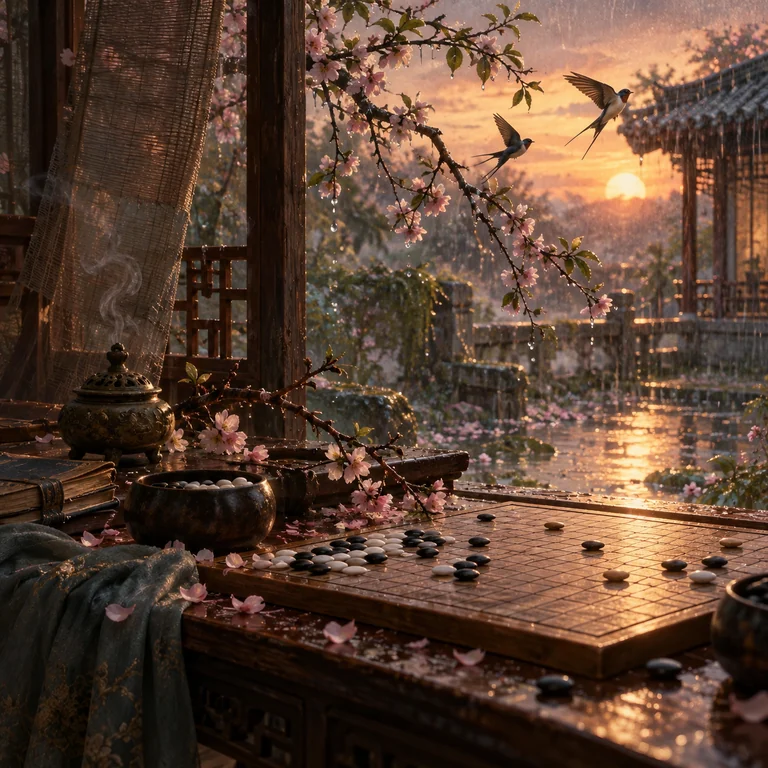
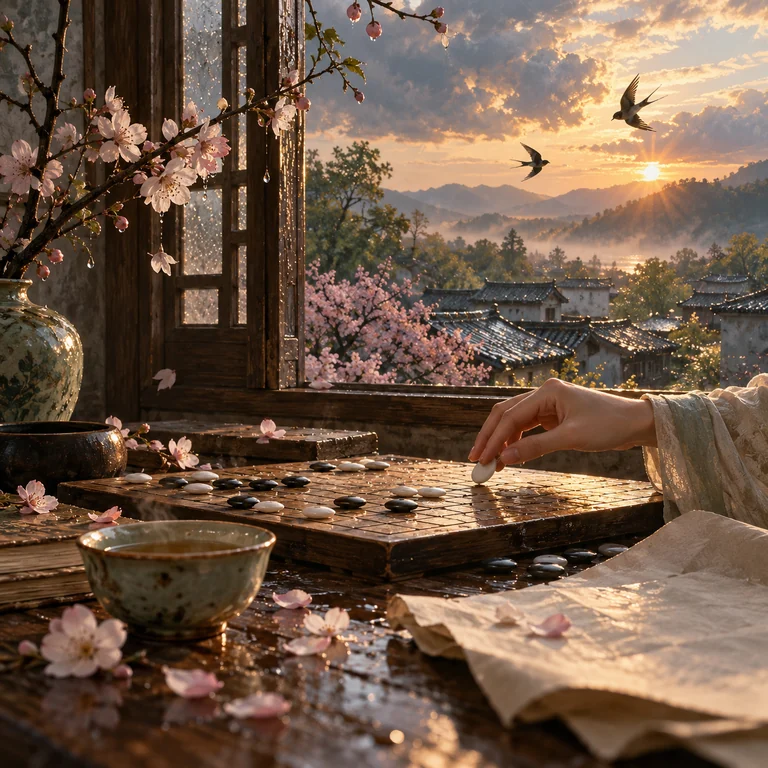
From a poem into a story
Spring rain closes the ferry crossing, and a stranger sets a chipped Go-stone jar before Jiang Chi. It belonged to her father, but contains no stones—only seven boat tallies. In the three years since leaving the besieged city, she has made her living helping boat passengers pass the time. Now a fragmentary game record draws her back to the old city’s water gate. In this game begun anew, how many people’s paths out are still at stake?
Start readingAI-assisted writing · Fictional characters and events
