
Jiang Cheng Zi · Enjoying Spring
Song dynasty・Zhu Shuzhen

Song dynasty・Zhu Shuzhen
Slanting wind and fine rain bring spring's chill; before the wine cup, I remember former joys. Once I held pear blossoms, lonely tears streaking my face. Fragrant grass and broken mist line the road to the southern bank; through tears of parting, I gaze at green mountains.
Last night a dream brought us together by chance, among waters and clouds, silent and still. Yet when I woke, sorrow and anguish remained unchanged. Tossing beneath the bedclothes, I lament in vain: heaven is easy to see, but seeing you is hard.
The animation remains in its original Chinese.
The animation is ready.
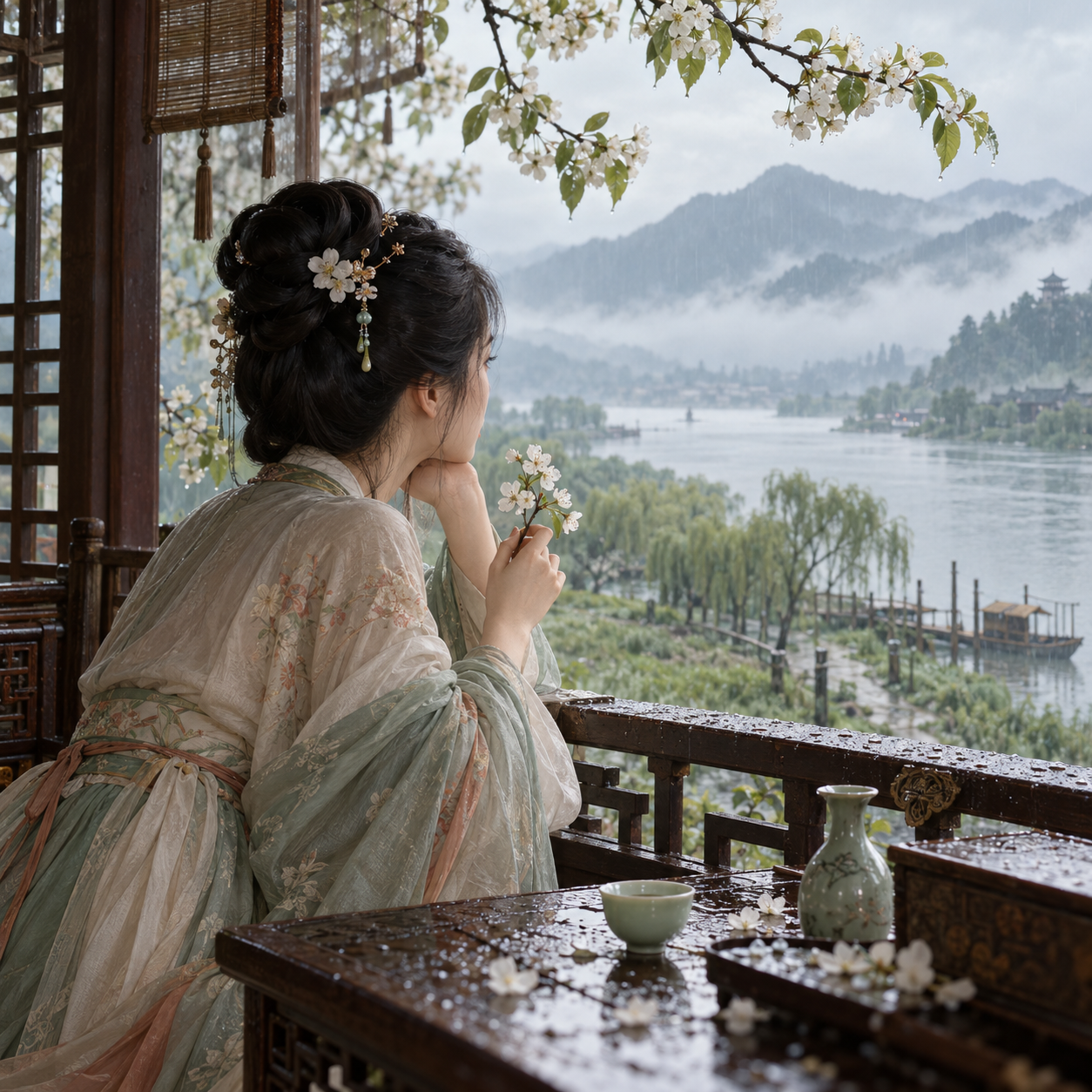
Slanting wind and fine rain bring a spring chill. Sitting before my wine cup, I recall our former happy gatherings. Once, holding pear blossoms, I wept alone; fragrant grass and broken veils of mist concealed the road to Nanpu, and with tears of parting in my eyes, I gazed toward the green mountains.
Last night, in dreams, we finally had the chance to meet again, silently facing each other amid water and clouds. But on waking, sorrow and regret remained. I toss and turn beneath the covers, distressed to no purpose: even the heavens are easy to see, yet seeing the one I long for is so hard.
尊: a wine cup. 阑干: here describes tears flowing freely across the face, not a railing. 南浦: a waterside place of farewell, often used as an image of parting.
夤缘: originally attachment or connection; here, the chance that allows a meeting in a dream. 争奈: but how can one help it. 衾裯 (chóu): quilts and bedding.
伊: the person being missed. “天易见,见伊难”—“Heaven is easy to see; seeing you is hard”—takes the difficulty of meeting to its utmost.
Reading guide: Though titled an appreciation of spring, the lyric's spring scenery repeatedly evokes longing and parting. Its two stanzas center respectively on past events and last night's dream—two ways of briefly drawing near to the person longed for, both ultimately returning to present solitude.
Pear blossoms, fragrant grass, and green mountains might offer pleasure on an outing, but here they accompany tears and the road of parting. The emotional mismatch between title and text highlights that beautiful spring scenery alone cannot make a person happy.
The dream’s “悄无言” (“quiet, without a word”) offers no exuberant reunion, preserving instead a fragile sense of meeting. Repeated tossing and turning after waking shows that the dream has not dispelled sorrow. The ending exaggerates by comparing seeing heaven with seeing the beloved, directly voicing the pain of being unable to meet.
Let words find a melody
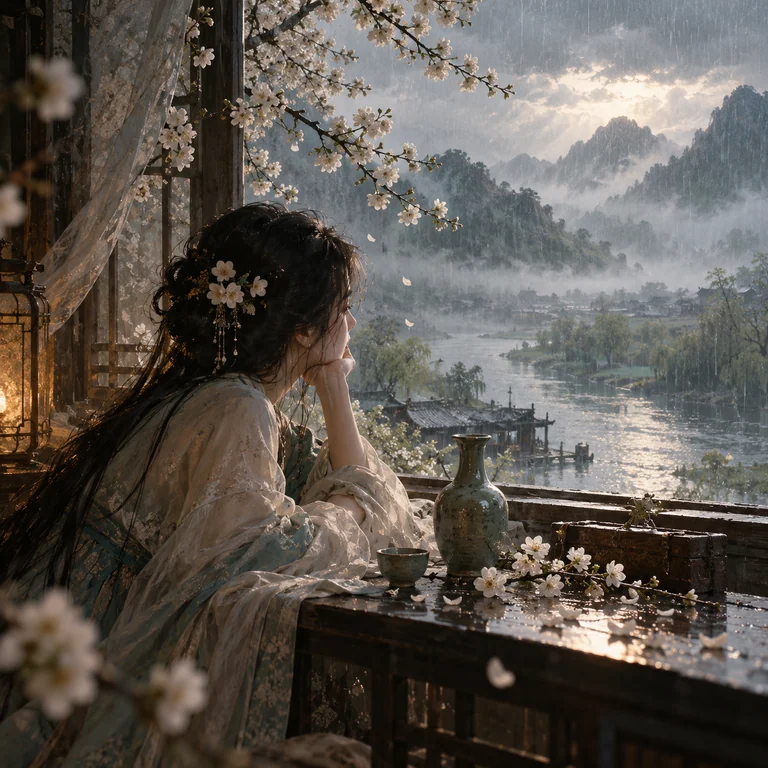
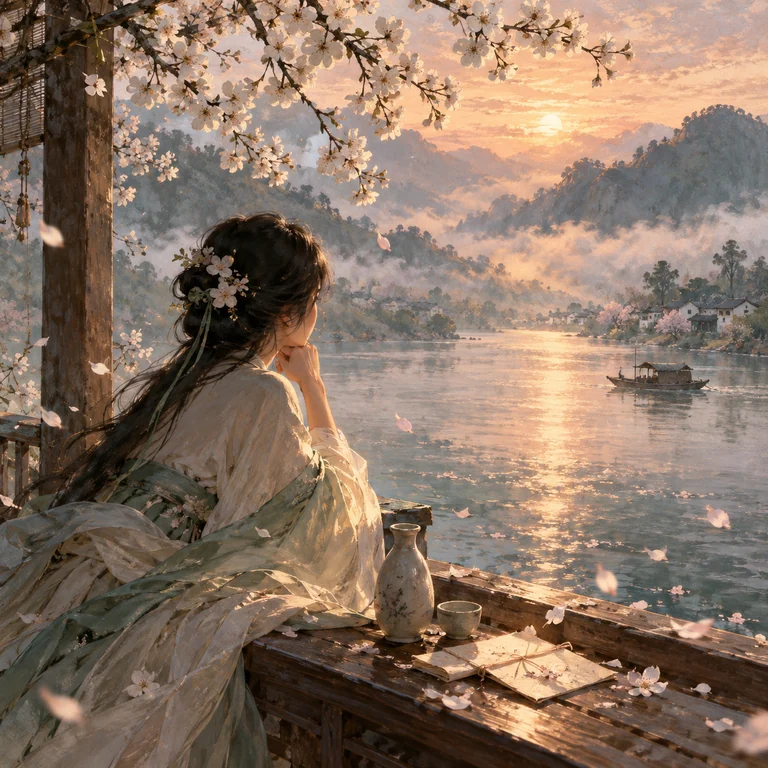
From a poem into a story
The pear tree in the courtyard has yet to bud, but a wet blossom appears beside Su Li’s pillow, river sand still clinging to its heart. In her dream the night before, her late husband had broken off this very spray of pear blossom for her. Since she resumed embroidering their unfinished wedding quilt, every petal she adds has brought the riverbank into sharper focus. She begins to long for nightfall, even as river water slowly seeps through the floor tiles at home, and beneath the sound of water someone else is knocking on a boat.
Start readingAI-assisted writing · Fictional characters and events
