
Grass on the Ancient Plain: A Farewell on an Assigned Theme
Tang dynasty・Bai Juyi

Tang dynasty・Bai Juyi
Lush grows the grass across the plain,each year it withers and flourishes anew。
Wildfire cannot burn it all away; when spring winds blow, it grows again.
Far-spreading fragrant grass encroaches on the ancient road,sunlit green reaches the deserted city。
Once more I see a noble friend depart,the lush grass brims with farewell sorrow。
The animation remains in its original Chinese.
The animation is ready.
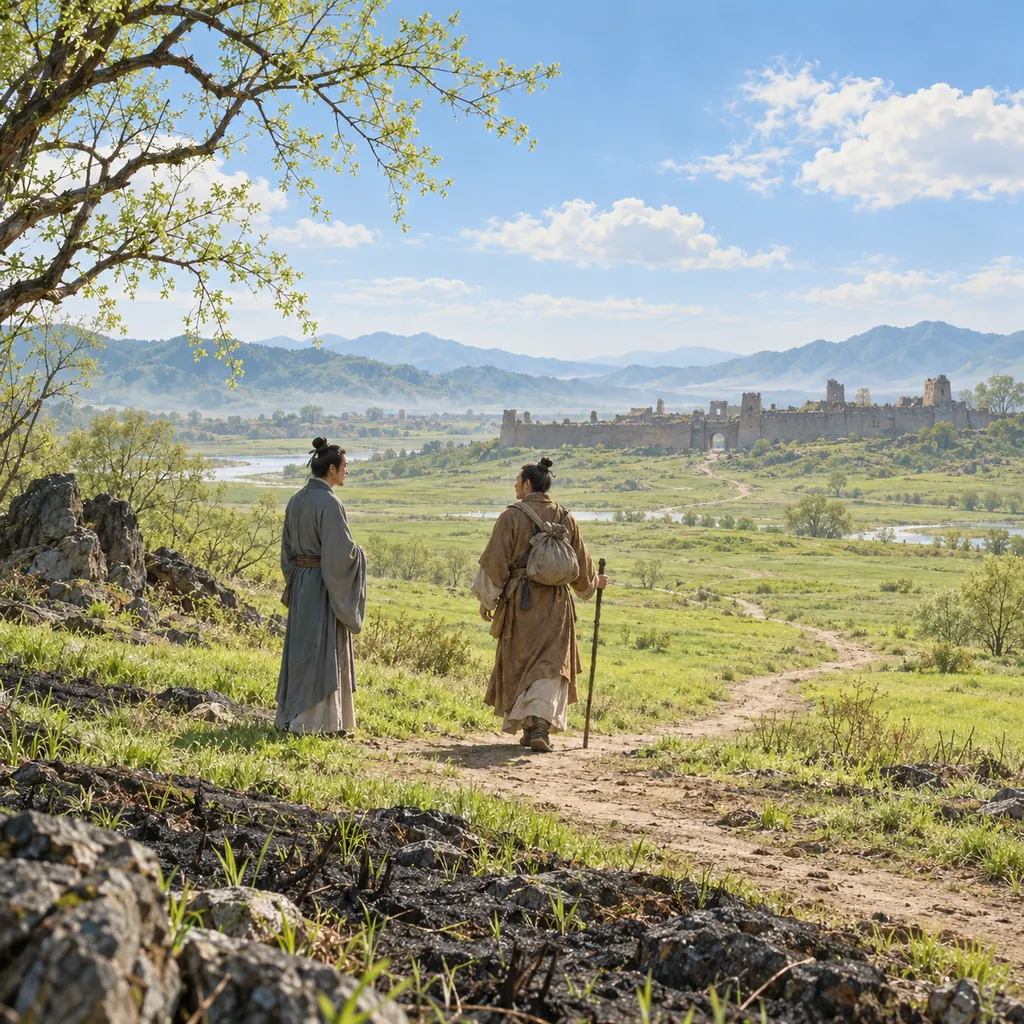
Grass grows thick on the ancient plain, withering and flourishing year after year.
Wildfire cannot put an end to this grass; when the spring wind comes, new blades grow again.
Fragrant grass stretches into the distance and spreads over the old road; its green in the clear sunlight reaches all the way to the deserted city.
Now I am again seeing a friend off on a distant journey; the lush grass before me seems filled with the feelings of parting too.
赋得: a title marker indicating a poem composed on an assigned subject, common in set-topic writing; these two characters alone cannot establish that the poem was written during any particular imperial examination. 古原: an ancient plain. The title is also often shortened to “草” (Grass); this page retains all eight lines.
离离: dense, luxuriant vegetation. 岁: a year. 一枯荣: withering and flourishing within a year. 枯 means to dry up or decline; 荣 means to flourish.
野火: fire in the wild. 烧不尽: cannot extinguish the grass's vitality forever, a meaning carried forward by its springtime rebirth in the next line; it does not mean the visible blades were not burned away.
远芳: fragrant grass stretching into the distance; 芳 here means fragrant grass. 侵: gradually spreading, encroaching. 古道: an old road.
晴翠: the emerald green of grass in clear sunshine. 接: to connect with, to extend all the way to. 荒城: a desolate old city; the poem does not explain why it was abandoned.
又: again, once more. 王孙: originally descendants of royalty, but also a frequent poetic term for a distant traveler; here it means the friend being seen off, whose actual identity need not be assumed aristocratic.
萋萋: describing lush grass. 满别情: filled with the feelings of parting, entrusting human reluctance to part to the green grass before one's eyes.
Reading guide: This poem is often remembered as a celebrated poem about grass because of “野火烧不尽,春风吹又生” — “Wildfire cannot burn it all away; when spring winds blow, it grows again.” Yet the complete work has four more lines and ends by seeing a friend off on a long journey. The first half moves from the year's withering and flourishing to the grass's renewal; the second lets its green stretch along an ancient road toward a deserted town, then entrusts that road to the person about to leave. Readers can feel the grass's vitality while also attending to the “farewell” in the title and to how the scenery gradually takes up human feeling.
The opening “离离” (lush and abundant) first presents a dense expanse of grass; the following “一岁” (one year) places the scene within the cycle of seasons. The poem describes not only flourishing but also withering. Wildfire and spring wind thus become a continuous process from injury to renewal rather than two isolated scenes. “不尽” (not exhausted) and “又生” (grows again) echo each other, expressing the grass's resilience through change. It may inspire reflections on life, but need not be reduced to a particular political experience or a vague optimism that erases every loss.
In the second half, the space gradually expands. “侵” (“encroach”) lets fragrant grass spread onto the old road, while “接” (“join”) links its sunlit green to the deserted city, as though the eye follows the grass's growth into the distance. Road and city are therefore essential to the scene: the direction the friend will soon travel has already unfolded within the landscape. Only when “送” (“see off”) and “去” (“depart”) appear in the final couplet is the farewell made explicit, while lush grass still fills the view. The luxuriant grass at the beginning resembles that at the end, but its emotional coloring has changed: the former reveals vitality, the latter evokes reluctance to part. Grass cannot hold back a person's journey, yet through it the feelings of farewell acquire a visible form that stretches without end.
Let words find a melody
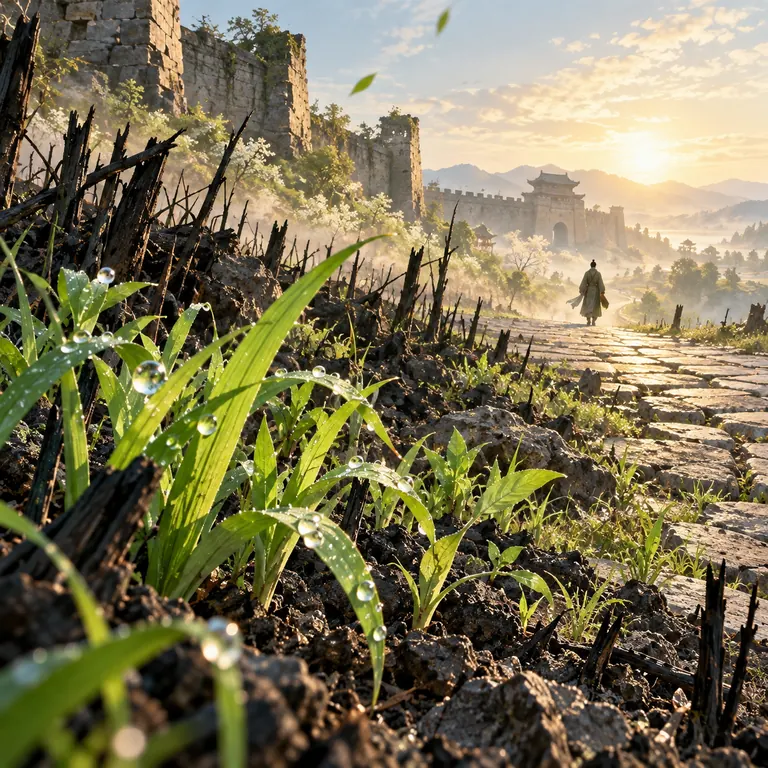

From a poem into a story
Sang Niang finally saves enough to buy freedom for herself and her daughter, receiving a manumission document for each. Yet as she burns their old estate clothes, her daughter snatches a coarse short jacket from the flames. The cart to East Town is already booked, and Sang Niang has inquired about sewing work and lodging for them both. A-Ji, however, produces a hiring notice from a sheep farm at North Ridge, saying she wants to do work she knows. One cart heads east, one notice points north, and the tomorrow Sang Niang has prepared suddenly has two destinations.
Start readingAI-assisted writing · Fictional characters and events
