
A Spring Outing by Qiantang Lake
Tang dynasty・Bai Juyi

Tang dynasty・Bai Juyi
North of Gushan Temple, west of Jia Pavilion, the water has just risen level, and the clouds hang low.
几处早莺争暖树,谁家新燕啄春泥。— Here and there, early orioles compete for sun-warmed trees; whose newly returned swallows peck at the spring mud?
A profusion of flowers begins to dazzle the eye; the short grass is only just tall enough to hide the horses’ hooves.
Most I love the lake’s eastern shore, where I can never walk enough,White Sand Causeway in the shade of green willows.
The animation remains in its original Chinese.
The animation is ready.
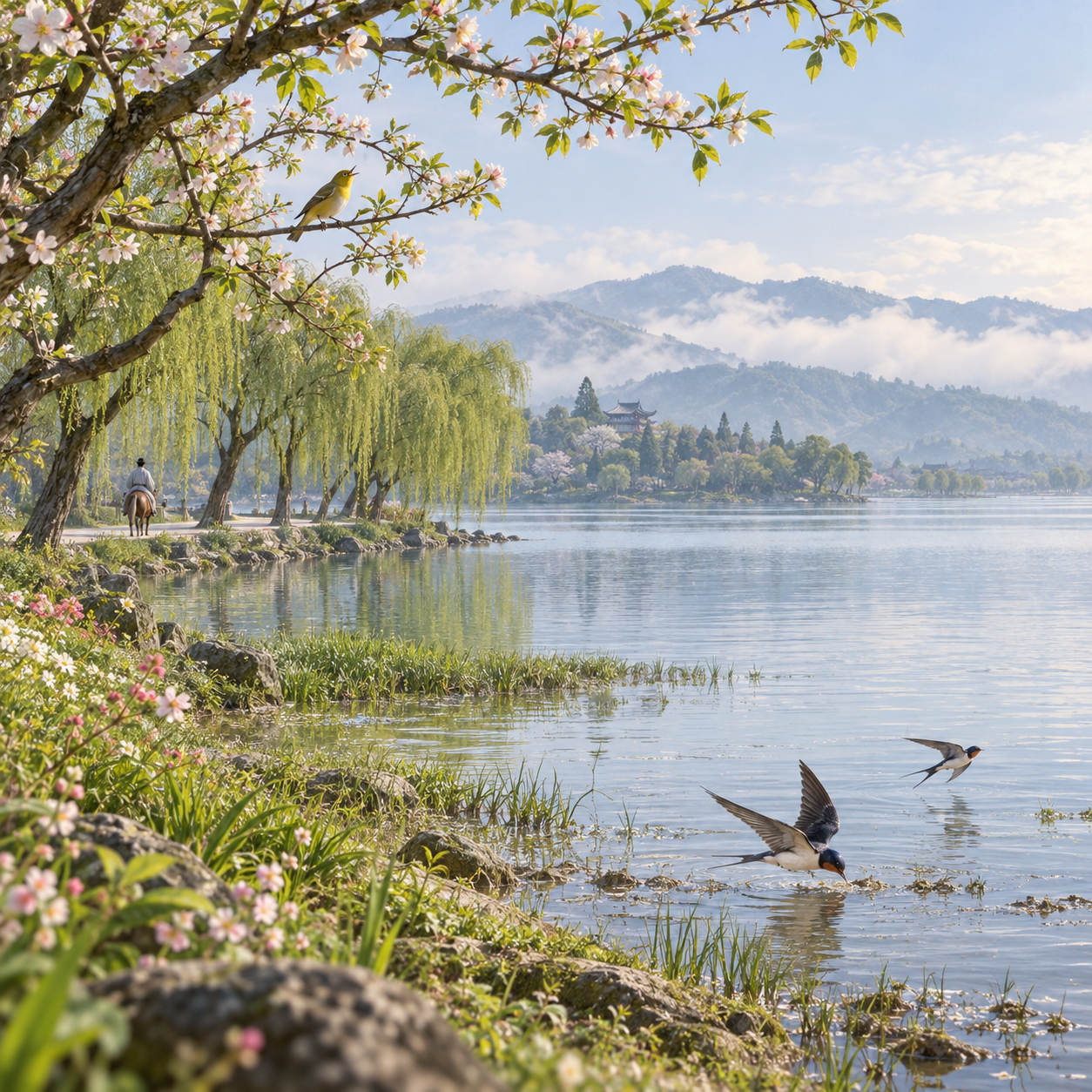
From north of Gushan Temple to west of Jia’s Pavilion, the lake has just risen level, and low clouds seem to meet its surface. Here and there, early orioles compete for sunlit trees; whose newly arrived swallows are pecking up spring mud? A profusion of flowers gradually dazzles the eyes, while short, tender grass barely covers the horses’ hooves. I love this eastern stretch of the lake most and can never tire of it, especially the White Sand Embankment beneath the shade of green willows.
钱塘湖: Qiantang Lake, Hangzhou's West Lake. 孤山寺、贾亭: Gushan Temple and Jia Pavilion, a temple and pavilion beside West Lake. 初平: the spring water has just risen nearly level with the banks. 云脚: low-hanging clouds.
暖树: trees facing the sun. 新燕: swallows newly returned in spring. 乱花: abundant, varied spring flowers. 没(mò): to cover or submerge. 行不足: unable to get enough of strolling and enjoying the view.
白沙堤: White Sand Causeway, a causeway on West Lake. The later name “白堤” (Bai Causeway) alone does not justify claiming that it must be the causeway built personally by Bai Juyi.
Reading guide: Written during Bai Juyi's tenure as prefect of Hangzhou, this poem follows a spring outing around West Lake, recording early spring's fresh changes along the route. It does not seek spring at its fullest, but captures stages of growth marked by “初,” “first”; “早,” “early”; “新,” “new”; “渐,” “gradually”; and “才,” “only just.”
Orioles competing for sun-warmed trees and swallows pecking at spring mud are vivid actions and evidence of the season’s first turn. Flowers are still gradually spreading and grass remains low, distinguishing this early-spring West Lake from midsummer, when lotus leaves reach to the sky.
The ending, “行不足,” “I cannot walk here enough,” connects the scenery with the visitor's response: after visiting many places, the speaker still wishes to linger in willow shade east of the lake. Emotion does not leave the actual scene behind for abstract praise, but emerges naturally from the desire to keep exploring.
Let words find a melody
From a poem into a story
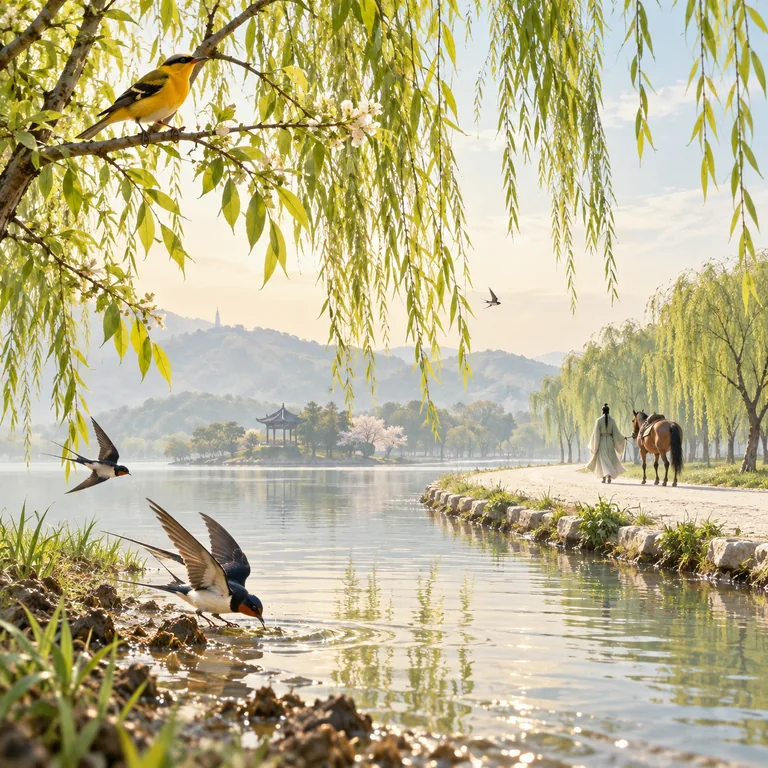
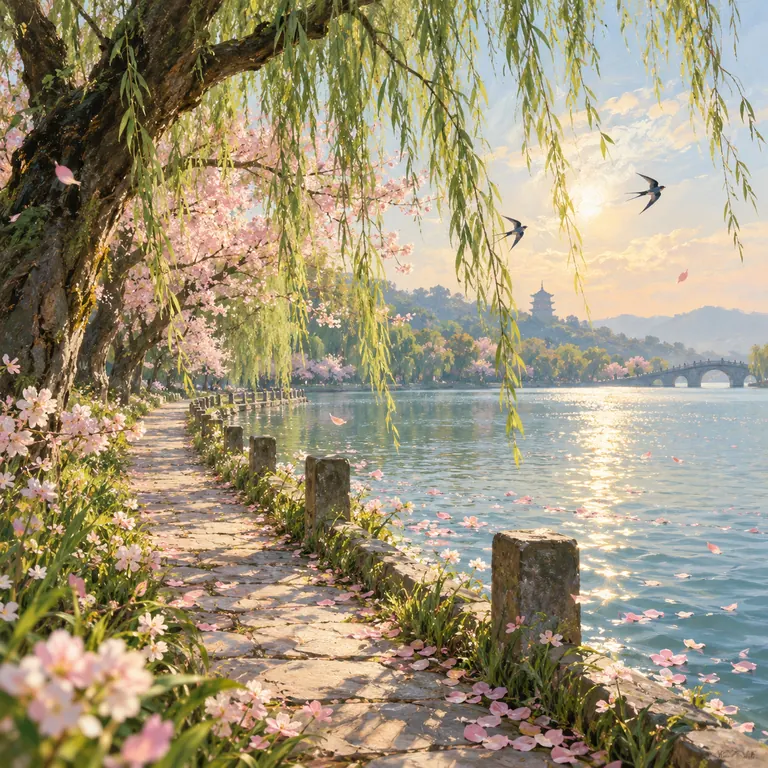
Han Liu loses track of his master’s newly purchased prized horse, crashes into three baskets of spring flowers, and even runs out of one shoe. He Xing, a woman washing horses beneath the willows, laughs that he knows only coat colors, not hoofprints, and points to tracks in the mud, telling him to search along another road. People are still waiting at the pavilion to admire the horse, while another pair of hands has already seized its reins beside the lake; amid the laughter of springtime visitors, old wounds on a horse’s body are slowly coming to light.
Start readingAI-assisted writing · Fictional characters and events
