
Visiting Shanxi Village
Song dynasty・Lu You

Song dynasty・Lu You
Do not laugh at the farm family's cloudy winter wine; in a year of plenty, they have ample chicken and pork for guests.
Mountains fold and streams wind, and I doubt there is a path; beyond shaded willows and bright flowers, another village appears.
Flutes and drums accompany us as the Spring Earth God Festival draws near; plain clothes and caps preserve the customs of old.
From now on, if I may wander at leisure by moonlight,staff in hand, I shall knock at your door at night whenever I please。
The animation remains in its original Chinese.
The animation is ready.
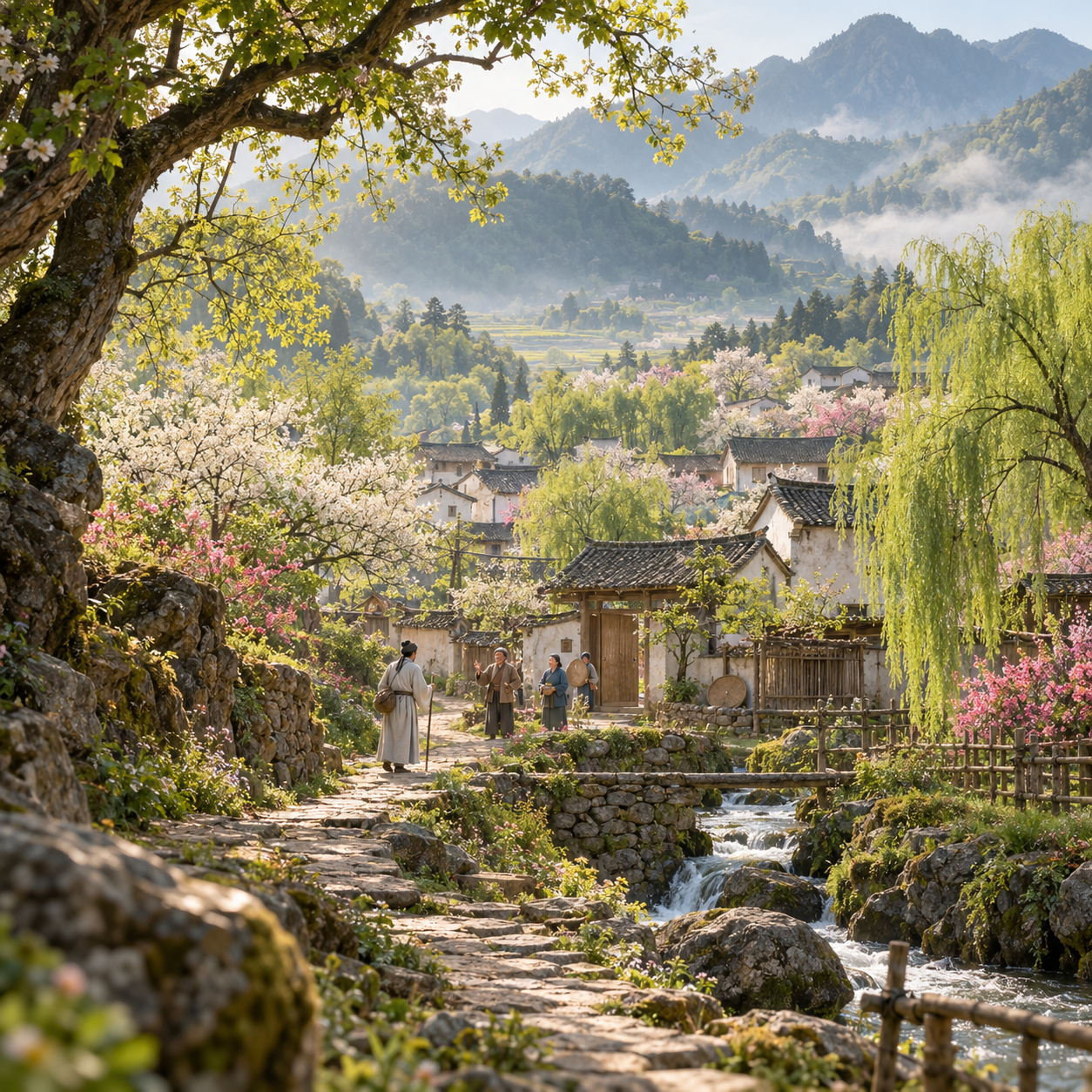
Do not laugh at the farmhouse wine brewed in winter for being a little cloudy; in a bountiful year, the hosts have ample chicken and pork to keep their guests. Mountains and waterways wind through turn after turn, and just as I begin to think no road lies ahead, another village appears amid shaded willows and bright flowers.
The Spring Soil Festival is near; villagers come and go to flute and drum, their simple dress still preserving ancient ways. If I may stroll here at leisure by moonlight in the future, I would gladly come with my staff at any time to knock at your brushwood gate at night.
山西村: usually understood as a village in the Shanyin area, not present-day Shanxi Province. 腊酒: wine brewed in the twelfth lunar month. 浑: cloudy, suggesting the simplicity of farmhouse wine. 足鸡豚: to prepare plenty of chicken and pork for guests.
春社: an ancient spring festival honoring the god of the soil. 箫鼓: village activities involving flute playing and drumming. 若许: if permitted. 无时: at no fixed time. 叩: to knock.
Reading guide: This seven-character regulated poem records sights and feelings from a visit to the countryside. The farmers’ warm hospitality, the turns of the landscape, and local festival customs come together to convey the poet’s closeness to the villagers, extending the pleasure of the outing into a wish to return.
The opening couplet begins with food and wine. “莫笑” (“do not laugh”) sounds warmly familiar, while “足” (“plentiful”) reveals the host’s sincere hospitality. These details make the countryside a real place warmed by human feeling, rather than an abstract retreat from the world.
The second couplet first makes the road seem about to end, then reveals a village, opening both the view and the traveler’s mood. It later became a common expression for a turn of fortune amid difficulty, but in the poem it is first a vivid experience of walking. The last four lines return to village customs and a future visit by moonlight, grounding the excursion in human relationships.
Let words find a melody
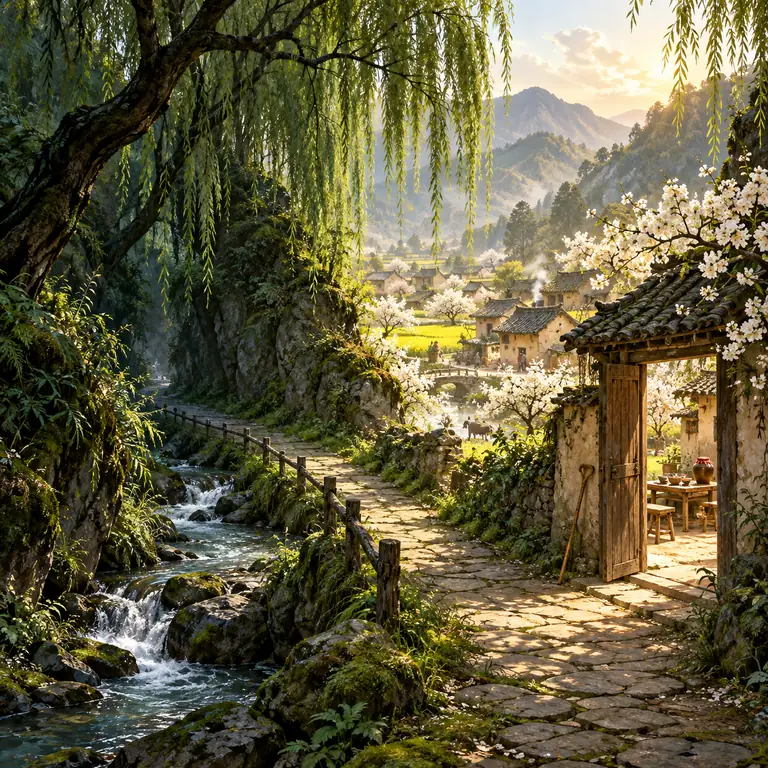
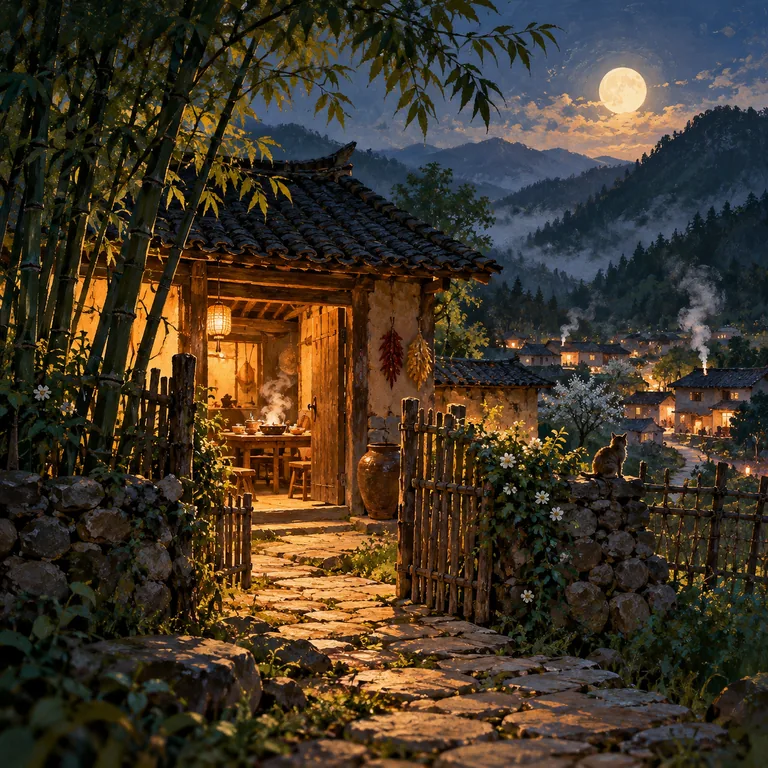
From a poem into a story
On his third day in the village, Cheng Pu searches everywhere for the broken pot, growing more afraid with every passing moment that its owner has hired another craftsman. Two days earlier, he lost his way and arrived in Shiwan Village, where a bowl of chicken from Sister-in-law Mo persuaded him to sit down and left him eager to repay her kindness with his craft. The spring land-god festival is almost here, but new cracks keep appearing beside the patch; he has staked even his father’s reputation on the job, yet the hardest thing to say is precisely what he realized long ago.
Start readingAI-assisted writing · Fictional characters and events
