
Buddhist Dancers · Fallen Flowers Trail Away as the Layered Shade Thins
Song dynasty・Shen Wei

Song dynasty・Shen Wei
Flowers fall in drifting trails, the layered shade still sparse; tiny green plums vie upon the branches. Red petals rain through mist, while the traveler is across the river.
All the lovely flowers have passed; only fragrant grass fills the ground. At sunset I wake from wine and ask: has this whole spring known such cold?
The animation remains in its original Chinese.
The animation is ready.
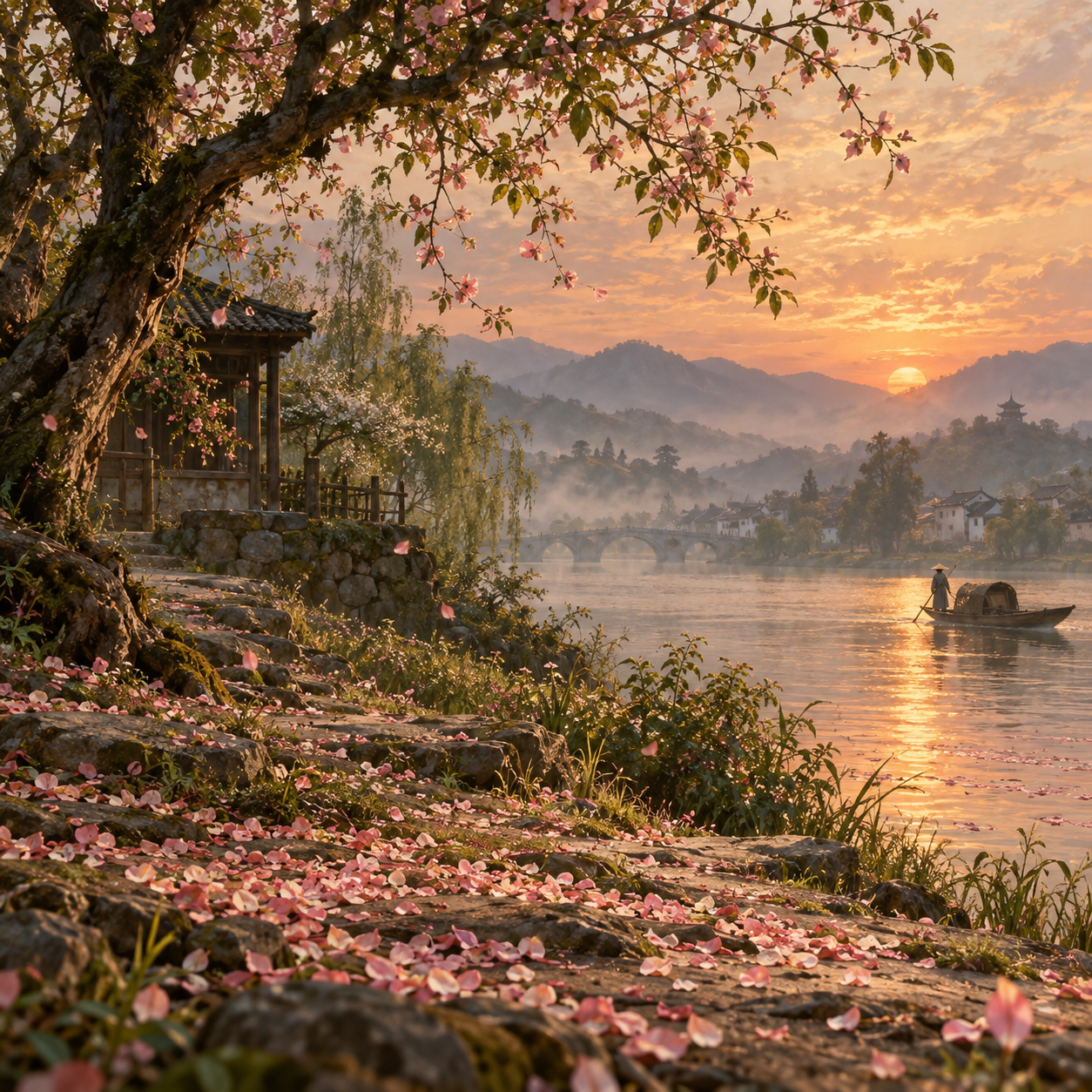
Fallen blossoms scatter all along the way, the layered tree shade is still thin, and tiny green plums compete to show their tender fruit on the branches. The remaining red blossoms are veiled in misty rain; the traveler is already across the river. The fine flowers have all passed their prime, leaving only fragrant grass upon the ground. At sunset, between drunkenness and sobriety, I feel this desolation and find that all spring has never been as cold as this moment.
迤逦 (yǐ lǐ): extending continuously along a winding course. 层阴: overlapping layers of tree shade. 弄: to reveal or display. 雨和烟: rain mingling with mist.
This page reads “落日醉醒问”; most popular anthologies read “落日醉醒间,” between drunkenness and sobriety at sunset. The translation follows the sense of being between drunkenness and sobriety; the page's original wording is retained and the textual difference noted.
“一春无此寒” (“Never this spring has it been so cold”) can refer to late-spring weather while also turning the desolation of parting into a bodily sensation.
Introduction: Shen Wei moves from the season of fallen blossoms and green plums to someone far away across the river. The seasons keep advancing, but the waiting brings no result. The chill at the end thus comes both from wind and rain and from the emptiness left after splendor has passed.
The green plums “竞弄” (vie in displaying themselves), an image already full of fresh vitality, yet the next phrase says “好花都过了” (the finest flowers are all past), showing that the speaker cares more about the blossoms already lost. The scenery carries no single emotion; human attention colors it with sorrow.
The word “空” (empty) turns the grass-covered ground into a space missing what is longed for. The ending closes on an unusually intense sensation of cold. It does not mention parting again, yet leaves the reader feeling the distance from the person across the river.
Let words find a melody

From a poem into a story
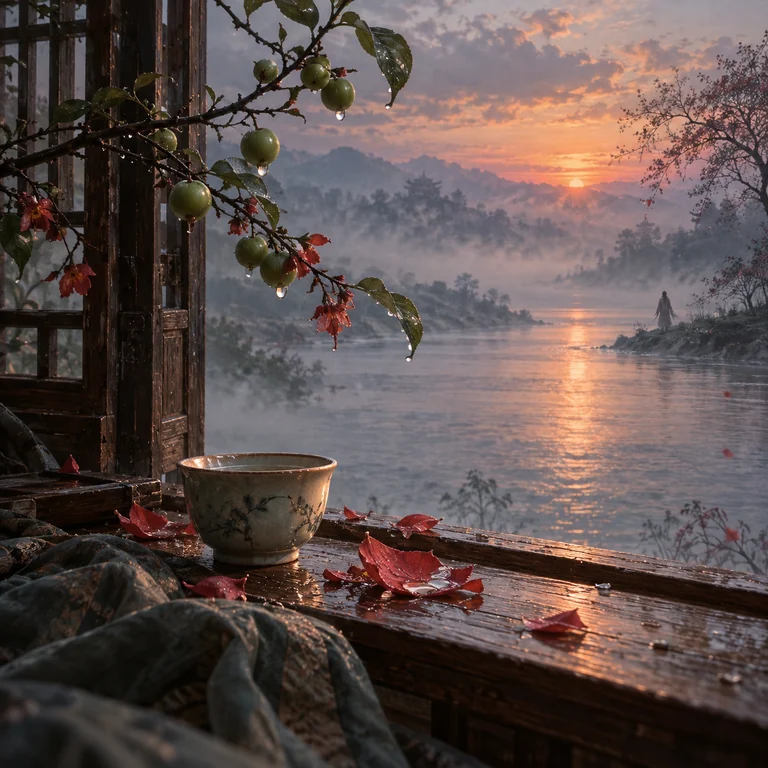
As the last peach blossom falls into the water, Lin Xiaoman unwraps the bundle she has kept packed through three years of waiting for someone, leaving behind three hundred copper coins and a river-route map pieced together on the backs of old account papers. Just then, Lu Yan comes ashore with news that his mother is willing to meet her. She ought to be happy, but hears plans for her to learn needlework and change her accent; suddenly she wants to travel for herself along the waterway on the wall that he once laughed at as incorrectly drawn.
Start readingAI-assisted writing · Fictional characters and events
