
Pu Sa Man · In the New Chill, Hungover, with Rain Tapping the Window
Qing dynasty・Nalan Xingde

Qing dynasty・Nalan Xingde
In the first cold, heavy with wine, I hear rain tapping the window, fading incense curls thinly, stirring autumn feelings. I have barely said, do not grieve, when a wet streak marks my blue robe.
Listless, I lie alone; in a snap of the fingers, lovely time slips past. I remember when we parted: peach blossoms, willows trailing countless threads.
The animation remains in its original Chinese.
The animation is ready.
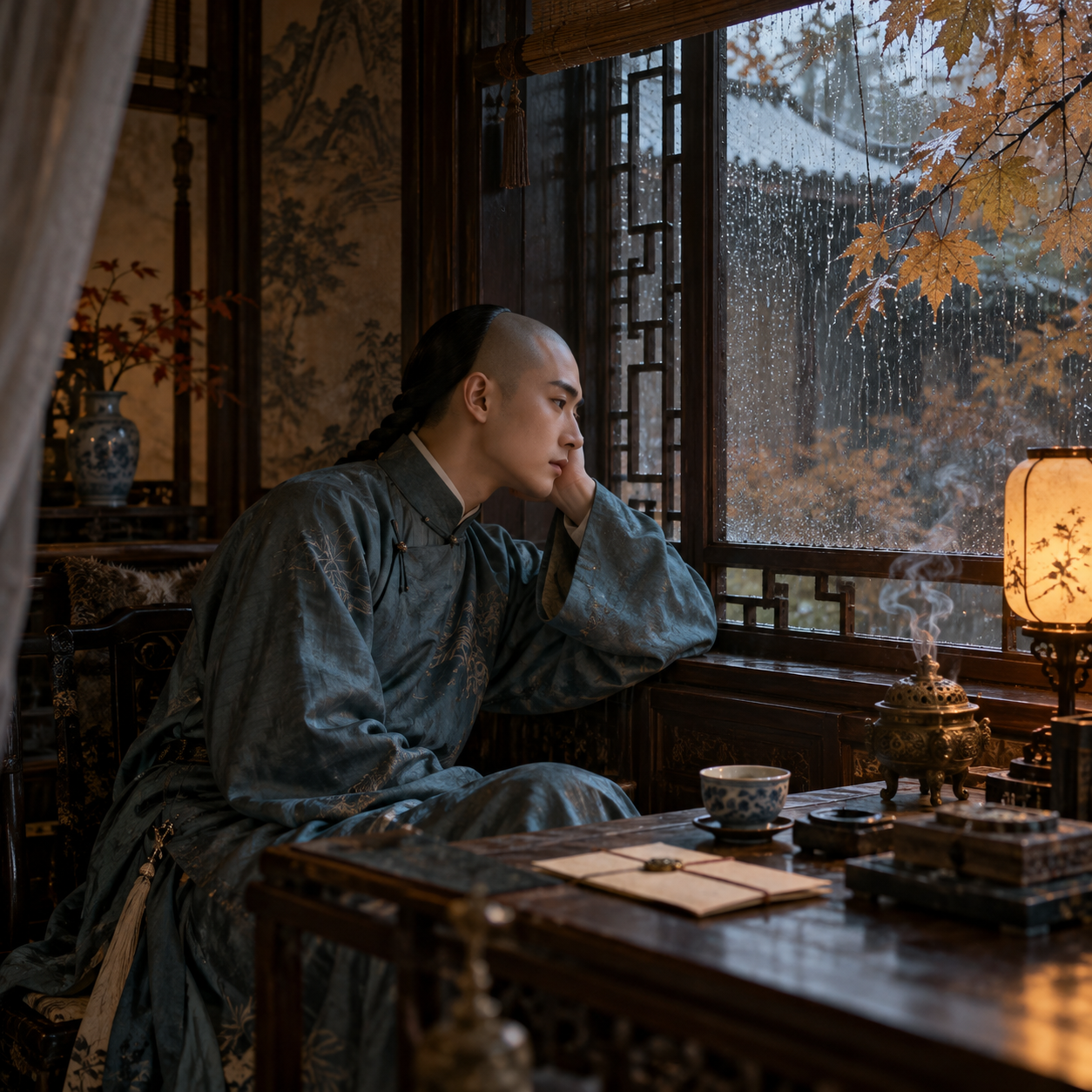
In the first chill, still not sober, I hear raindrops tapping the window. The last incense smoke curls in thin threads, filled with autumn feeling. I have only just told myself not to grieve too much, yet a trail of tears has already soaked my blue robe.
Listless and bored, I can only lie alone; in a blink, the year has slipped away. I still remember our parting, when peach blossoms were in bloom and willows hung with countless strands of spring.
中(zhòng)酒: drinking excessively; becoming drunk. 袅: thin smoke curling upward. 伤神: feeling sorrow. 青衫: clothing; it also readily recalls the poetic image of robes wet with tears.
弹指: an extremely brief time, a snap of the fingers. 韶光: beautiful days. 伊: the person one longs for. 桃花柳万丝: peach blossoms and countless willow strands, encapsulating the spring scene at parting.
Reading guide: Set in solitude after waking from wine amid autumn rain, this lyric looks back on a springtime parting. Rather than recount a complete story, it uses bodily chill, tear stains on clothing, and the difference between seasons to convey how long the longing has endured.
“才道,” barely having spoken, leads straight into “湿一痕,” a wet streak: before the words of self-consolation are finished, tears have already answered. This small gesture moves us more than a general declaration of grief.
The ending suddenly turns to a bright spring scene of peach blossoms and willows, reflecting back against the opening’s cold rain and lingering fragrance. Spring has not dispelled autumn sorrow, because it exists only in memory. The more vivid the past, the more keenly it reveals the emptiness of lying alone now.
Let words find a melody
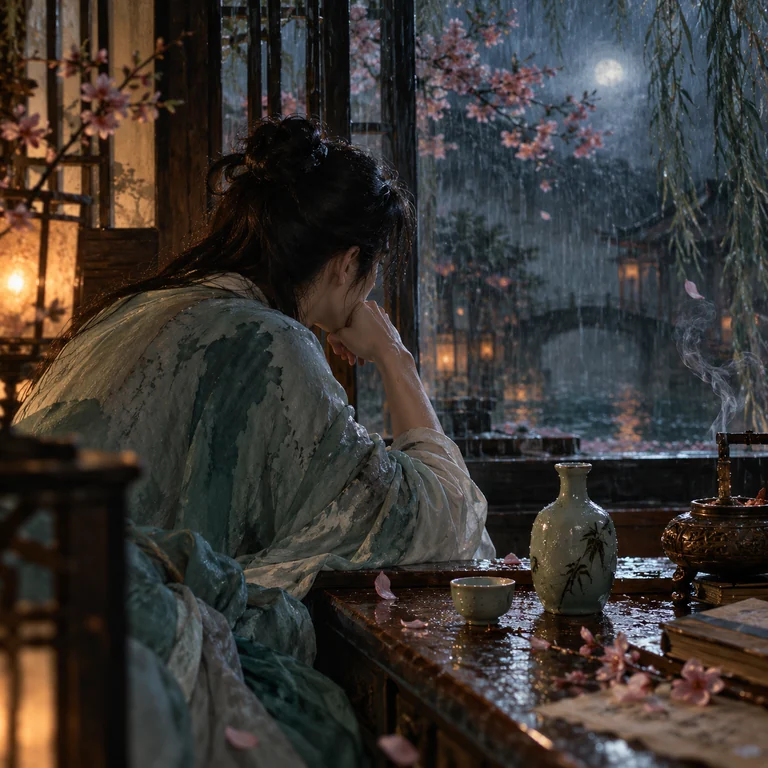

From a poem into a story
Autumn rain taps at the window, sounding the very signal her late husband used when returning home at night. Following the sound, painting restorer Luo Qing catches a boy with a missing finger. He asks no mercy, only that she prevent anyone from taking the “寒汀图” (Painting of a Cold Riverbank) from the wall. Someone has offered three hundred taels for it, and she once ground ink beside her husband as he worked. The boy points to the birds in the painting and tells her of another master, still painting coffins by the river.
Start readingAI-assisted writing · Fictional characters and events
