
Spring Dawn
Tang dynasty・Meng Haoran

Tang dynasty・Meng Haoran
Sleeping in spring, I do not notice dawn,everywhere I hear birds calling。
Last night came the sound of wind and rain,who knows how many flowers have fallen。
The animation remains in its original Chinese.
The animation is ready.
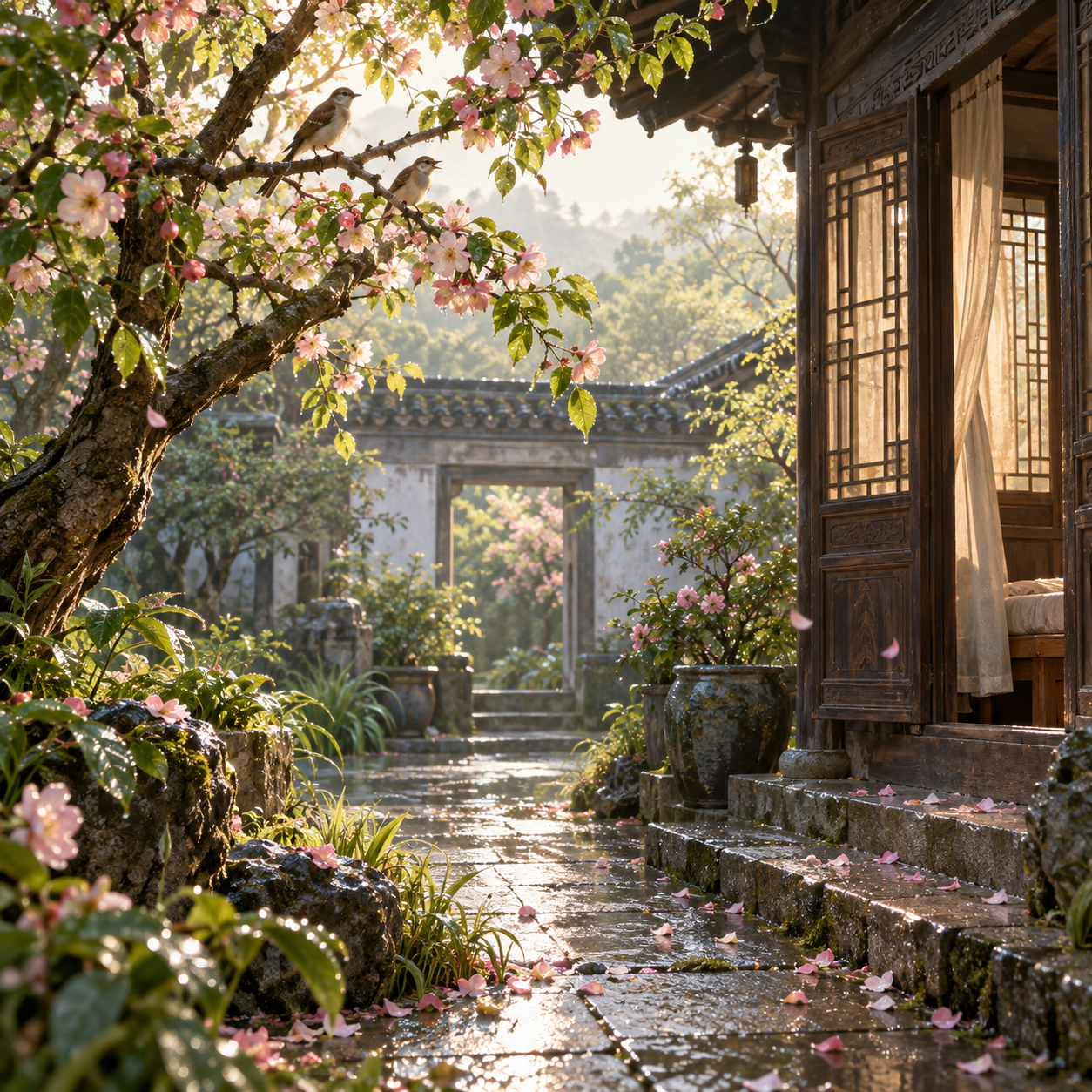
Sleeping peacefully in spring, I do not notice that dawn has come; birds are calling all around. Remembering the wind and rain I heard last night, I wonder how many flowers have been blown down.
晓: daybreak, early morning. 不觉: without noticing. 啼鸟: birds calling. 夜来: last night. 知多少: who knows how many; carries a questioning, regretful tone.
Hearing birdsong leads the poet to recall the previous night’s wind and rain. The fallen flowers in the last line are imagined; the poem does not say that he has already gone into the courtyard to count the petals.
Introduction: Meng Haoran uses the sounds heard on waking on a spring morning to express love for spring and regret at its passing. Moving from morning birdsong to the previous night’s rain and fallen blossoms, the four lines encompass the present, recollection, and conjecture. There is no need to force a precise date of composition.
The poem begins with “不觉晓,” unaware of dawn, the moment of waking, rather than a garden full of spring color. Birdsong awakens life from sleep, so spring first arrives as sound.
The reversal of time in the final two lines feels natural: hearing the birds now recalls the wind and rain during the night; thinking of the storm brings concern for the flowers. Regret at spring's passing never becomes a weighty pronouncement, remaining concealed in a gently asked question.
Let words find a melody
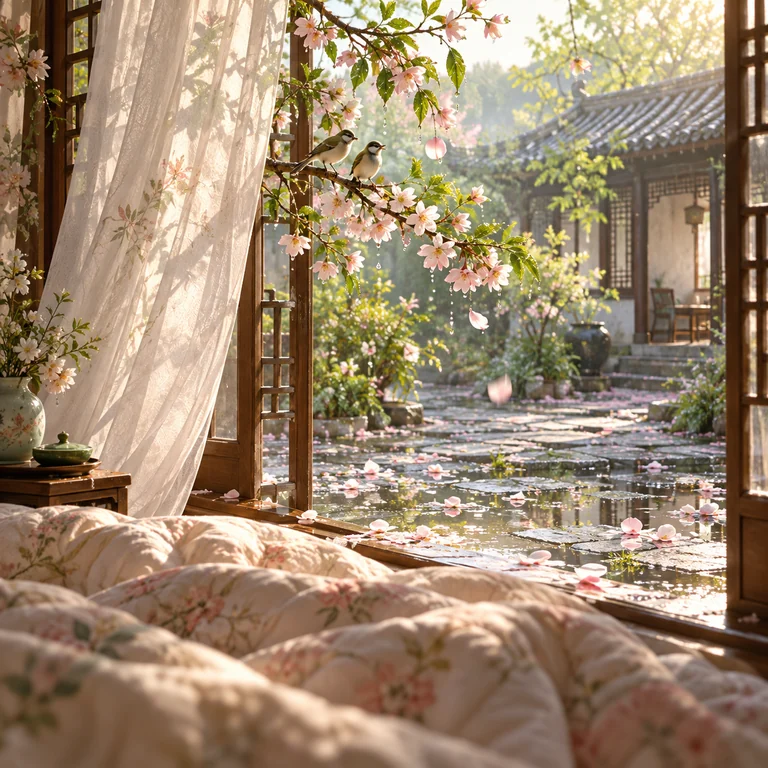
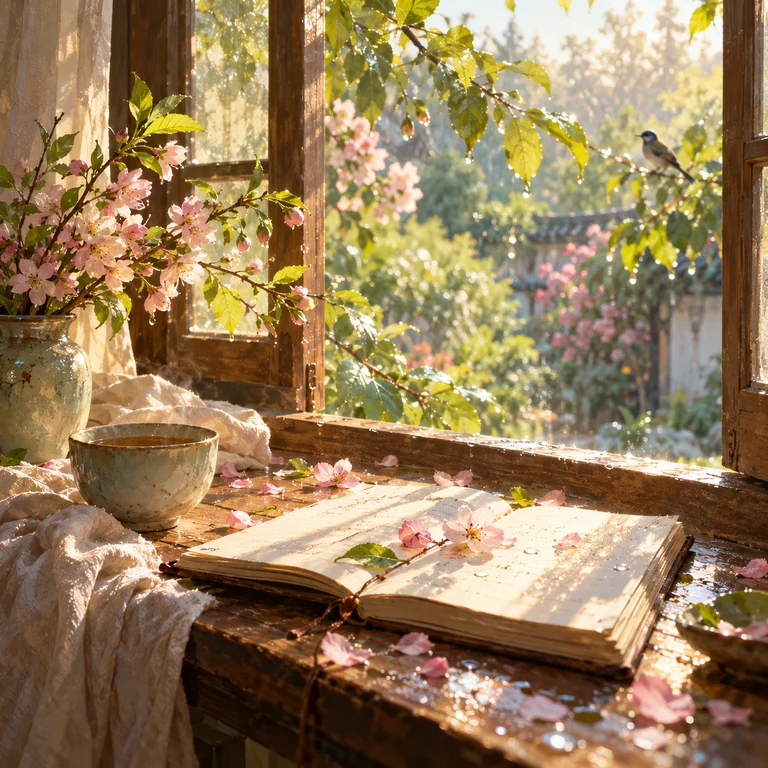
From a poem into a story
After a night of wind and rain, most of the rose petals have fallen, and the flower money Zhu Tao needs to repay her debts looks set to vanish too. The merchant will buy the remaining fragrant petals for only twenty percent of the price and urges her to sign over the next three years’ flowers as well. She guards the sweet-pastry recipe her grandmother passed down to only one daughter in each generation, when the voice of her old rival Jiang Rong comes over the wall: with wedding pastries still in demand, how could no one want flowers? The Jiang family’s old steamer still lies in the ditch.
Start readingAI-assisted writing · Fictional characters and events
