
To the Tune “Niannujiao” · Spring Feelings
Song dynasty・Li Qingzhao

Song dynasty・Li Qingzhao
A desolate courtyard, slanting wind and fine rain again, the successive gates must be closed. Cherished willows and delicate flowers, Cold Food Festival draws near, all manner of vexing weather. A poem in difficult rhymes is finished, I wake from head-heavy wine, a different flavor of idle solitude. The migrating geese have all passed, my countless thoughts have no messenger.
Upstairs, days of spring cold, curtains hanging on all four sides, too listless to lean against the jade railing. Quilt cold, incense faded, newly awake from dreams, the sorrowing one cannot stay abed. Clear dew flows at dawn, new parasol trees begin to bud, how much longing to roam in spring. When the sun is high and the haze has cleared, I shall look again to see whether today is fair.
The animation remains in its original Chinese.
The animation is ready.
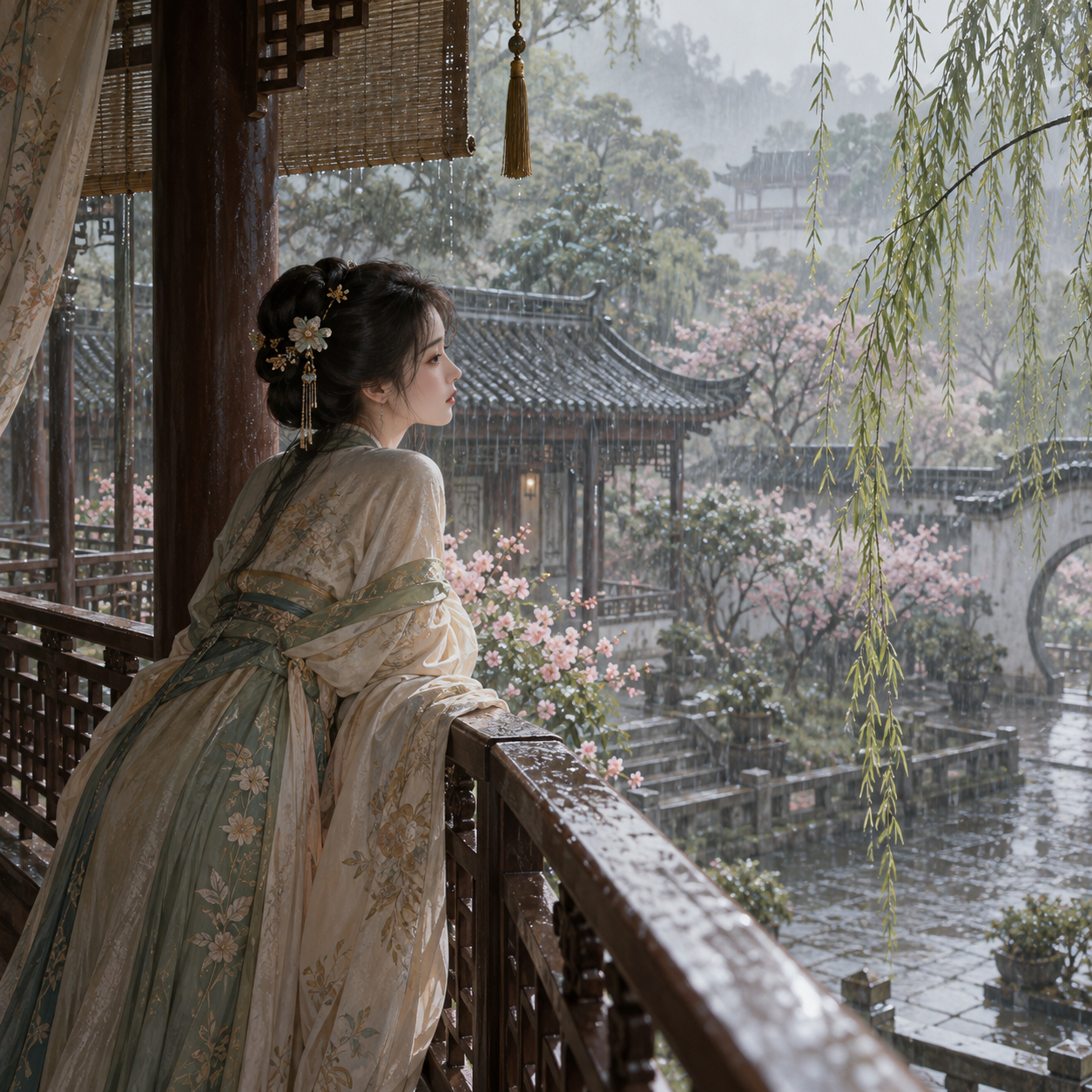
The courtyard is desolate, and slanting wind and fine rain have come again, leaving me only to close door after door. The Cold Food Festival approaches; willows are tender and flowers lovely, yet the weather brings one vexation after another. A poem in difficult rhymes is finished, and the intoxication of strong wine has faded; idle seclusion has a flavor beyond words. The geese flying far away have all passed, yet my countless concerns still cannot be sent.
Upstairs, spring has been cold for days; curtains hang on every side, and I am too listless to lean against the jade railing. The quilt grows cold and incense smoke disperses; newly awake from a dream, the sorrowing one cannot remain in bed. Morning dew flows and the new parasol trees begin to bud, stirring so many thoughts of going out to enjoy spring. When the sun rises high and the haze clears, I shall look again to see whether today has finally turned fair.
宠柳娇花: lovely willows and flowers like people cherished and tenderly raised. 险韵: obscure rhymes that are difficult to match. 扶头酒: strong wine that readily makes one drunk enough to need support for one’s head.
征鸿: wild geese flying far away, often associated with carrying letters. 慵(yōng): disinclined or too listless to do something. 新梦觉: just awakened from a dream; 觉 is pronounced jué.
新桐初引: new shoots on the parasol tree are beginning to lengthen. 烟敛: mist disperses. 晴未: whether the sky has cleared.
Reading guide: Li Qingzhao writes of springtime melancholy around the Cold Food Festival. The figure closes the door against the rain and feels too listless to lean on the railing, yet the morning's new shoots awaken a wish to go out and enjoy spring. These shifts allow “春情” (spring feelings) to encompass desolation, remembrance, and anticipation of life.
Writing poetry and drinking should offer relief, yet the lyric leaves lingering sorrow after the poem is finished and the wine has worn off. With all the geese gone, the possibility of sending affection seems to disappear as well, and the first stanza's mood gradually deepens into sadness.
The lower stanza does not remain confined to a cold quilt and fading fragrance. Fresh paulownia growth and clear dew rekindle the wish to venture out in spring. The final “晴未” (“has it cleared?”) places hope in a question about weather still uncertain, delicately preserving the impulse to reach outward even amid sorrow.
Let words find a melody

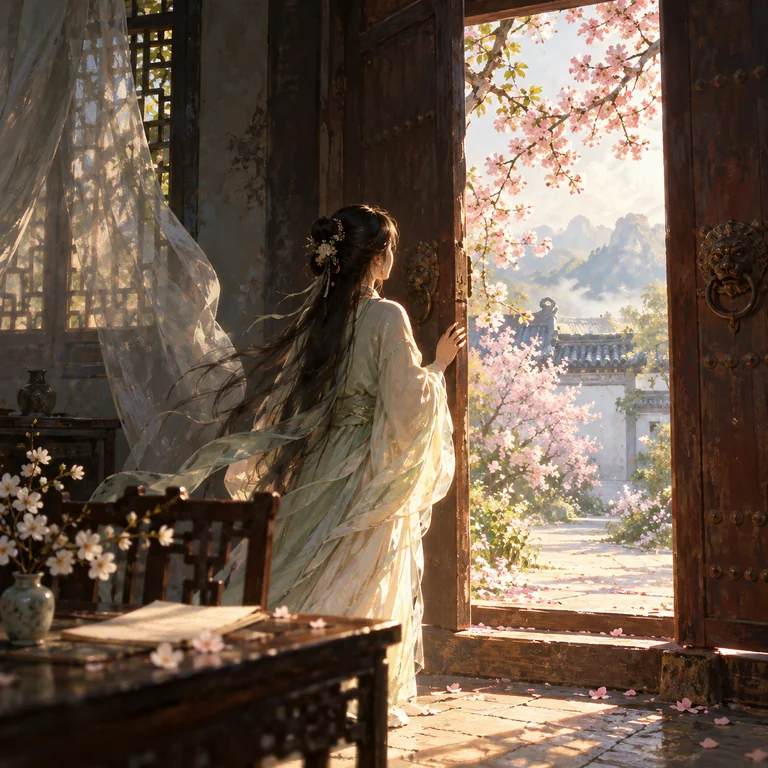
From a poem into a story
Cheng Qi has kept the curtains on all four sides lowered for an entire spring, telling every visitor that she is gravely ill. She has yet to put behind her the poem mocked at last year’s gathering when a new work bearing her name begins circulating outside—a satire aimed at her old friend Liang Su. Business at the bookshop grows quieter by the day. Cheng Qi lays out paper to clear things up, but after writing “断非我作” (This is certainly not my work), her brush suddenly stops.
Start readingAI-assisted writing · Fictional characters and events
