
Butterflies in Love with Flowers · Warm Rain and Fair Breezes First Thaw the Ice
Song dynasty・Li Qingzhao

Song dynasty・Li Qingzhao
Warm rain and gentle fair-weather winds first break the frost; willow eyes and plum-blossom cheeks already feel spring stirring in their hearts. With whom can I share wine's delight and poetry's feeling? Tears dissolve the remaining powder; the floral ornament weighs heavy.
I have just tried on a lined robe sewn with golden thread, leaning sideways on a mountain-shaped pillow, crushing the phoenix on my hairpin. Alone with deep sorrow, I find no pleasant dreams, late into the night I still trim and toy with the lamp's wick-flower.
The animation remains in its original Chinese.
The animation is ready.
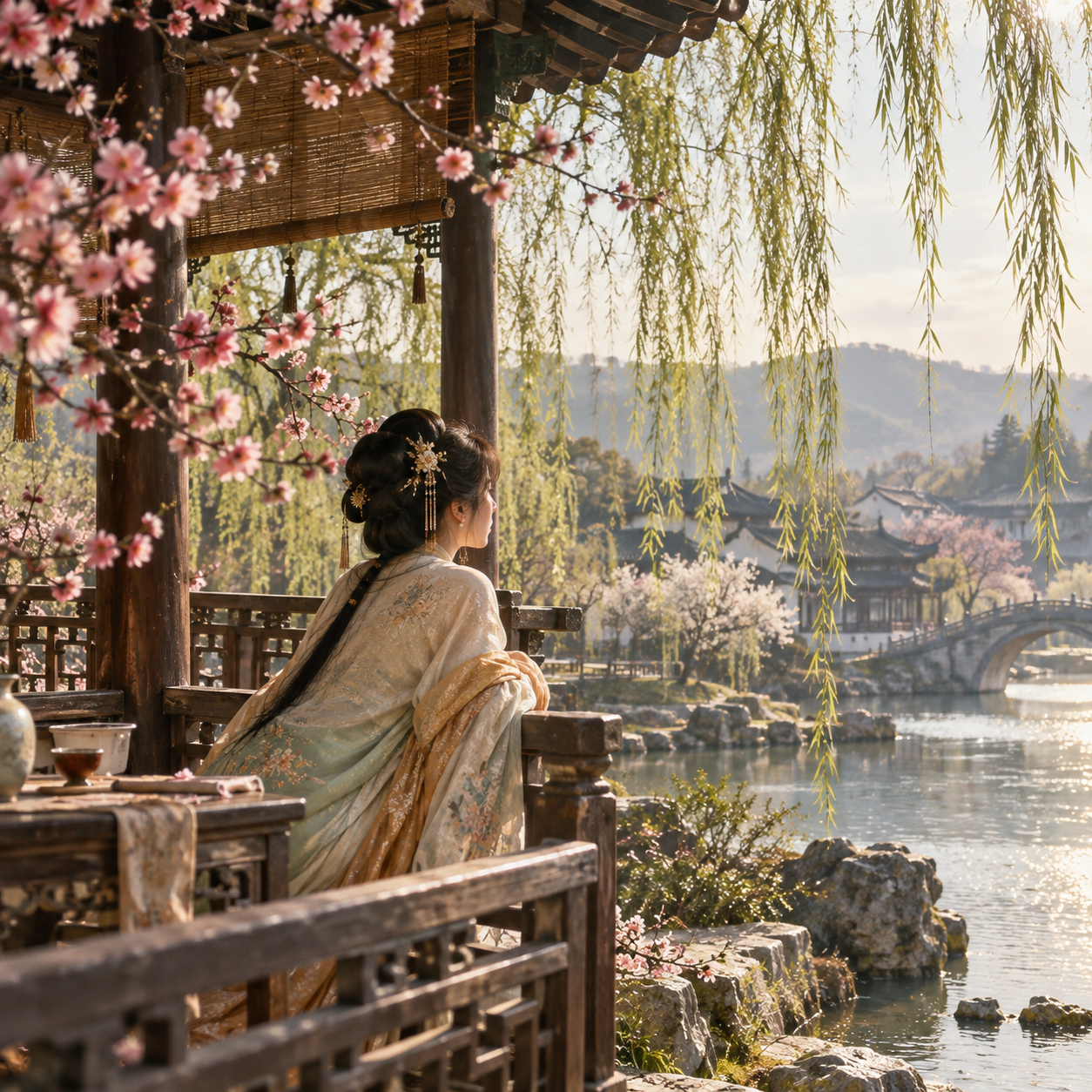
Warm rain and gentle, sunny winds have just thawed the ice; willow buds like eyes and plum blossoms like cheeks already make spring's stirring felt. I wish to drink and write poetry, but who will keep me company? Tears dissolve my remaining powder and rouge, and even the floral ornament on my forehead seems to grow heavy.
I have just tried on a lined jacket stitched with gold thread, then leaned against the mountain-shaped pillow until even the phoenix ornament on my hairpin was pressed askew. Alone with deep sorrow, I cannot find a pleasant dream; late into the night I still refuse to sleep, only trimming and fussing with the lampwick again and again.
柳眼: Newly emerging willow buds. 梅腮: Plum blossoms likened to a woman's cheeks. 春心: Tender feelings awakened by spring scenery. 花钿 (diàn): An ornament applied to the face or forehead.
乍: just, newly. 夹衫: a double-layered garment without cotton padding. 山枕: a mountain-shaped pillow, or one decorated with mountain patterns. 欹(qī): tilted.
灯花: The flowerlike formation on a burning lamp wick. 剪灯花: Trimming the wick, often used in poetry to evoke a long, sleepless night.
Reading guide: Li Qingzhao portrays loneliness through the daily routine of a woman in her chamber in early spring. The spring breeze, clothes, and adornments all signal warmer weather, yet her spirits do not grow lighter with it. The key lies in the question “谁与共” (“With whom can I share it?”).
“柳眼梅腮” (“willow eyes and plum-blossom cheeks”) makes spring resemble a living face, but the tears and fading powder that follow immediately turn pleasure into sadness. The scenery can inspire poetry and wine, yet cannot provide a companion.
The second stanza conveys long hours of listlessness through small actions: trying on clothes, leaning against a pillow, and trimming the lamp. The ending no longer explains the sorrow, but simply shows someone still tending the charred wick late at night, giving loneliness a tangible, slow rhythm.
Let words find a melody
From a poem into a story
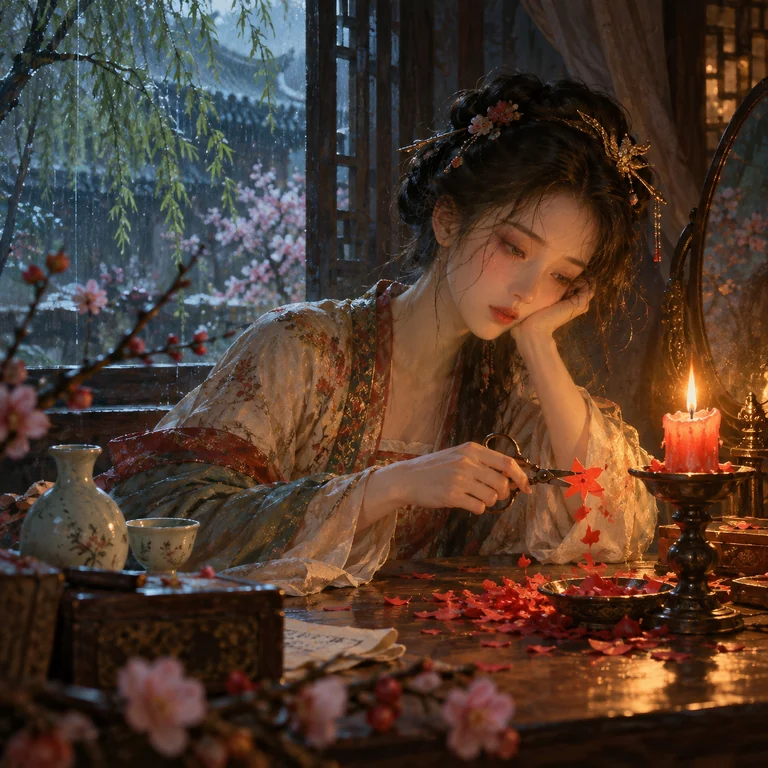
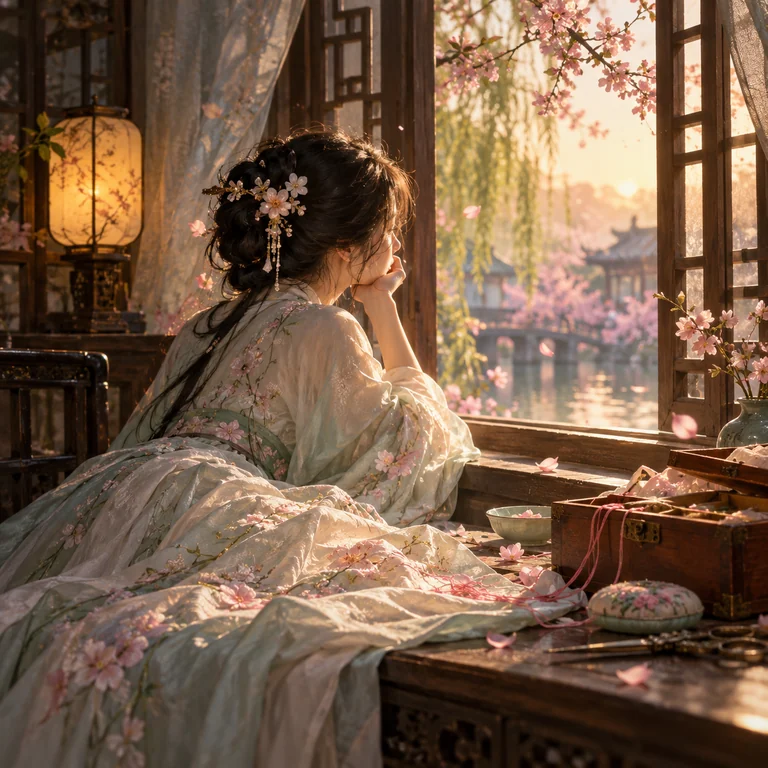
Xue Cai accepts the commission to make a wedding outfit for an old love, not out of wounded pride, but because the fee will cover the debt owed by Xue Cai’s mother. Yet the bride, Wen Xing, comes every night to try the same cuff. The calluses between her thumb and forefinger and the horse reins inside her clothes do not match the delicate measurements sent by the Liang family. As the wedding approaches, Wen Xing suddenly asks where the tailoring shop’s rear window leads; Xue Cai grips the scissors, not daring to answer at once.
Start readingAI-assisted writing · Fictional characters and events
