
Busuanzi · In Praise of Plum Blossoms
Song dynasty・Lu You

Song dynasty・Lu You
Outside the post station, beside a broken bridge,it blooms in solitude, with no one to tend it。Already alone and sorrowful at dusk,it suffers wind and rain as well。
I have no wish to strive for spring; let all the flowers envy me. Fallen into mud and ground to dust, my fragrance alone remains unchanged.
The animation remains in its original Chinese.
The animation is ready.
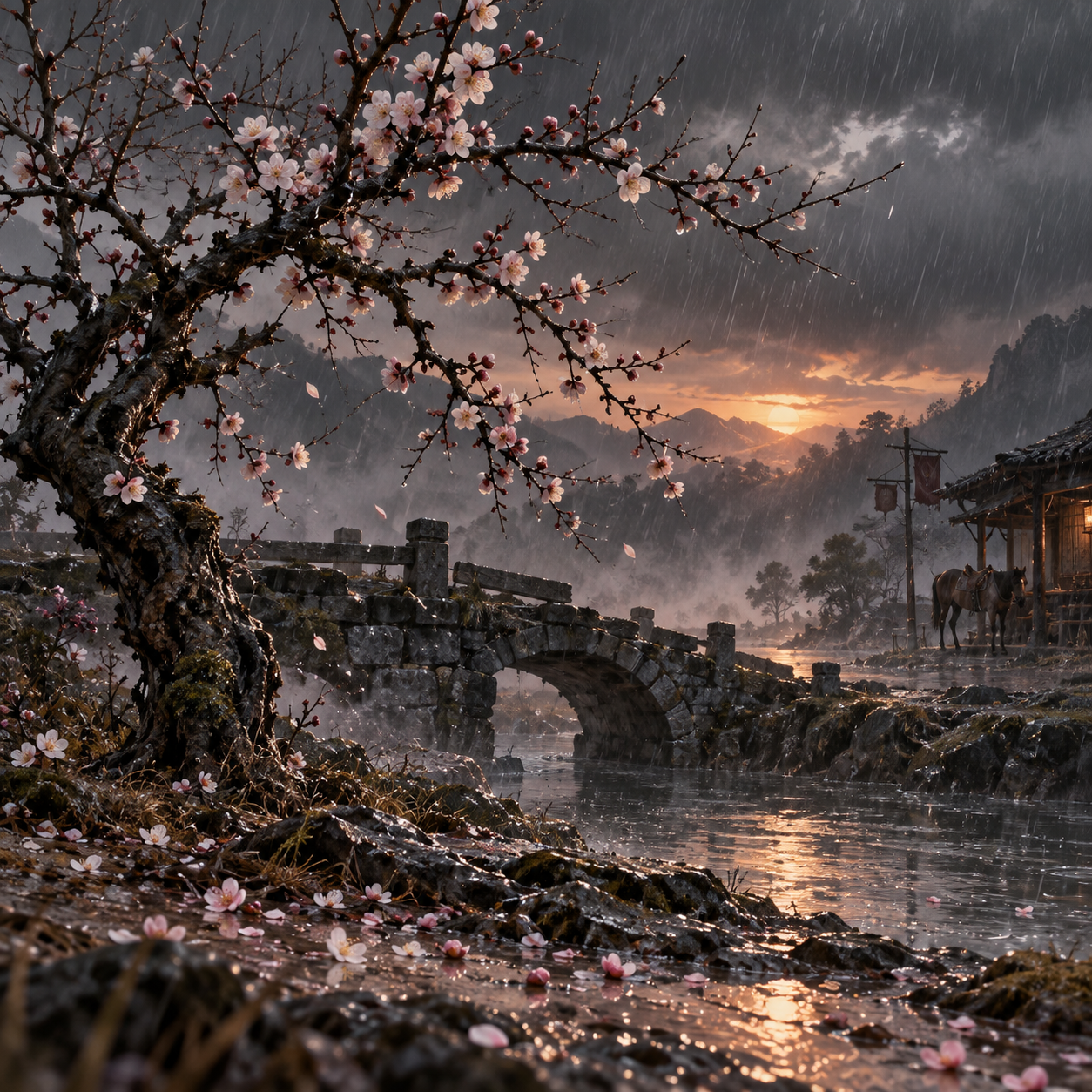
Beside a broken bridge outside the post station, plum blossoms bloom in loneliness, with no one to tend them. It is already dusk; alone they bear their sorrow, then suffer wind and rain as well. They have no desire to struggle for spring’s glory, letting all the other flowers envy them. Even if they fall into mud and are crushed to dust, their fragrance remains unchanged.
驿: a relay station in ancient times for transmitting official documents and receiving travelers. 无主: unattended and uncared for. 更著: further added to. 苦: strenuously or insistently.
一任: to leave entirely to others or to circumstances. 群芳: the many flowers; it may also convey feelings about relationships with one’s contemporaries. 碾: to crush. 如故: as before.
Reading guide: Lu You uses the plum blossom’s circumstances to portray an integrity that refuses to change. The first stanza describes loneliness and damage inflicted from outside; the second describes the plum’s wishes and fragrance, contrasting what it suffers with what it chooses. No particular political event need be assigned without firm evidence.
The broken bridge, dusk, wind, and rain deepen the plum blossom’s loneliness layer by layer, yet its worth is not determined by its surroundings. The second stanza turns to “无意” (“having no desire”) and “一任” (“letting others do as they will”), as active choice begins to replace passive suffering.
The ending traces destruction step by step, from fallen blossoms to mud and then to dust, while “香如故” (“the fragrance remains as before”) never changes. This tangible fragrance carries the implication of moral character, conveying firmness while retaining the concrete imagery of a poem about an object.
Let words find a melody
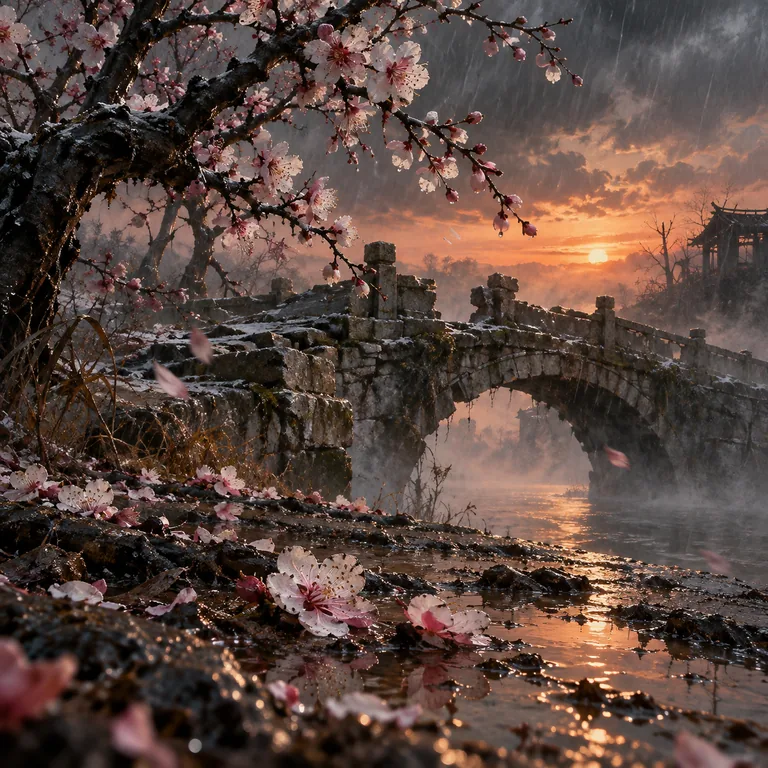

From a poem into a story
After being expelled from her mountain school, Xie Wei sets up a shelter beside a broken bridge to practice medicine, guarding a document that can clear her name. On a rainy night, she lights her old incense for a guest with an arrow wound, only to draw the sound of horse bells that have sought her for two years. The wounded man is the very person who signed her expulsion order. Her sachet still rests against her waist. As the water outside the bridge arch slowly rises, she remembers the ship for the Eastern Sea that she should have boarded long ago.
Start readingAI-assisted writing · Fictional characters and events
