
Ascending a Height
Tang dynasty・Du Fu

Tang dynasty・Du Fu
The wind is fierce, the sky high, the apes’ cries mournful; above clear islets and white sand, birds wheel in flight.
Boundless falling leaves rustle down; the endless Yangtze rolls and surges onward.
Ten thousand miles from home, grieving autumn, ever a guest; a lifetime beset by illness, I climb the terrace alone.
Hardship and bitter sorrow have thickened the frost upon my temples; worn down, I have lately set aside my cup of cloudy wine.
The animation remains in its original Chinese.
The animation is ready.
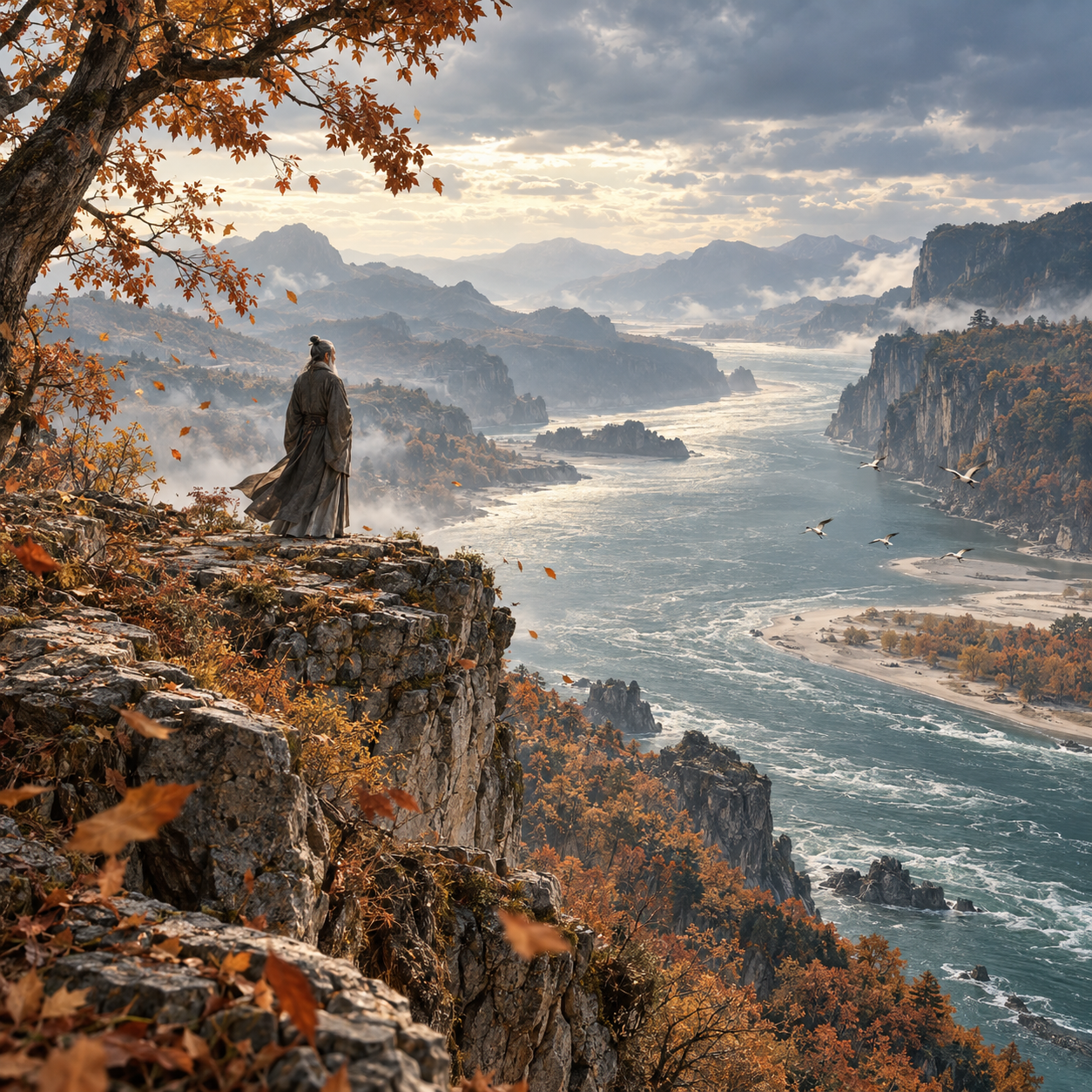
The wind blows hard beneath a vast, high sky, and the apes’ cries carry sorrow; the river islets are clear, the sandy banks white, and birds circle overhead. Boundless leaves fall with a rustling sound, while the endless Yangtze comes rolling on. Far from home, I wander year after year, feeling still more desolate in autumn; plagued by illness all my life, I now climb the terrace alone. Hardship has made my temples ever more frost-white, and amid my troubles I have lately given up cloudy wine because of my health.
渚(zhǔ): a small islet. 回: to circle. 落木: falling leaves. 萧萧: the sound of vegetation stirred by the wind or falling. 万里: far from home.
百年: A person's lifetime, here also suggesting old age. 苦恨: Deep regret. 繁霜鬓: Hair at the temples growing increasingly gray. 潦倒: Declining and dispirited. 新停: Recently stopped.
This poem is generally dated to Du Fu’s later years in Kuizhou; it need not be assigned to one particular, unverified day of climbing a terrace.
Reading guide: While staying in Kuizhou late in life, Du Fu links what he sees from an autumn height with his long wanderings and illness-ridden body. The first half opens out into a vast landscape; the second turns to his personal circumstances. Read with attention both to the scenery's grandeur and to what the person must bear.
“无边,” “boundless,” and “不尽,” “endless,” carry the falling leaves and flowing river beyond the immediate view, opening them into time and space. Leaves fall while water comes onward: their directions differ, yet together they make passing time tangible, lending the autumn scene a sustained force.
“常作客” (“always a guest away from home”) and “独登台” (“climbing the terrace alone”) compound the suffering of a lifetime, beyond a passing sadness at autumn. At the end, even the possibility of easing sorrow slightly with wine is lost, so the vast landscape before it further underscores the figure’s loneliness, decline, and illness.
Let words find a melody

From a poem into a story
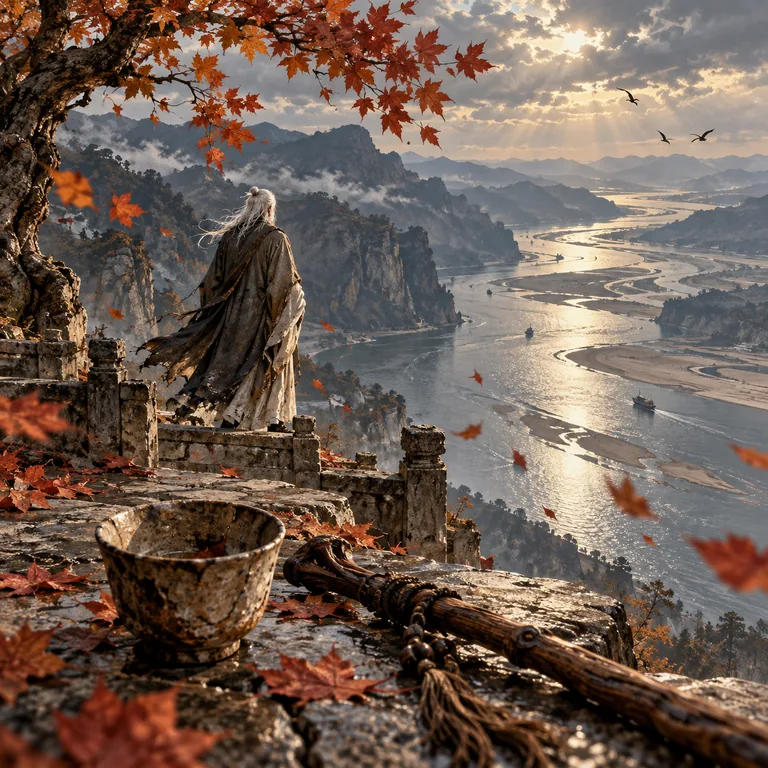
Xie Wu hides a flask of wine for the Double Ninth climb, but his son needs no search, reaching straight into his sleeve to take it out. After half a lifetime in the wine-making trade, he still hopes a lively feast will let father and son drink away their years of estrangement. Xie Qiao brings only plain water. The higher they climb, the fiercer the autumn wind grows, and every prosperous memory his father recounts has another version in his son’s recollection.
Start readingAI-assisted writing · Fictional characters and events
