

Two Songs of Changgan
Tang dynasty・Li Bai
Tang dynasty・Li Bai
妾发初覆额,折花门前剧。— When my hair first covered my forehead, I picked flowers and played outside our gate.
You came riding a bamboo horse, circling the well railing and playing with green plums.
We lived together in Changgan Lane, two children without suspicion or reserve,
十四为君妇,羞颜未尝开。— At fourteen I became your wife; my bashful face had never opened into a smile.
Head lowered, I faced the shadowed wall,a thousand calls could not make me turn once.
At fifteen I first relaxed my brows, wishing to share your dust and ashes.
Always keep the faith of the man who clung to the bridge pillar; why would I climb the terrace to watch for my husband?
十六君远行,瞿塘滟滪堆。— At sixteen, you traveled far away, to Yanyu Rock in Qutang Gorge.
In the fifth month, none dare approach the reef; gibbons cry mournfully high in the heavens.
The footprints where you lingered before the gate have each grown green with moss.
The moss grows too deep to sweep away; leaves fall early in the autumn wind.
In the eighth month butterflies come, flying in pairs over the western garden’s grass.
These thoughts wound my heart; I sit in sorrow as my youthful beauty fades.
When will I journey down to Sanba? I will send a letter home in advance.
I will come to meet you, counting no distance too far,all the way to Changfengsha.
I remember when I lived deep within my chambers, never knowing the dust of war.
Married to a man of Changgan, I wait on the sandbank, watching the wind.
In the fifth month, the south wind rises; thinking of you, I travel down to Baling.
When the west wind rises in the eighth month, I imagine you setting out from Yangzi.
How sorrowful these comings and goings, so little time together, so much apart.
How many days until you reach Xiangtan? My dreams cross the wind and waves.
Last night a fierce wind passed,snapping trees beside the river.
Vast waters stretch dark and boundless; where is the traveler?
Gladly ride the cloud-swift dappled horse; our cherished meeting is east of the orchid islet.
Mandarin ducks rest upon green sweet flag; kingfishers appear within the brocade screen.
I took delight in being just past fifteen,my complexion red as peach blossoms.
Why become a merchant’s wife, fearing the waters and then the wind?
The animation remains in its original Chinese.
The animation is ready.
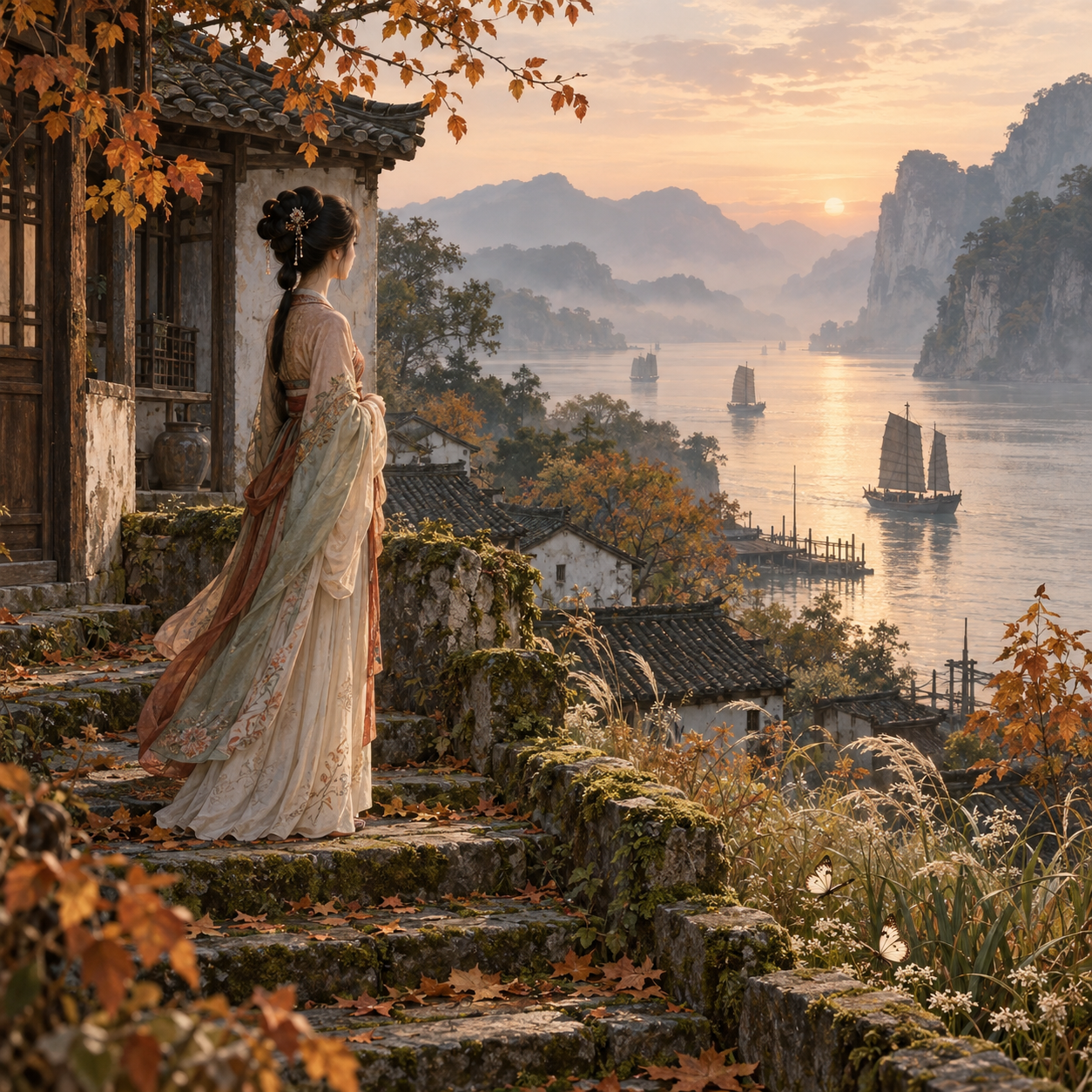
I: When my hair had only just grown over my forehead, I played at the doorway, picking flowers. You came riding a bamboo horse, circling the well railing and playing with green plums. We lived together in Changgan Lane, innocent and without suspicion as children. I married you at fourteen, still often shy; I lowered my head toward the dark wall and would not turn, however many times you called. Only at fifteen did my brows begin to relax, and I wished to remain with you until we turned to dust and ashes. I trusted you to be as faithful as the man who clung to a pillar to keep his promise; how could I have imagined climbing the Husband-Watching Terrace, waiting for your return?
At sixteen you traveled far away, passing the perilous Yanyu Reef in Qutang Gorge. In the fifth month, rising waters made the reef dangerous to approach, and the gibbons' cries on either bank seemed to come from high in the heavens. The footprints left when I saw you off at our door have each grown over with green moss; the moss is now too deep to sweep away, and the autumn wind has already begun blowing down the leaves. In the eighth month, butterflies fly in pairs among the grasses of the western garden. Seeing them saddens me, and in my sorrow I fear my beauty will fade. When you travel downstream from Sanba, please write home beforehand; I will come to meet you, never complaining of the distance, gladly going all the way to Changfengsha.
II: I remember when I lived deep within the women's chambers, knowing nothing of the dust and toil of the outside world. After marrying a merchant from Changgan, I often waited on sandy banks, watching the wind. When the south wind rose in the fifth month, I imagined you sailing with it toward Baling; when the west wind blew in the eighth month, I guessed you were setting out from Yangzi. Your comings and goings always bring sorrow: we meet so seldom and part so often. How many more days until you reach Xiangtan? My dreams have already crossed wind and waves in pursuit of you.
Last night a wild wind swept through, snapping trees beside the river. The river stretches boundlessly into darkness; where are you now on your distant journey? How I long for you to return on your fine horse, and meet me east of the orchid-covered islet. Mandarin ducks nestle together on the green sweet flag, and paired kingfishers are embroidered on the brocade screen. I am only just past fifteen, my face still like a peach blossom, yet I have become a merchant's wife, worried about the river, worried about wind and waves.
长干: an ancient settlement in Jinling, in the area of present-day Nanjing. 剧: to play. 床: usually interpreted here as a well railing, though other explanations exist. The expressions 青梅竹马 (green plums and bamboo horses, meaning childhood sweethearts) and 两小无猜 (the innocent affection of two children) are associated with the opening of the first poem.
抱柱信: the legendary faithfulness of Wei Sheng, who kept an appointment and clung to a bridge pillar as the water rose rather than leave; an allusion to steadfastness in a pledge of love. 望夫台: a traditional image of a woman climbing to a high place to look out for her husband.
瞿塘、滟滪: Qutang Gorge in the Three Gorges and the dangerous reef formerly at its entrance. 三巴: the regions of Ba Commandery, Badong, and Baxi. 早晚: when. 不道远: not considering the distance too great. 长风沙: a place along the Yangtze in present-day Anhui.
巴陵: the area around present-day Yueyang, Hunan. 扬子: a place on the lower Yangtze. 浮云骢(cōng): the name of a fine horse, used here to express hope for someone's return. 兰渚: a waterside islet where fragrant orchids grow. 翡翠: here, a kingfisher motif.
The authorship of the second poem is disputed: the Complete Tang Poems includes it under Li Bai's name while noting an alternative attribution to Zhang Chao; Huang Tingjian considered it a poem by Li Yi. This page retains the original attribution and explains the issue here, rather than treating the authorship of both poems as undisputed.
Reading guide: This page includes two yuefu poems expressing longing in the voice of a merchant’s wife. The first follows a clear timeline from childhood acquaintance to marriage and distant separation; the second concentrates on the wife’s worries over winds and river routes while her husband travels by boat. The poems should be read separately, and the authorship of the second remains disputed.
The first poem develops its emotions through age: childhood innocence, the shyness of early marriage, and vows made after growing close gradually give way to keeping vigil alone. Moss, fallen leaves, and paired butterflies make the passage of waiting visible; her wish at the end to travel far to meet her husband allows sorrow to retain an active, ardent love.
The second poem’s emotions follow the weather. Favorable winds prompt calculations of the journey; fierce winds immediately bring fears for safety. Everyday sights thus continually reach across space toward the person who is absent.
Both poems use the characters’ own voices, and the place names and details of merchants’ travels give longing a tangible reality. Their first-person speakers cannot simply be identified with the poet’s family experiences, nor should the two poems be joined into a continuous story of successive ages.
Let words find a melody
From a poem into a story
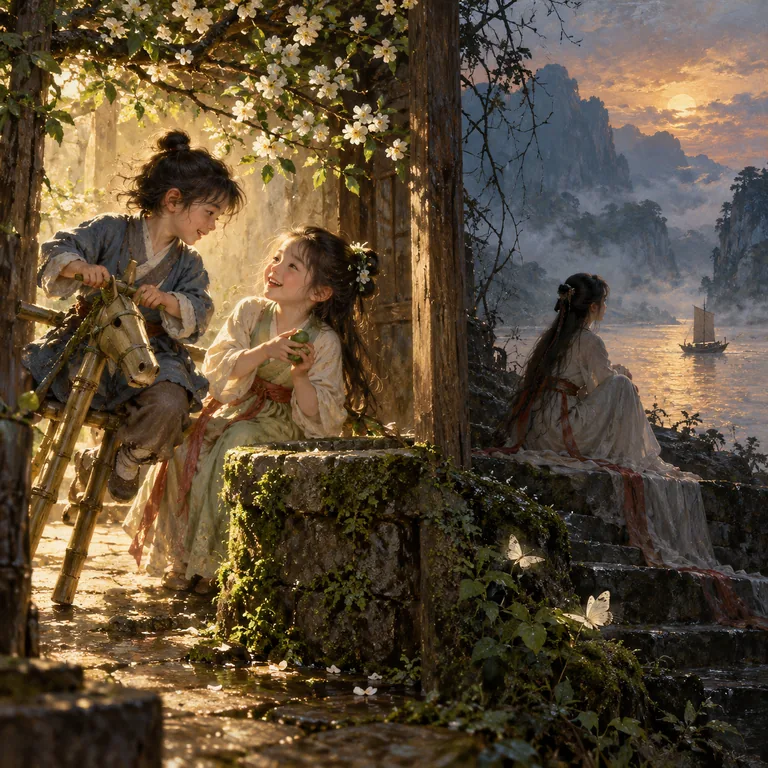
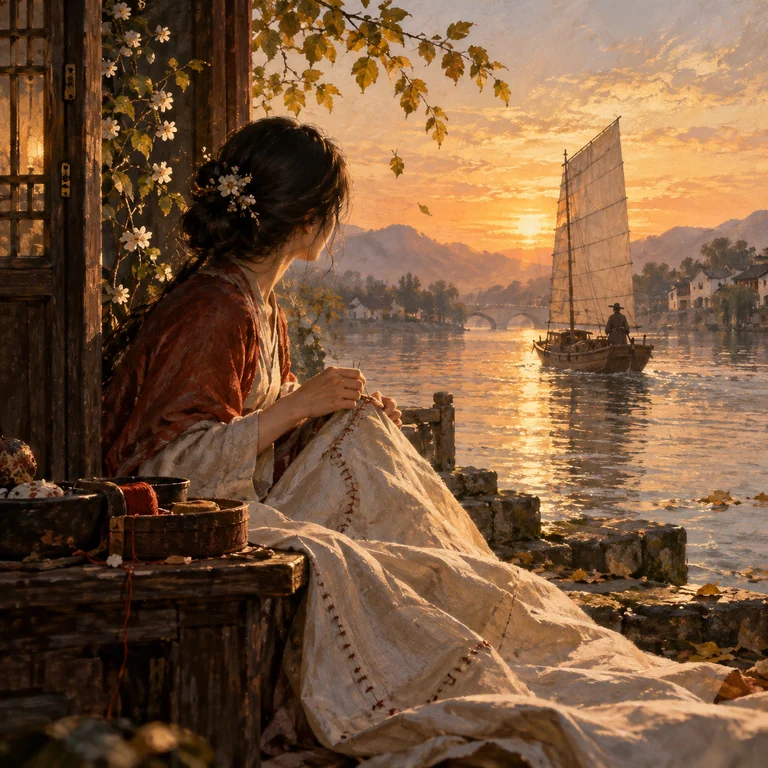
Eleven years later, Lu Yan returns to Changgan with a parcel of green plums, hoping to settle old debts along with his apologies. But Yao Jia pushes the extra money back and opens a vinegar-stained ledger. A bamboo hobbyhorse, timber, labor never given a price—everything contradicts his memories. And the life she now leads is far beyond what a single youthful promise can explain.
Start readingAI-assisted writing · Fictional characters and events
