
Prelude to Water Melody · When Will the Bright Moon Appear?
Song dynasty・Su Shi

Song dynasty・Su Shi
At Mid-Autumn in the bingchen year, I drank joyfully until dawn, became thoroughly drunk, and composed this piece, also thinking of Ziyou.
When did the bright moon first appear? Cup in hand, I ask the blue heavens. I wonder what year it is tonight in the palaces above. I long to ride the wind back there, yet fear those jade towers and jeweled halls: at such heights, the cold would be unbearable. I rise and dance, playing with my clear shadow—how could it compare with being here among mortals?
It circles the vermilion pavilion, sinks low by the patterned windows, and shines on the sleepless. Surely it bears no grudge; why is it always full when people part? People have sorrow and joy, partings and reunions; the moon has cloud and clarity, fullness and waning—perfection has been hard to attain since ancient times. May we live long, and share this lovely moonlight though a thousand miles apart.
The animation remains in its original Chinese.
The animation is ready.
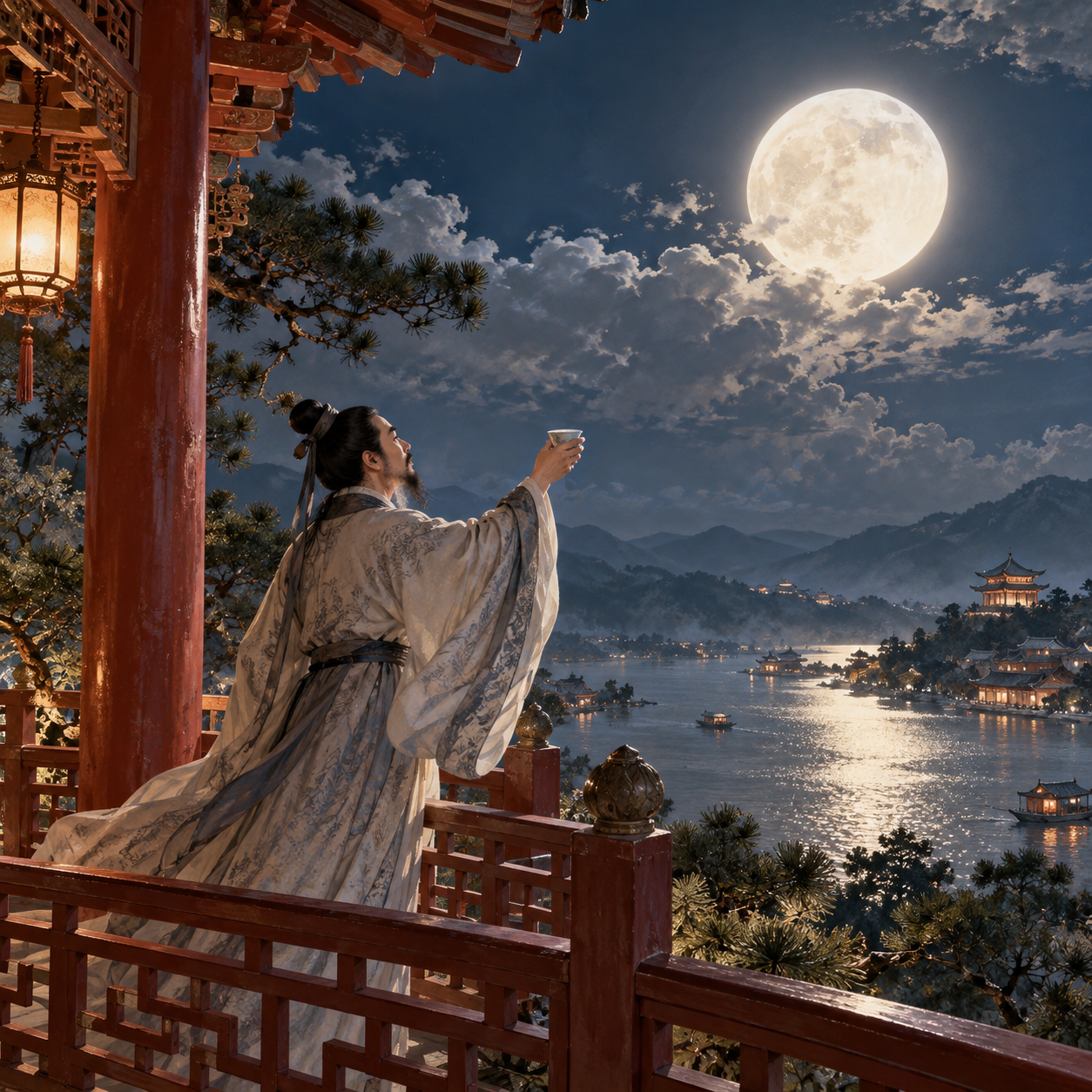
Short preface: On the Mid-Autumn Festival of the Bingchen year, I drank joyfully until dawn, became very drunk, and wrote this lyric, also thinking of my younger brother Ziyou.
When did the bright moon first appear? Raising my wine cup, I ask the blue heavens. I wonder what year it is tonight in the palaces above. I wish to ride the wind back to heaven, yet fear those lofty halls of fine jade would be too cold to bear. I rise and dance with my clear shadow for company—how could heaven compare with the human world?
Moonlight moves around the vermilion pavilion and shines low through carved windows upon someone unable to sleep. Surely the moon should bear no resentment—why, then, is it so full when people are apart? People experience sorrow and joy, reunion and separation; the moon, too, has darkness and brightness, fullness and waning. Such things have never been easily made perfect. May we both remain safe and well for many years, and, though a thousand miles apart, share the beauty of this bright moon.
丙辰: the ninth year of Emperor Shenzong's Xining era in the Song dynasty, 1076. 子由: Ziyou, the courtesy name of Su Shi's younger brother Su Zhe. 达旦: until dawn. The short preface at the beginning belongs to the original work and differs from the reading guide written separately for this website.
宫阙: palaces. 琼楼玉宇: magnificent buildings in an imagined immortal realm. 不胜 (shēng) 寒: unable to endure the cold. 何似: how could it compare with; this line also admits different tonal readings, though the context as a whole turns toward attachment to the human world.
朱阁: A red pavilion. 绮 (qǐ) 户: Ornamented doors and windows. 无眠: Unable to sleep. 婵娟: A beautiful form or bearing; here, the bright moon.
Reading guide: Su Shi spent the Mid-Autumn Festival of the bingchen year in Mizhou, composing this ci while drinking and admiring the moon; in its short preface he explicitly states that he misses Su Zhe. The poem moves from questioning heaven and imagining an immortal realm toward understanding human separations and reunions, ending with wishes entrusted to a moon shared in contemplation.
The upper stanza’s wish to ascend to heaven soon encounters the concern that “高处不胜寒” (“the heights are too cold to bear”), while dancing with one’s shadow brings the speaker back to the present. Rather than continually escaping outward, it moves between imagination and reality to reaffirm the value of human life.
In the second stanza, moonlight falling on the sleepless prompts questions about fullness and waning. Setting human partings and reunions beside the moon's phases acknowledges the difficulty of attaining completeness rather than denying sorrow. “但愿” (I only wish) thus becomes a measured blessing: though immediate reunion is impossible, people can still care for one another and share the same moonlight.
Let words find a melody
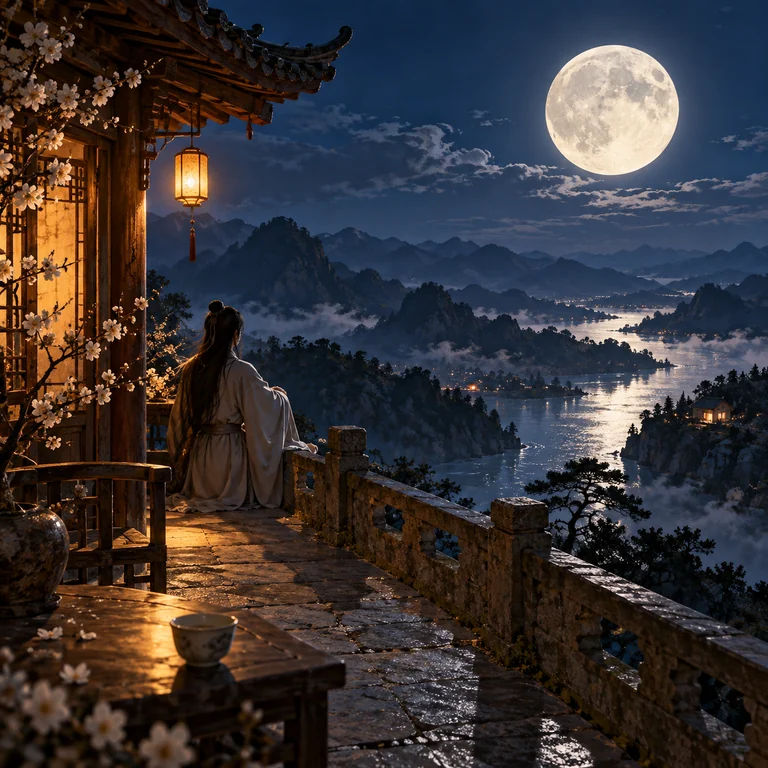
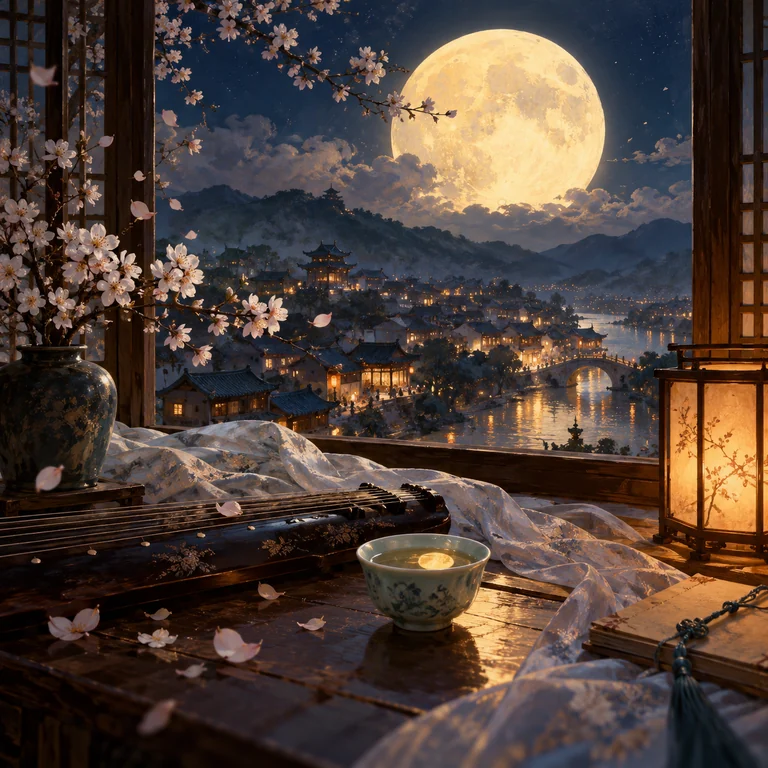
From a poem into a story
Zhang Ming stamps the moon lantern his younger brother sent into pieces, yet the new quilts prepared for his brother’s family remain in the room. They have gone twenty years without seeing each other across the river. This time, the ferry has finally been allowed to open for three days, but the letter still says he cannot return. Beneath the broken lantern, a six-holed copper plate remains intact. On Mid-Autumn night, mist suddenly rises over the river, and from midstream comes the sound of an empty barrel, three beats at a time.
Start readingAI-assisted writing · Fictional characters and events
