
Remembering Xin Da at the Southern Pavilion on a Summer Day
Tang dynasty・Meng Haoran

Tang dynasty・Meng Haoran
The mountain light suddenly sinks in the west; the moon above the pool gradually rises in the east.
With hair unbound, I enjoy the evening cool; opening the window, I lie at ease in the airy room.
The lotus breeze brings fragrance; dew dripping from bamboo sounds clear.
I wish to take up my resonant qin and play, but regret that no understanding listener is here to appreciate it.
Moved by this, I think of my old friend; through the night, longing troubles my dreams.
The animation remains in its original Chinese.
The animation is ready.
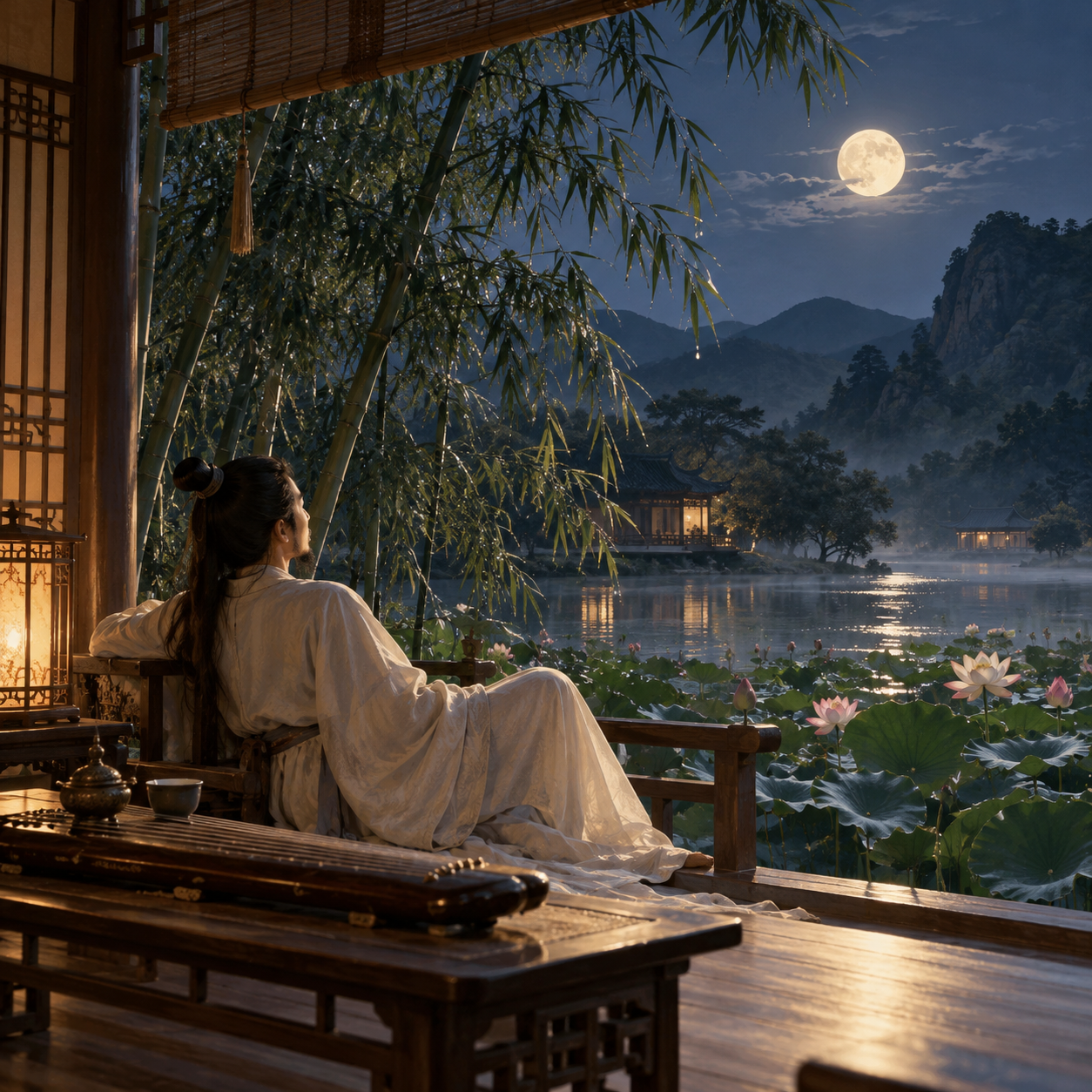
Sunlight in the mountains suddenly sinks westward, while the moon beside the pond gradually rises in the east. With my hair loosened, I enjoy the evening cool, open the window, and lie down in a spacious, peaceful place. The wind brings fragrance from the lotuses; dew drips from bamboo leaves with a clear, bright sound.
I would fetch my qin and play, but regret that no one who understands its music is here to share it. So I think of my old friend, still seeking him in longing and dreams at midnight.
辛大: a friend surnamed Xin; 大 indicates his seniority within his family. 山光: the light of the setting sun among the mountains. 轩: a window. 闲敞: quiet and spacious.
鸣琴: a qin with a pleasing sound. 知音: someone who understands music, also a friend who understands oneself. 中宵: midnight. 劳梦想: to be haunted by longing and dreams.
Reading guide: Meng Haoran turns an evening of enjoying summer coolness into a poem of longing for a friend. The first half richly evokes the secluded peace of being alone; the second moves from the desire to play the qin to the absence of someone who understands him, showing that pleasant natural scenery still cannot replace human understanding and companionship.
“忽” (“suddenly”) describes sunset, while “渐” (“gradually”) describes moonrise, making the passage of time feel entirely natural. The lotus fragrance and the sound of dew on bamboo are both faint; only someone who has become still can perceive them keenly.
The thought of fetching the qin turns the whole poem: contented solitude reveals a lack because there is no companion to share the pleasure. The ending carries this feeling into the middle of the night; without directly recounting past friendship, it still reveals its depth.
Let words find a melody
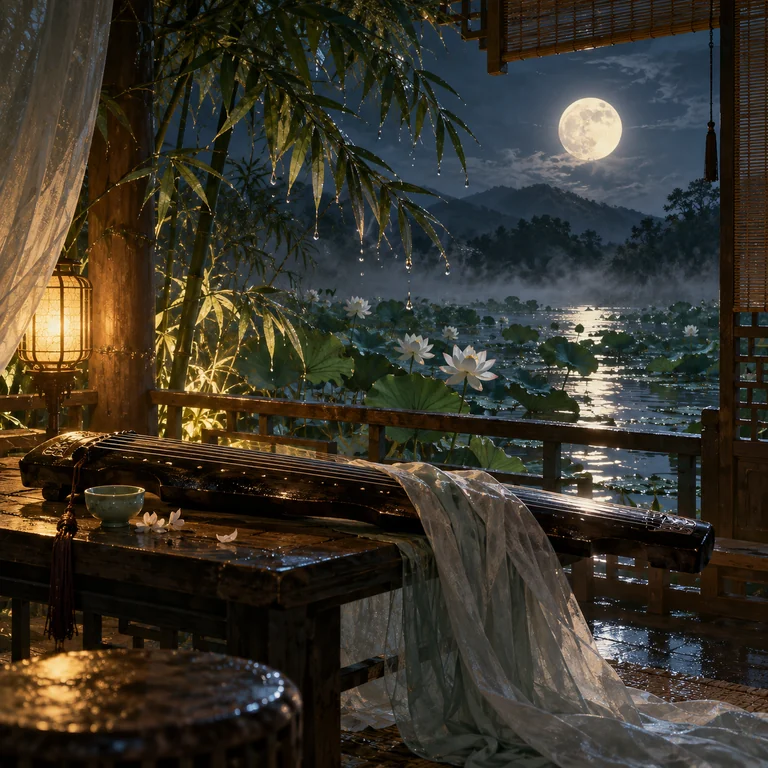
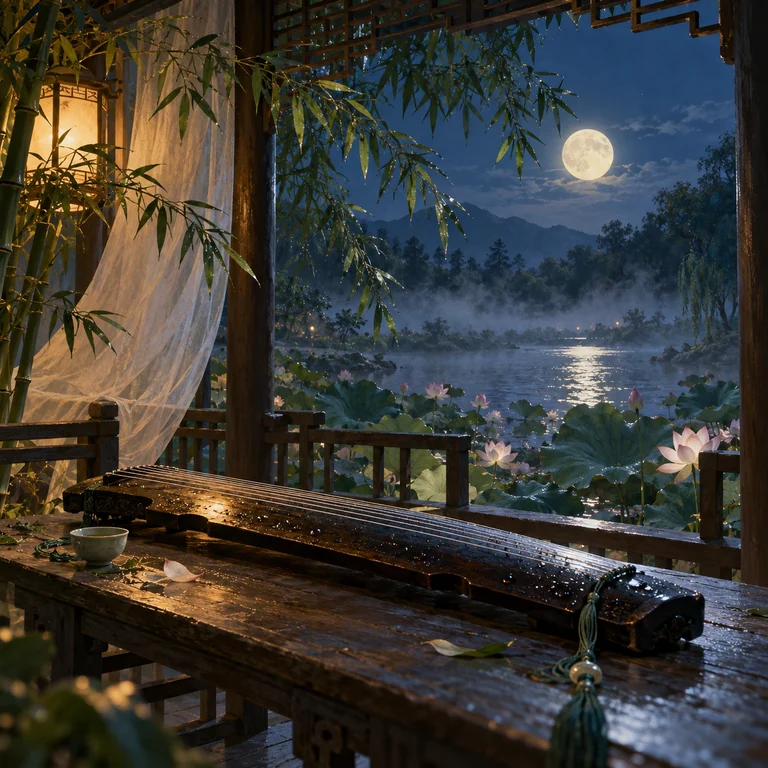
From a poem into a story
Whenever the lotuses bloom, Shen Wujiu, who is deaf, sets out his qin and wine in the southern pavilion, waiting for He Ting, who has not come for years. A young man brings news of his old friend, but his first request is to buy the score of “Lotus Night,” the piece the two never finished. Its coda remains blank, and where the youth places his hands differs from the old fingering Shen knows. Across the silent qin table, Shen Wujiu refuses to discuss a price first, or to admit that perhaps he has long since missed something.
Start readingAI-assisted writing · Fictional characters and events
