
Ta Suo Xing · Viewing Plum Blossoms in the Snow
Yuan dynasty・Wang Xu

Yuan dynasty・Wang Xu
Two kinds of grace, one maker's work. Snowflakes look just like plum blossoms' calyxes. Look closely, it is not that snow has no fragrance, the wind of heaven has scattered its scent.
Though of one kind, one stands a move above. Snowflakes are not so thin as plum blossoms. Plum blossoms scatter color toward empty mountains; snowflakes wander freely through curtains.
The animation remains in its original Chinese.
The animation is ready.
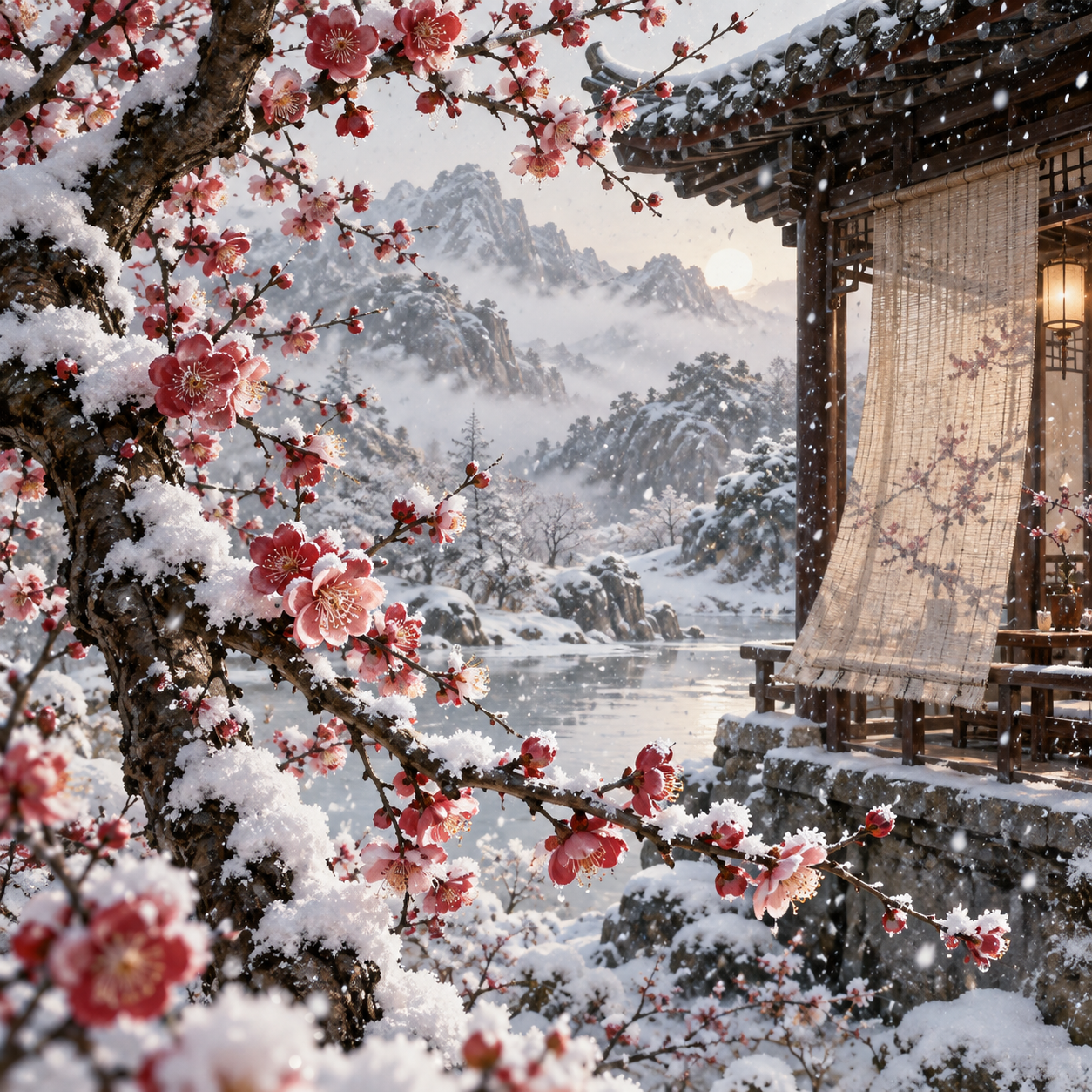
Plum blossoms and snowflakes each have their own grace, both creations of nature. Snowflakes look exactly like plum petals; on reflection, perhaps snow is not inherently without fragrance, but the wind of heaven has scattered its scent. Similar though they are, a difference in degree remains: snowflakes are not as “thin” as plum blossoms. The plum shines in empty mountains, while snow drifts freely through people's curtains.
两种: plum blossoms and snowflakes. 一家: nature. 风流: grace or style. 萼: the calyx, here standing for petals. 着(zhāo): a degree or rank.
“不是雪无香,” “It is not that snow has no fragrance,” can be read as a playful imagining on snow's behalf that the wind has scattered its scent. Another reading explains it as identifying plum blossoms by their fragrance.
薄: interpretations of this line have long differed. Some understand it in terms of slightness or resistance to cold, while others see an expression of moral character; consequently, views also differ on whether the lyric praises plum blossoms or snow. Here the comparison is retained without treating any one symbolic reading as the sole answer.
散彩: to give off radiance. 空山: secluded, quiet mountains. 帘幕: curtains and draperies over doors and windows.
Reading guide: Wang Xu compares plum blossoms with snow, describing both likenesses and differences. Interpretations differ over “薄” and the direction of the poem's praise and criticism. One can begin with color, fragrance, form, and freedom of movement before discussing deeper implications, without rushing to impose a single ranking on plum blossoms and snow.
In the first stanza, “一家制作,” one maker's work, and “全似,” exactly alike, emphasize a shared beauty; fragrance then opens a space for imagination. In the second, “向空山,” toward empty mountains, and “穿帘幕,” passing through curtains, reveal two different modes of being: plum blossoms remain fixed in the mountains, while snow can drift freely.
The lyric’s liveliness comes from the constantly shifting angles of comparison. Whichever interpretation of “薄” is adopted, it should be considered alongside the final two lines, rather than judged from “高一着” (“one step above”) alone. Such a reading also preserves the pleasure of the lyric as a poem about an object.
Let words find a melody
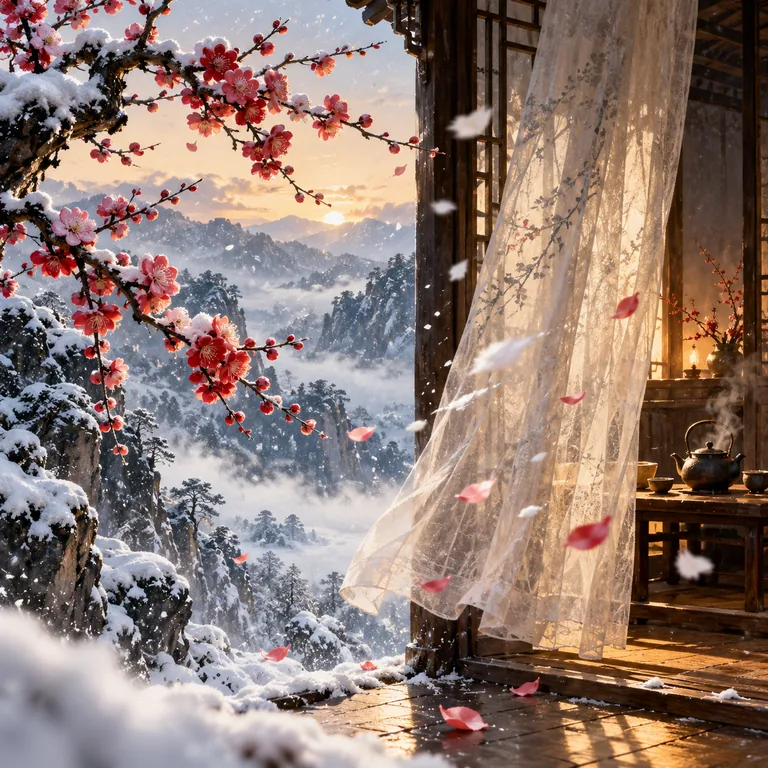
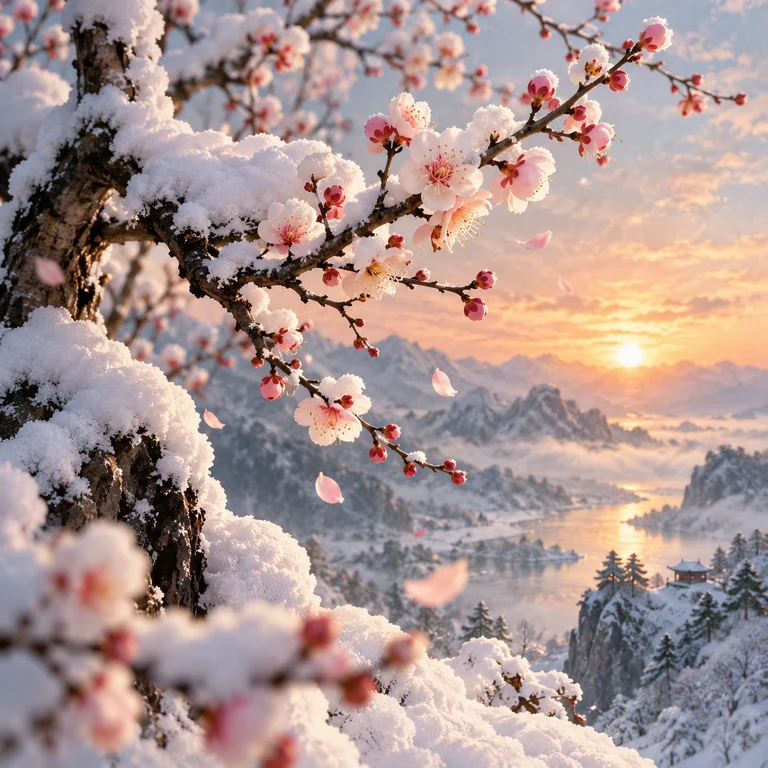
From a poem into a story
On a snowy night, a moneylender dies in the ditch outside the garden. A white petal on his sleeve directs suspicion toward the young master of the plum garden. Lin Yan moves it beside a charcoal brazier, but the change she observes differs from everyone’s confident assertions. Her senior fellow disciple has already written the examination report for her and urges her to sign. Holding the paper, she remembers the person who stood in the doorway to shield her ten years ago, who never completed an examination report for her.
Start readingAI-assisted writing · Fictional characters and events
