
Autumn Thoughts
Song dynasty・Ouyang Xiu

Song dynasty・Ouyang Xiu
节物岂不好,秋怀何黯然!— Are the season's sights not lovely? Why is my autumn heart so dark!
West wind through a market of wine flags; fine rain in the season of chrysanthemums.
Distressed by affairs, I grieve over my graying temples, swallowing shame, I eat meals worth ten thousand coins.
When shall I harness a little deer cart and return to the fields east of the Ying?
The animation remains in its original Chinese.
The animation is ready.
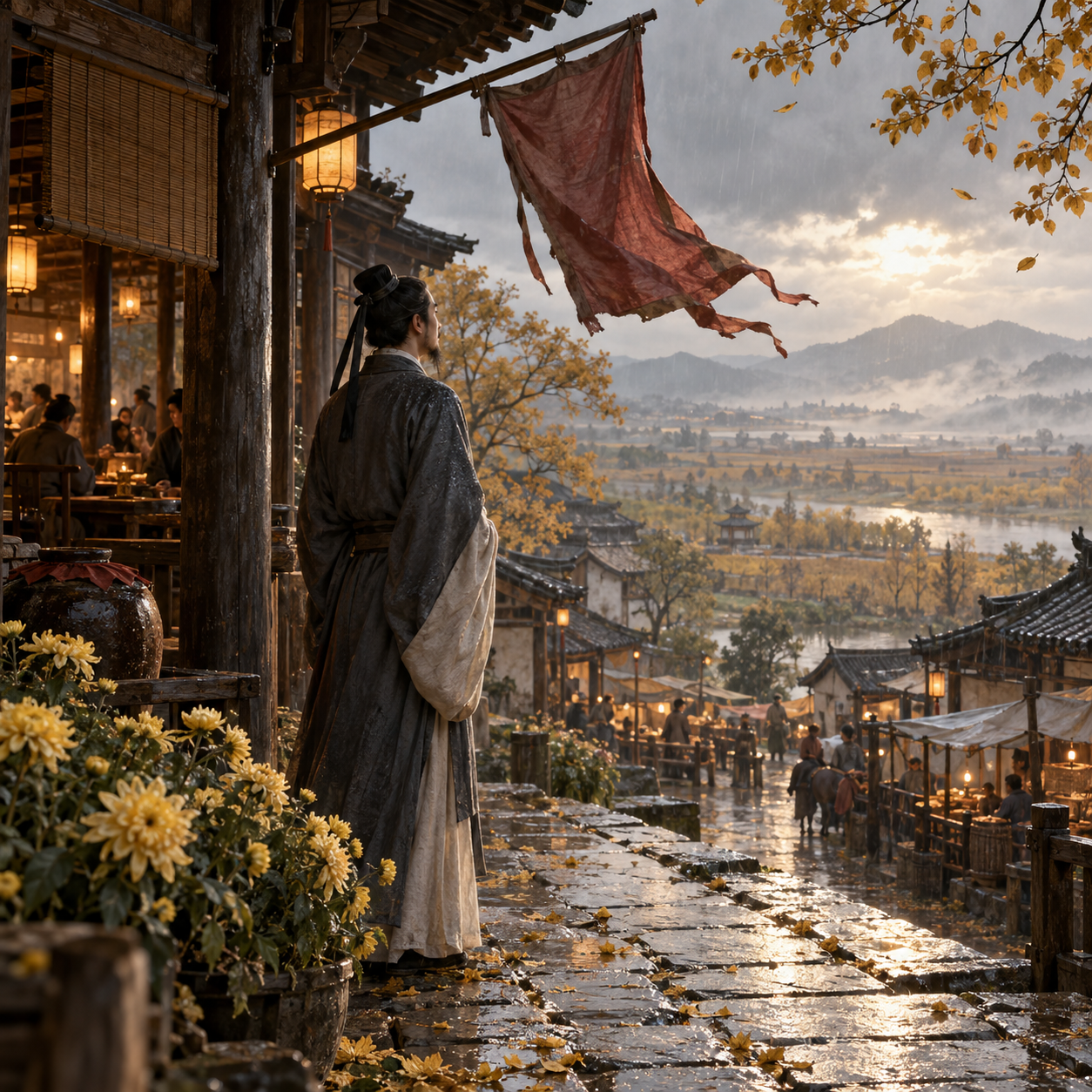
Are autumn's seasonal sights not lovely? Why is my heart so gloomy? The west wind stirs the wine-shop banners in the marketplace, and fine rain falls in the season of chrysanthemums. Thinking of worldly affairs, I grieve over my whitening temples; enjoying a generous salary while my wishes remain unfulfilled leaves me deeply ashamed. When can I take a little carriage home to the fields east of Yingzhou?
节物: scenery and things that change with the seasons. 酒旗: a banner displayed by a wine shop to attract customers. 感事: being moved by the affairs of the world.
包羞: bearing shame. 食万钱: the great expense of food conveys a generous official salary; it need not be taken as an exact daily expenditure. 鹿车: a small cart that people can push or pull, not a cart drawn by deer.
颍东田: farmland east of Yingzhou, in the area of present-day Fuyang, Anhui.
Reading guide: Ouyang Xiu uses autumn scenery to express feelings about official life and a wish to retire to the fields. The opening first affirms the beauty of the season, then asks why the heart feels sorrowful, weaving the autumn colors outside and the anxieties within into two intertwined strands.
Wine-shop banners and chrysanthemums are not necessarily sorrowful, and the west wind and fine rain also carry the atmosphere of everyday life. The poet's gloom comes from “感事” (“feelings stirred by events”), rather than simply becoming sad at the sight of autumn.
The last four lines move from white hair to shame over the official salary, then settle on a small cart that could take the poet back to farming. This concrete wish to return follows the abstract self-examination, giving the ending both a longing for retirement and regret that it cannot yet be realized.
Let words find a melody
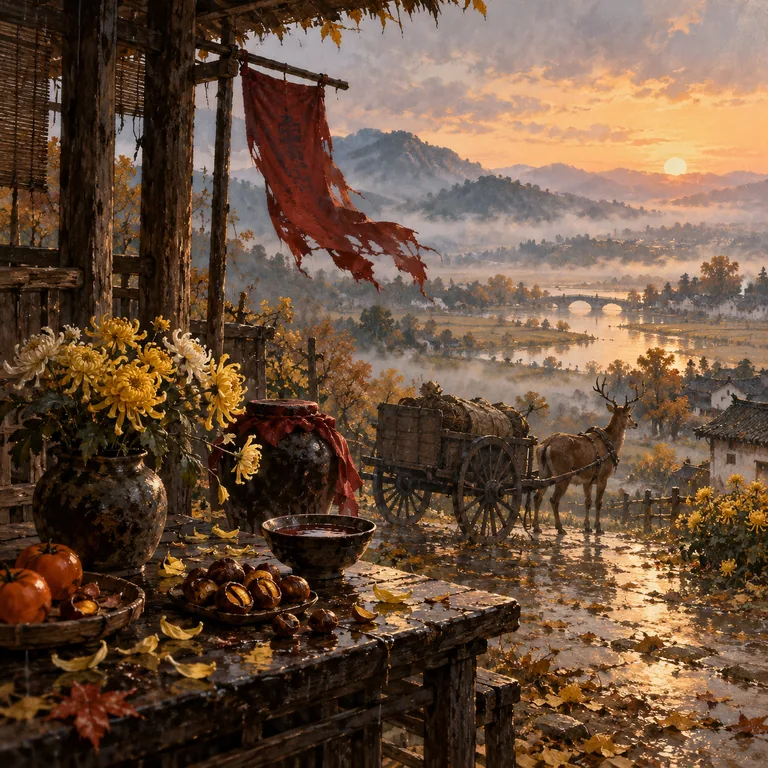
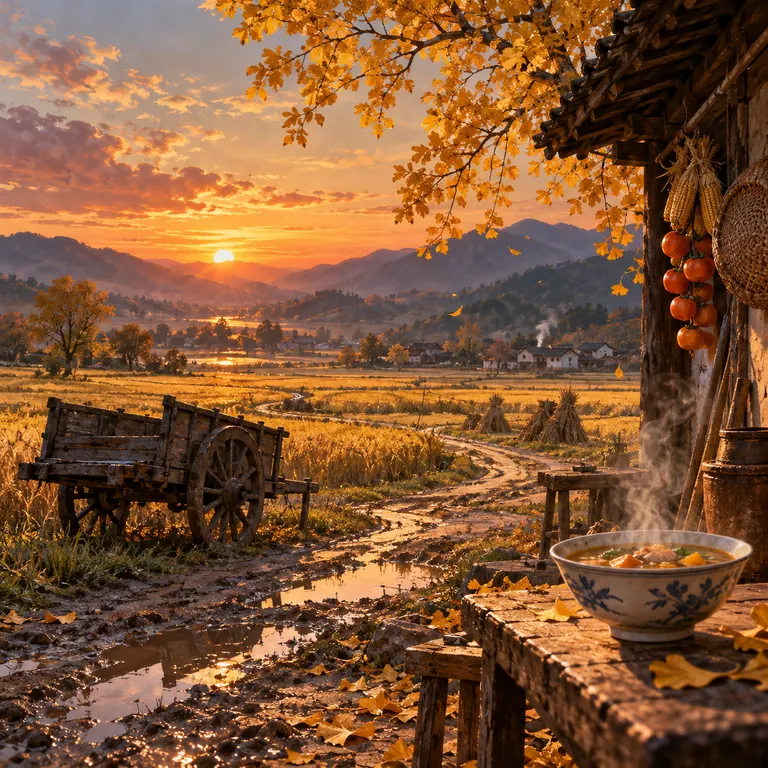
From a poem into a story
His resignation has been submitted and his small handcart packed. Yu Heng wants only to return to Dongtian, grow vegetables, and listen to the rain. But at the final banquet thanking those involved in disaster relief before he leaves the city, eighty disaster victims have been replaced by a hall full of distinguished guests. Outside, a child divides a flatbread into three; inside, they are still praising the autumn crabs. After twenty years heading the provisions office, he knows the accounts for every dish, yet now cannot find a single guest list that would give those outside a seat.
Start readingAI-assisted writing · Fictional characters and events
