
Chrysanthemums in the Cold / Painting Chrysanthemums
Song dynasty・Zheng Sixiao

Song dynasty・Zheng Sixiao
It does not bloom amid the throng of other flowers,alone beside a sparse fence, its charm is endless。
Better to die upon the branch, holding my fragrance, than ever be blown down in the north wind.
The animation remains in its original Chinese.
The animation is ready.
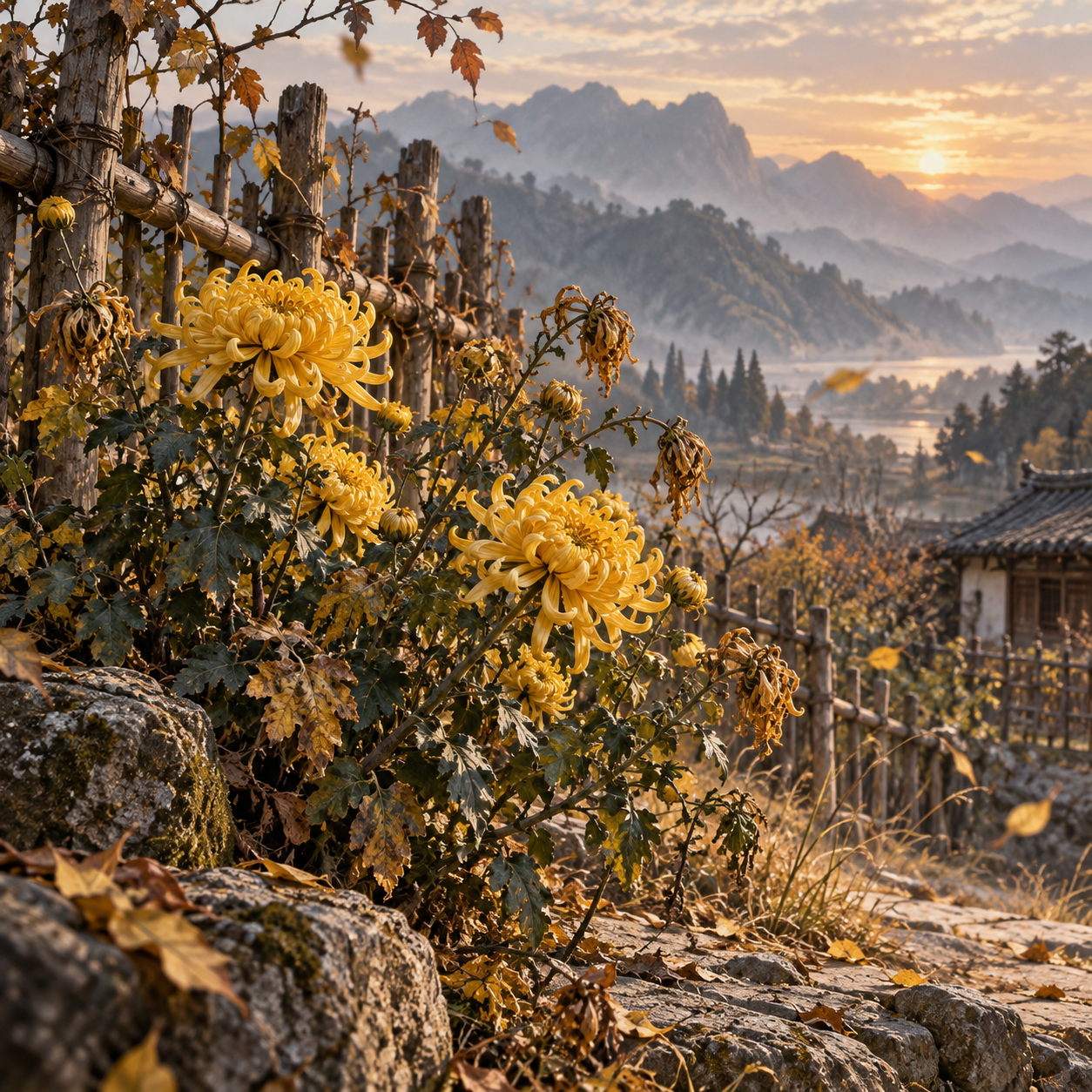
The chrysanthemum does not crowd into bloom in the same season as all other flowers; standing alone beside a sparse fence, it has endless charm of its own. It would rather wither on the branch, holding its fragrance, than consent to be blown down by the north wind and swept away.
并: together, side by side. 疏篱: a sparse fence. 趣未穷: the interest and pleasure are inexhaustible. 抱香: retaining fragrance; also symbolizes fidelity to one's own character.
何曾: when ever; how could one be willing. 北风: the cold wind of autumn and winter; read against the background of loyalists after the fall of the Song, it may also carry political meaning.
This poem is also titled “Painting Chrysanthemums.” The final couplet poetically emphasizes integrity; it should not be treated as a botanical assertion about how all chrysanthemums wither.
Reading guide: Zheng Sixiao was a poet of the late Song and early Yuan periods. This poem uses the image of a chrysanthemum standing firm in the cold to express a resolve not to follow prevailing fashions. In light of his identity as a loyalist of the fallen Song, it is often read as an expression of fidelity to his former country and moral integrity.
The first two lines establish the chrysanthemum's independence, emphasizing the contentment of “趣未穷” (delight not yet exhausted) rather than loneliness. It has its own season to bloom and does not measure its worth by joining the bustle of other flowers.
The final two lines turn a natural posture into an explicit choice: “宁可” (would rather) and “何曾” (when ever) affirm and deny with equal firmness. Linking fragrance to the branch continues the chrysanthemum theme while giving abstract integrity a concrete image.
Let words find a melody
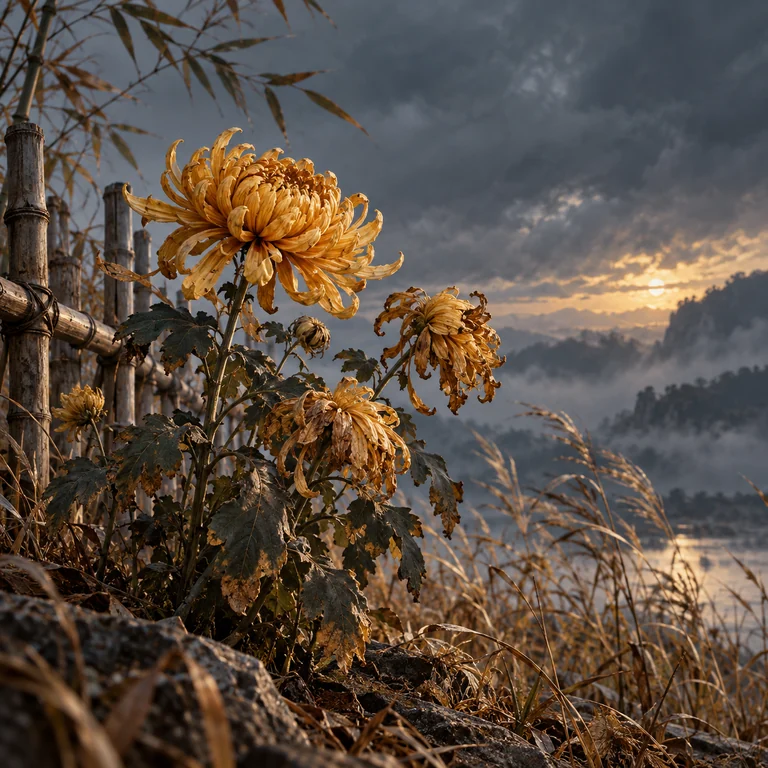
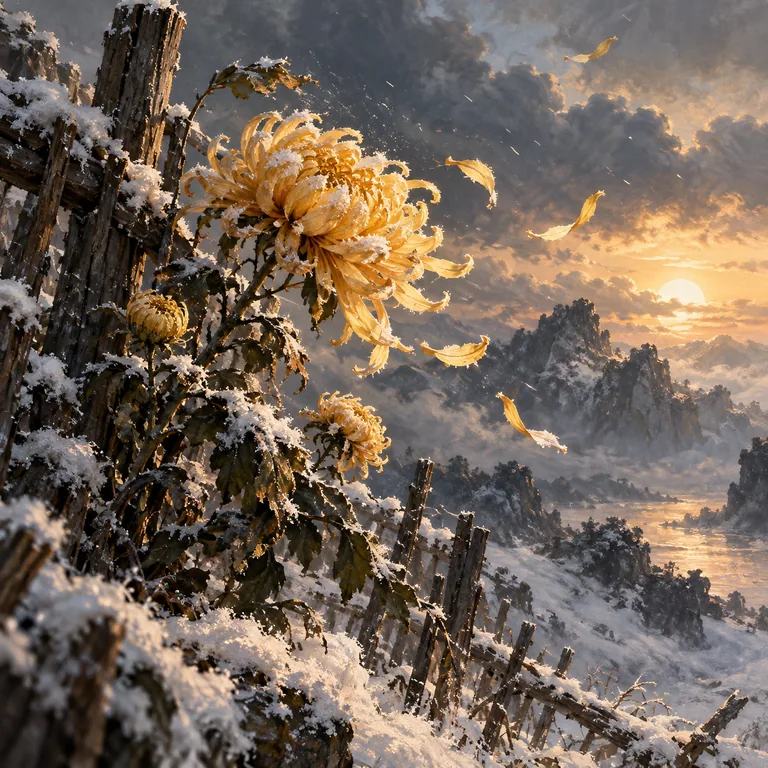
From a poem into a story
Han Yan has spent his life painting chrysanthemums that refuse to bow; now he must paint them bending in birthday tribute to secure his detained granddaughter’s release. The new prefectural authorities demand the painting before the Double Ninth Festival, but the branches beneath his brush keep turning upward out of habit. On the tenth day, a vegetable seller brings a packet of earth containing three chrysanthemum seeds and a scrap of cotton cloth bearing the words: “东堤水涨,莫等我。”—“The water is rising at the eastern embankment. Do not wait for me.” Between his painting table and the city gate, the old man suddenly no longer knows which way to go first.
Start readingAI-assisted writing · Fictional characters and events
