
To the Tune “The Fisherman’s Pride” · Autumn Thoughts
Song dynasty・Fan Zhongyan

Song dynasty・Fan Zhongyan
Autumn comes to the frontier, where the landscape is different,geese bound for Hengyang leave without a thought of staying。Frontier sounds rise on every side with the horns,amid a thousand peaks,long trails of haze, the setting sun, and a lone city with its gates shut。
One cup of cloudy wine, home ten thousand li away,with no victory inscribed at Mount Yanran, there is no way to return. Qiang pipes sound on and on, frost covers the ground,no one sleeps,the general’s white hair, the soldiers’ tears.
The animation remains in its original Chinese.
The animation is ready.
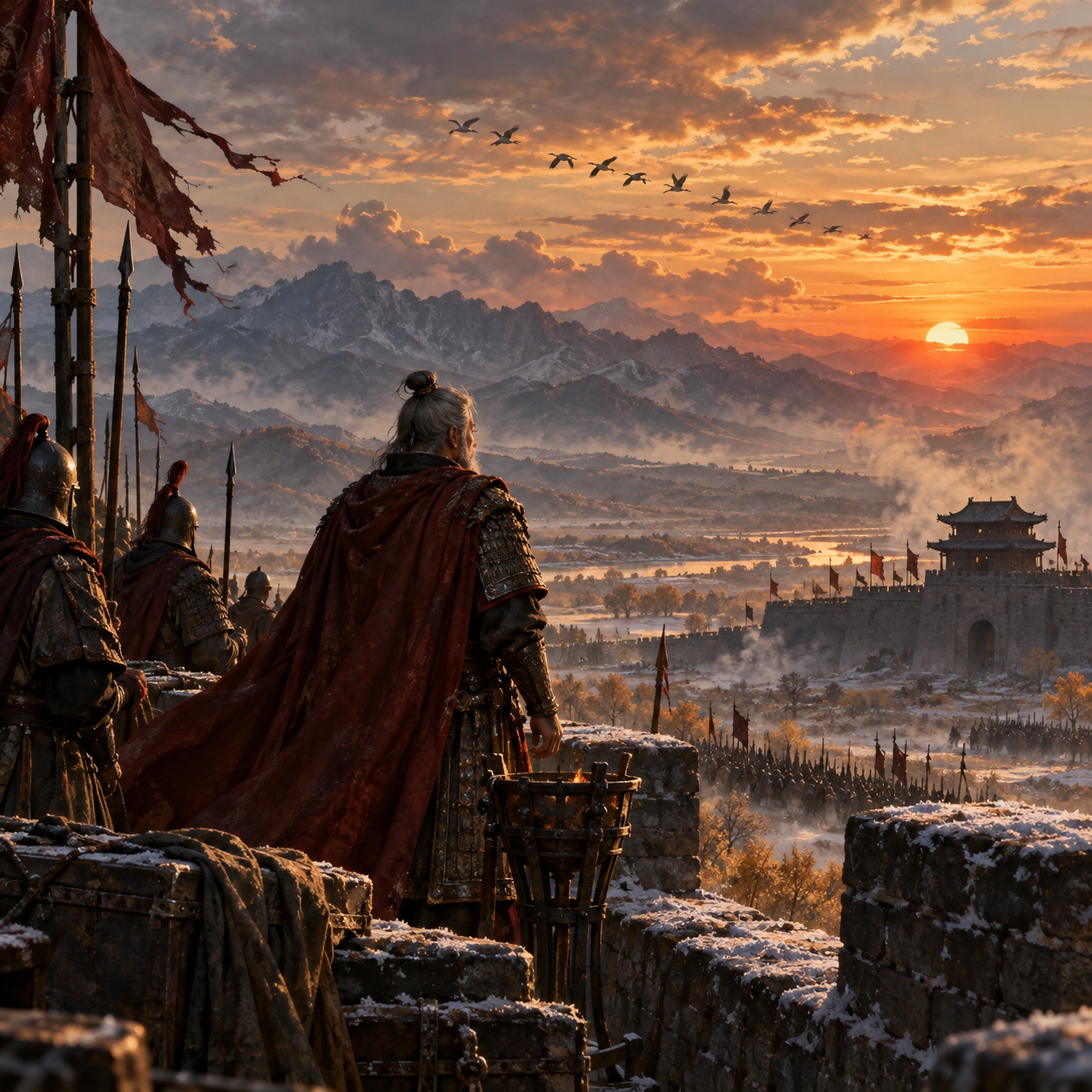
When autumn reaches the frontier, its scenery differs from that of the interior; wild geese fly toward Hengyang with no wish to stay. Sounds from every side of the borderlands rise together with the army's horns. Amid range upon range of mountains, long trails of smoke and the setting sun envelop a lone city with its gates shut.
I drink a cup of cloudy wine and think of home ten thousand miles away; the task of securing the frontier remains unfinished, so there is no way to arrange a return. The Qiang flute sounds long and lingering, frost already covers the ground. No one can sleep; the general gains white hairs, the soldiers shed homesick tears.
塞下: the frontier region. 衡阳雁: legend says southward-flying geese stop at Huiyan Peak in Hengyang; poetry draws on this to evoke returning geese. 边声: the sounds of wind, horses, and military life on the frontier. 角: a military horn.
千嶂: Range upon range of peaks. 长烟: An extended veil of mist. 燕然未勒: An allusion to the Eastern Han general Dou Xian, who climbed Mount Yanran and had his victory inscribed in stone after defeating the Xiongnu; here it means military success remains unachieved and frontier troubles unresolved.
羌管: the Qiang flute. 征夫: soldiers sent out to campaign or guard the frontier.
Reading guide: Fan Zhongyan wrote this lyric while serving on the northwestern frontier, bringing together the autumn border landscape, the duty of defending the frontier, and homesickness. The sleeplessness shared by the general and his soldiers expands a personal mood into a collective experience of military life.
The first stanza narrows the view step by step, from the sky where geese depart and sounds on every side to a lone fortress among the mountains. The single word “闭,” “closed,” describes the military situation while deepening the sense of separation from the outside world.
The second stanza sets one cup of wine against a home ten thousand miles away, creating a striking contrast of distance. “未勒,” “not yet inscribed,” subjects the longing for home to the demands of duty. The tears at the end therefore do not cancel ambition; they show the real exhaustion and attachments that persist while a person fulfills his responsibilities.
Let words find a melody
From a poem into a story
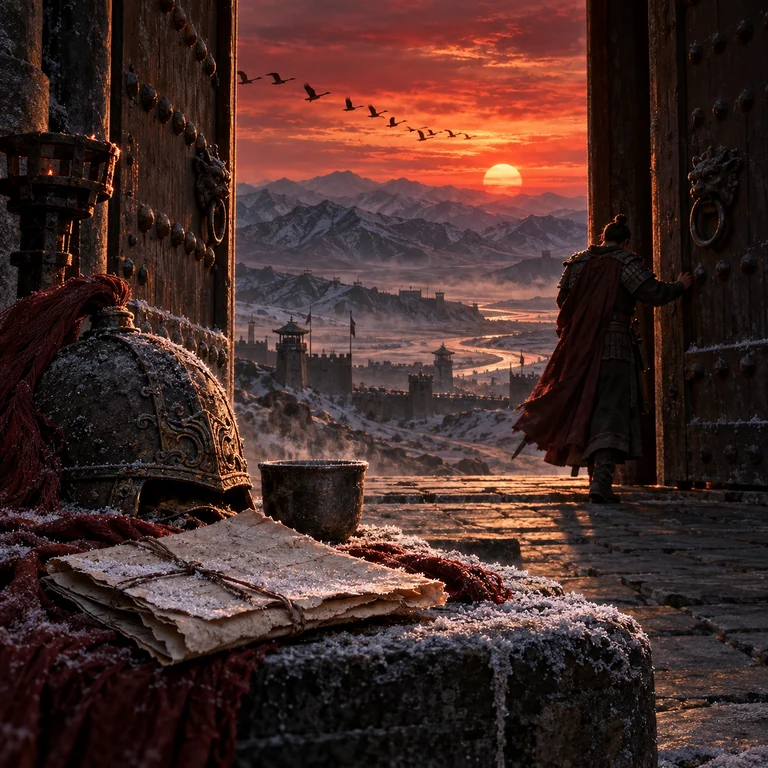
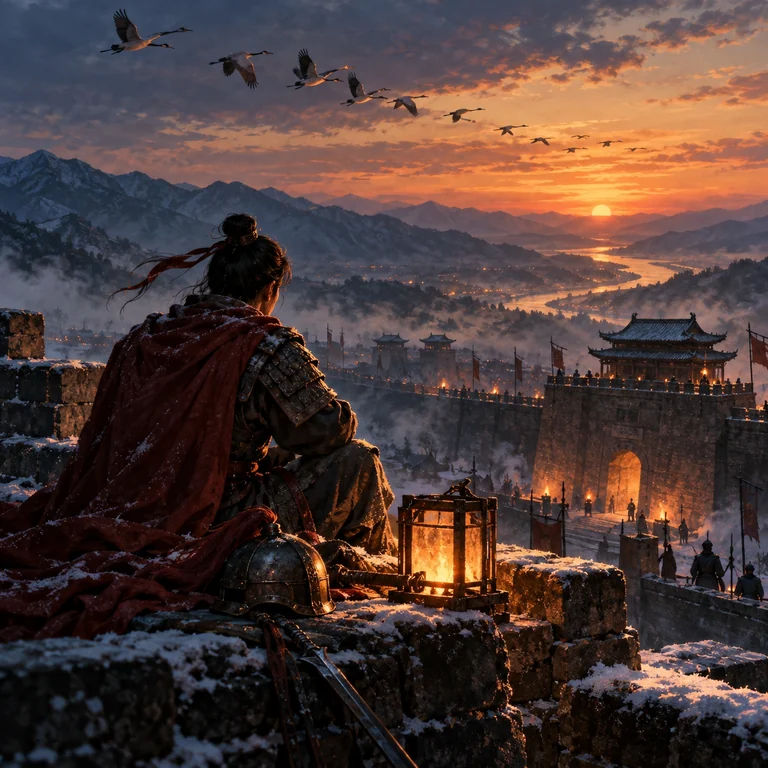
On receiving his papers to return home, Cao An first sniffs his army boots, afraid of bringing twelve years of the border town’s smell back to overwhelm his granddaughter. His replacement, He Xiaoman, thinks only of signal fires and will not even cover his ears properly. The two brave the first snow to climb the northern ridge. The beacon fire has not yet cooled, but the soldier due to relieve the watch is already half an hour late, and faint mule bells sound from the valley below.
Start readingAI-assisted writing · Fictional characters and events
