
To the Tune “River Moon Shining over Layered Mountains” · Written on First Arriving at Mount Song
Jin dynasty・Yuan Haowen

Jin dynasty・Yuan Haowen
On the frontier, autumn wind, drums, and horns; above the city wall, sunset and banners. Saddle and horse suit a young man well. There is joy in army life—do not ask whom one follows.
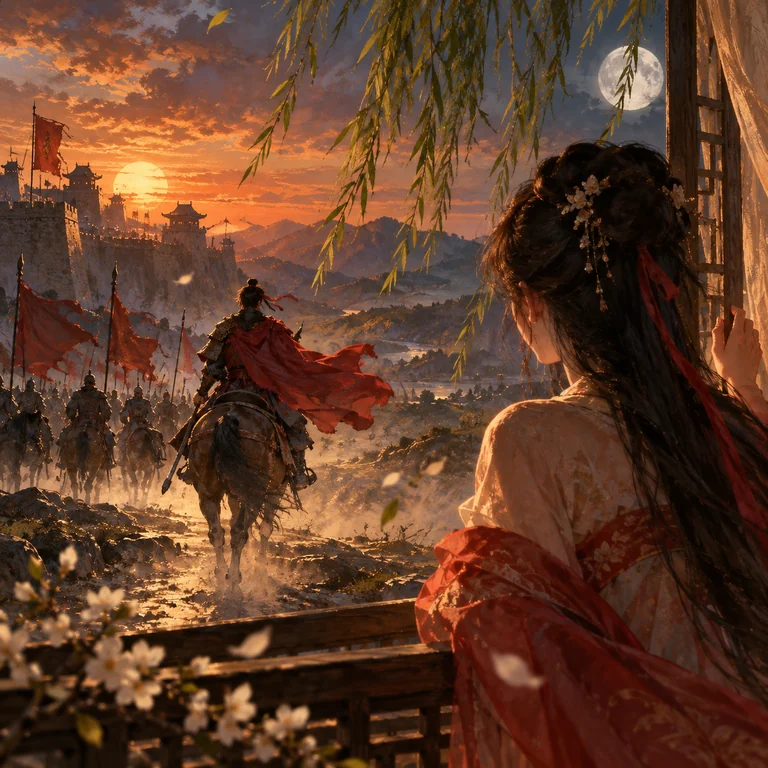
Scouting riders have barely reached northern Ji, yet word of our might already shakes western Liao. We shall return while the willows still sway softly. Beneath the moon in spring chambers, women in red sleeves need not weep.
The animation remains in its original Chinese.
The animation is ready.
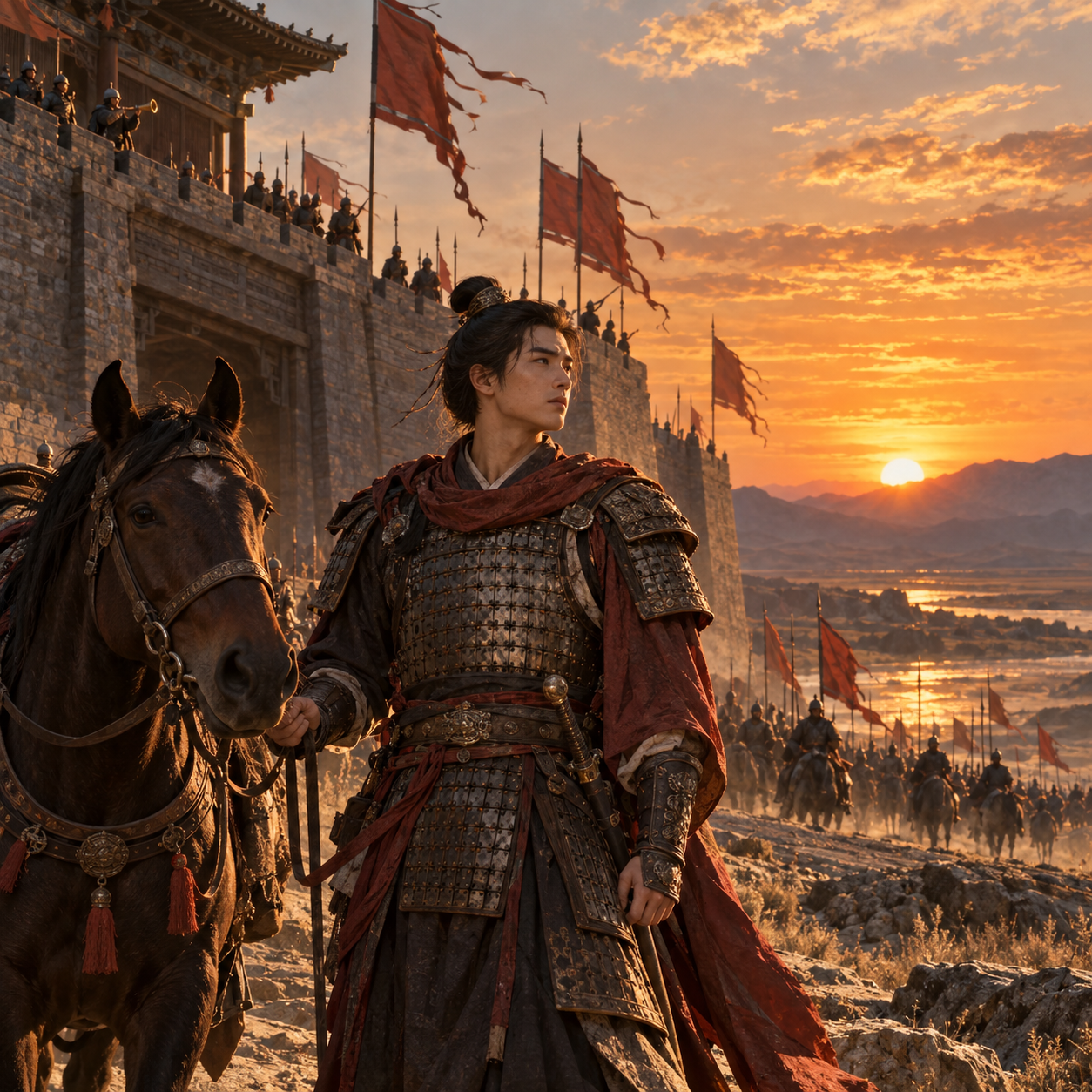
Drums and horns sound in the autumn wind along the frontier, and the setting sun lights the banners on the city walls. A young man gallops on horseback, perfectly in tune with his high spirits. Military life has its own bold pleasures; for now, do not ask where to commit yourself or whom to follow.
The scouting cavalry has only just reached northern Ji, yet the army’s might has already shaken western Liao. When they return, they can still catch the spring days of gently swaying willows; the woman in her spring chamber beneath the moon need not weep for her absent beloved.
嵩山: Mount Song, near present-day Dengfeng, Henan. 鼓角: military drums and horns. 相宜: suitable; well matched.
侯骑: the spelling used on this page; usually written “候骑,” meaning mounted scouts. 蓟北、辽西: northern regions. 先声: the reputation and martial prestige that spread before an army arrives.
柳依依: willow branches swaying gently, also evoking “Gathering Ferns” in the Book of Songs. 红袖: red sleeves, referring to the woman in her chambers through her clothing.
The military scenes in this lyric are imaginative reconstructions and should not be taken as direct evidence that the author experienced the battles described.
Reading guide: This lyric presents the force of the frontier and imagined homecoming through the eyes of a young man entering military service. The inscription places its composition on his first arrival at Mount Song, while the main text unfolds a frontier scene, linking the exhilaration of winning distinction with words intended to comfort the woman waiting at home.
Drums, horns, and banners first establish the military camp's atmosphere; then the “少年,” “young man,” becomes the center of the scene. “从军乐,” “the joy of joining the army,” does not avoid parting, but focuses on the spirit of setting out willingly.
The second stanza uses “才” (only just) and “已” (already) to show how swiftly martial prestige spreads, then turns the gaze back toward everyday life through spring willows and the moon over a woman's chamber. The closing reassurance does not record a battle already won; it is the speaker's hopeful imagining of triumph and reunion.
Let words find a melody
From a poem into a story
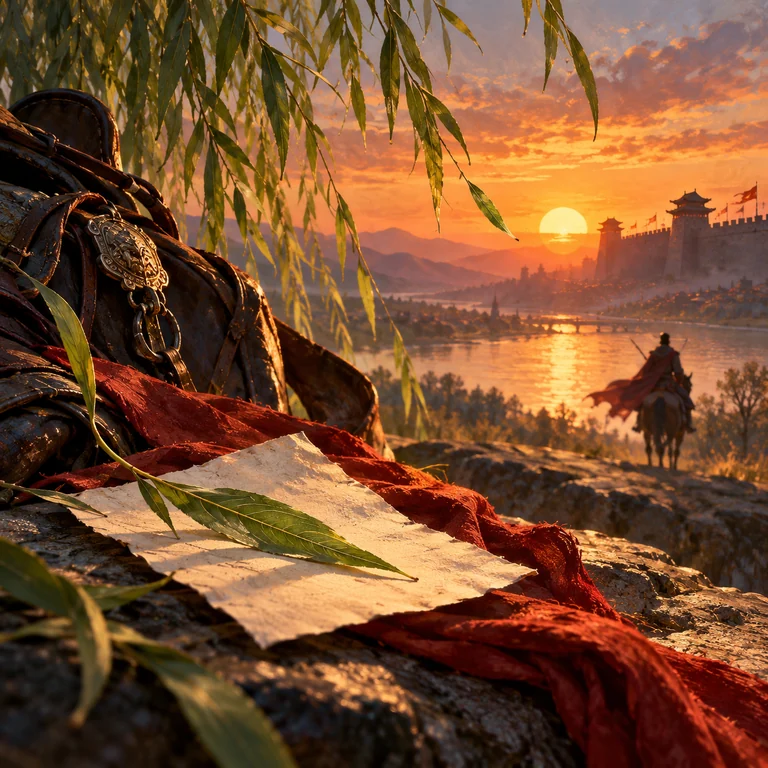
Lu Zhao slips a willow leaf into the wedding invitation and promises A Sui a victorious return in spring. He rides to war on the horse his father mortgaged farmland to obtain, receives new wrist guards, drinks strong liquor, and asks his squad leader to write his return date larger in the letter. When winter arrives, he is ordered to deliver a reply concerning a prisoner exchange and hears a voice from his hometown in the enemy camp. The agreed three days pass, but the reply remains buried beneath papers on a desk, while the people on both banks of the frozen river can no longer afford to wait for another spring.
Start readingAI-assisted writing · Fictional characters and events
