
Five Later Poems on Going Beyond the Frontier
Tang dynasty・Du Fu

Tang dynasty・Du Fu
A man born into this world should win a marquisate in his prime.
War offers deeds of merit; how could I remain in my old homeland?
Recruited to march to Jimen, I cannot stay as the army moves out.
A thousand gold pieces buy a saddle,a hundred adorn the sword’s hilt.
The neighbors see me off; relatives crowd the roadside.
The gray-haired sit in the places of honor,as wine warms the gathering, many dishes are served。
The young men have another gift to offer, smiling as they look upon my Wu blade.
朝进东门营,暮上河阳桥。— At dawn we enter the East Gate camp; by dusk we reach Heyang Bridge.
The setting sun shines on the great banner; horses neigh, and the wind sighs.
Ten thousand tents line the level sands; each unit's ranks can be seen summoning their men.
A bright moon hangs in midheaven; strict commands leave the night hushed and lonely.
A few mournful notes of the reed pipe sound,the brave men grow sorrowful, their proud spirits subdued.
May I ask who the great general is? Perhaps it is Huo, the Piaoyao General.
The ancients valued guarding the frontier; people today value lofty military honors.
Who would have known that the heroic ruler would send out armies stretching like long banks of cloud?
All beneath heaven is now one household,among the peoples beyond the borders, ours is but a lone army。
Thus those tiger-fierce warriors threw themselves forward, with courage worthy of their renown.
I draw my sword and strike into the vast wilderness, each day capturing herds of the enemy's horses.
I swear to open up the far north, the realm of Xuanming, and offer it to my sovereign!
Reports of victory follow day after day; both frontier peoples are quiet, with no cause for alarm.
Yuyang is a land of bold and chivalrous men,where drums are beaten and sheng and yu pipes played.
Cloud-high sails turn across the Liao Sea; rice comes from Eastern Wu.
Fine gauze from Yue and silk from Chu,shine upon the bodies of lowly servants.
The commander's rank rose ever higher, his arrogance overawing the imperial capital:
The frontier people dare not speak out; those who do lie dead along the roads.
I was born to a respectable family,and there were many paths into military service。
A general's arrogance only deepens anxious thoughts; his exalted rank is scarcely worth discussing.
For twenty years I have ridden to war, fearing I might fail my enlightened lord’s favor.
Helplessly I watch Youzhou’s cavalry sweep onward, darkening the Yellow River and Luo regions.
In the middle of the night I returned by hidden paths; my native place was nothing but an empty village.
Fortunate to escape a shameful name, I grow poor and old without children or grandchildren.
The animation remains in its original Chinese.
The animation is ready.
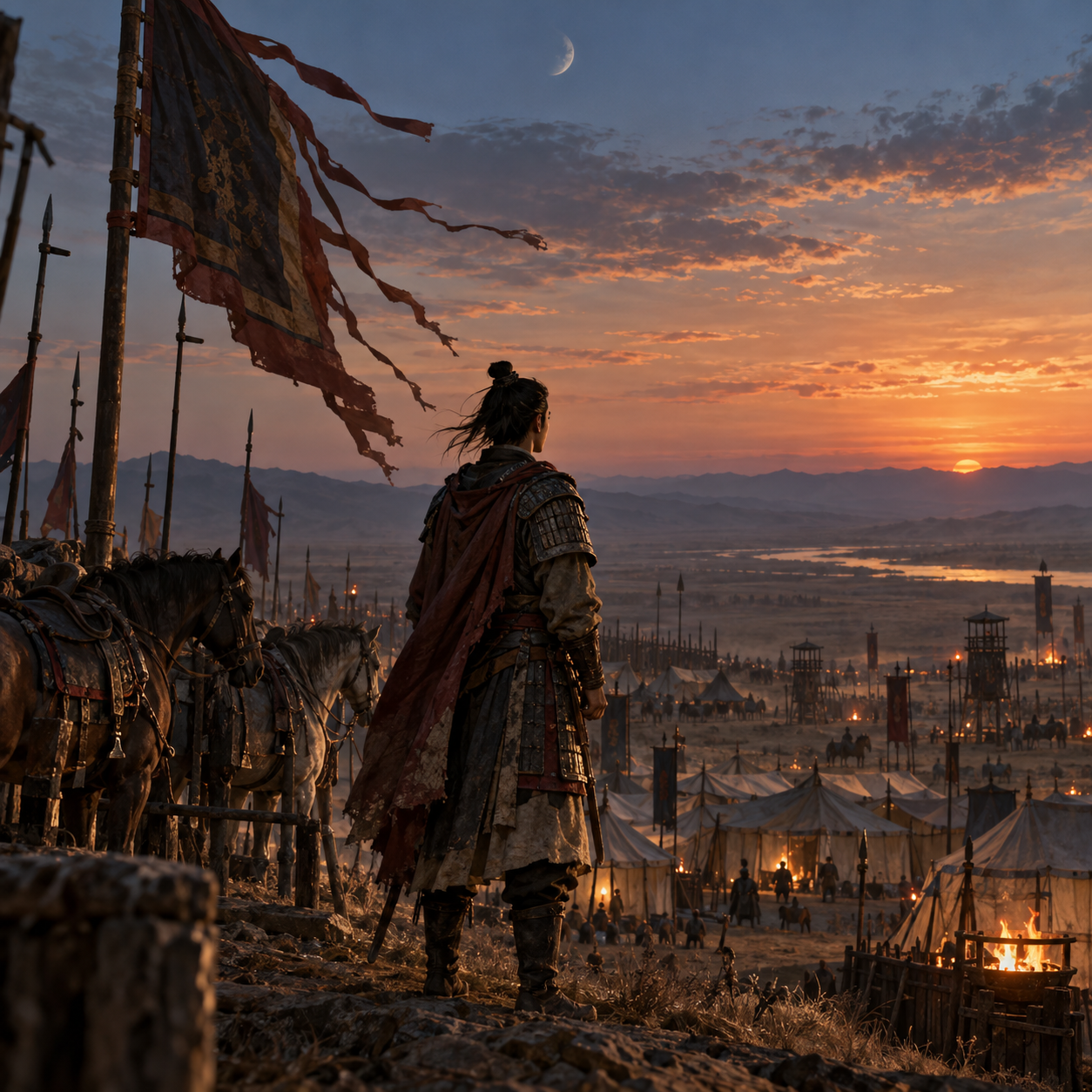
No. 1: Born into this world, a man hopes in his prime to win merit and be made a marquis; since war offers a way to achieve distinction, how could he remain forever in his hometown? I enlisted and hurried to Jimen; military orders pressed me on, leaving no time to stay. I spent heavily on a saddle and a fine sword, while neighbors, relatives, and friends crowded the road to see me off. White-haired elders sat in the places of honor, offering all kinds of food as the drinking grew merry; the young men had another gesture of affection to offer, smiling as they looked at the sharp blade I wore.
II: In the morning I enter the eastern-gate camp; by evening I reach Heyang Bridge. The setting sun shines on the great banner, horses neigh, and the wind sighs. Countless tents line the level sands, and each unit calls its soldiers back to their ranks. The bright moon hangs in mid-sky; military orders are strict, and the night is utterly quiet. Suddenly, several mournful notes from a reed pipe sound; even the brave warriors grow subdued and set aside their pride. If one asks who commands the army, perhaps it is someone like Huo Qubing.
III: The ancients valued guarding the frontier; people today value winning glorious military honors. Who would have expected an ambitious ruler to send out armies stretching like long banks of cloud? The realm is already unified, and the forces of the peoples beyond the border are relatively isolated and weak, yet he still drives warriors fierce as tigers and leopards to risk their lives in pursuit of the feats of arms they have heard of. They draw swords against remote wildernesses, seize herds of warhorses each day, and swear to open up the farthest north and present it to their sovereign.
IV: Reports of victory arrive day after day, and the two frontier peoples remain peaceful. Yuyang is a gathering place for powerful men; in the army, drums beat and reed pipes play amid extravagant revelry. Tall sails round the Liao Sea, and rice from Eastern Wu keeps arriving; even lowly servants wear dazzling garments of patterned silk from Yue and white silk from Chu. The higher the commander's position, the greater his arrogance, until he sets himself above the capital itself. People on the frontier dare not speak of it; those who do are killed beside the road.
V: I came from a respectable family, and had my own reasons for entering the army. Now the arrogance of the commanders deepens my anxiety; my own wealth and rank are no longer worth discussing. For twenty years I rode to war, fearing only that I might fail the sovereign's favor, yet I watched Youzhou cavalry drive straight in and plunge the He-Luo region into darkness. At midnight I escaped home by a narrow path, to find my native place an empty village. Though fortunate to escape the disgrace of serving the rebels, I ended poor and old, with no children or grandchildren beside me.
Sequence of the poems: This page includes five poems in order; each is narrated in the voice of a soldier and does not recount Du Fu’s own military service.
封侯: to earn the rank of marquis through merit; more broadly, to achieve distinction and high status. 旧丘: one's native place. 蓟门: the area around present-day Beijing. 道周: beside the road. 庶羞: various foods. 吴钩: a sharp blade.
河阳桥: a bridge over the Yellow River. 部伍: military organization and its units. 笳: an ancient wind instrument. 霍嫖姚: Huo Qubing once held the title Piaoyao Commandant; here it alludes to a renowned and powerful general, with the wording also suggesting the soldiers' conjecture.
高勋: distinguished military achievements. 六合: all the world, in the four directions and above and below. 貔虎: fierce beasts, a metaphor for elite troops. 玄冥: the name of a northern deity, here referring to the far north.
继踵: following one after another without interruption. 两蕃: generally the Khitan and Xi peoples of the northeast. 渔阳、幽州: important northeastern military centers during the Tang dynasty. 舆台: servants of low status. 上都: the capital. 路衢: roads.
良家子: a child of a family of unblemished standing. 间道: a minor path. 河洛: the Yellow River and Luo River region. 恶名: the reputation of having joined a rebellion.
The sequence moves from enlistment, army camps, and frontier expansion to commanders’ arrogance and the consequences of mutiny, addressing the tensions of the period before and after the An Lushan–Shi Siming Rebellion. Its every number should not be treated as a factual record.
Reading guide: “Five Later Poems on Going Beyond the Frontier” uses a soldier's changing voice to trace his journey from eagerness to win distinction, through recognition of his commanders' arrogance and tyranny, to eventual flight from the rebellious army. The five poems should be read together: the initial heroic enthusiasm answers the deserted villages and impoverished old age at the end, revealing both war's political consequences and ordinary people's experiences.
The first poem describes enlistment in an elevated spirit: costly equipment and farewells from friends and family make achievement seem within reach. The second enters the military camp, where amid magnificent banners and orderly ranks a mournful reed pipe sounds, enough to make faces pale; the mood begins to change.
The third and fourth poems gradually expose the problem: defending the frontier gives way to pursuing great military credit, resources and luxury concentrate among the commanders, and even speaking out can bring death. The poet arranges the characters’ experiences as a process of deepening understanding, giving the criticism a narrative foundation.
The last poem still speaks as “I,” but the initial confidence is gone. Escaping home preserved the speaker's integrity by keeping him from joining the rebellion, yet neither homeland nor family can be restored. The opening wish to gain a noble title stands against the final ending without children or grandchildren, creating the most painful contrast in the sequence.
Let words find a melody
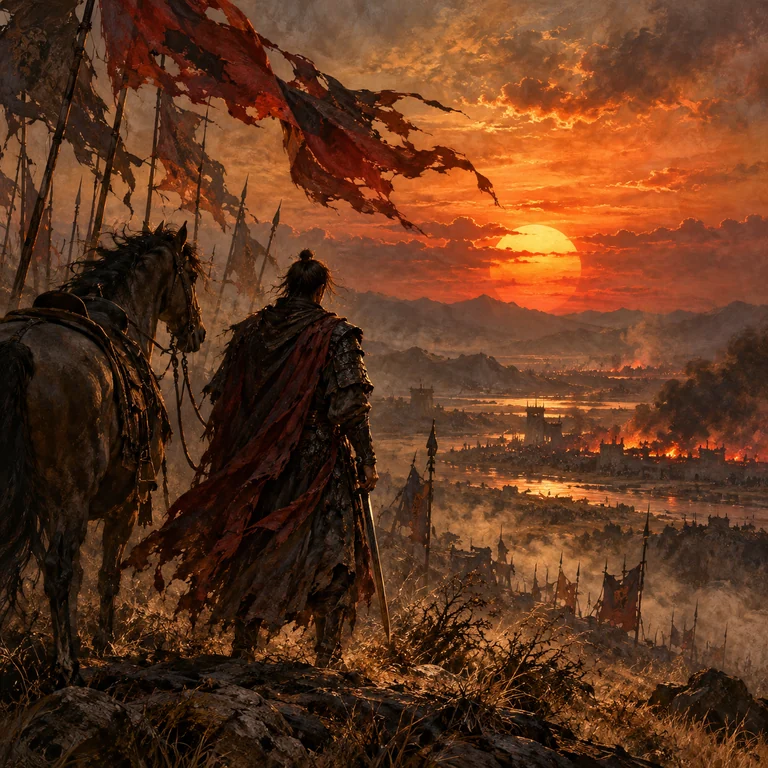
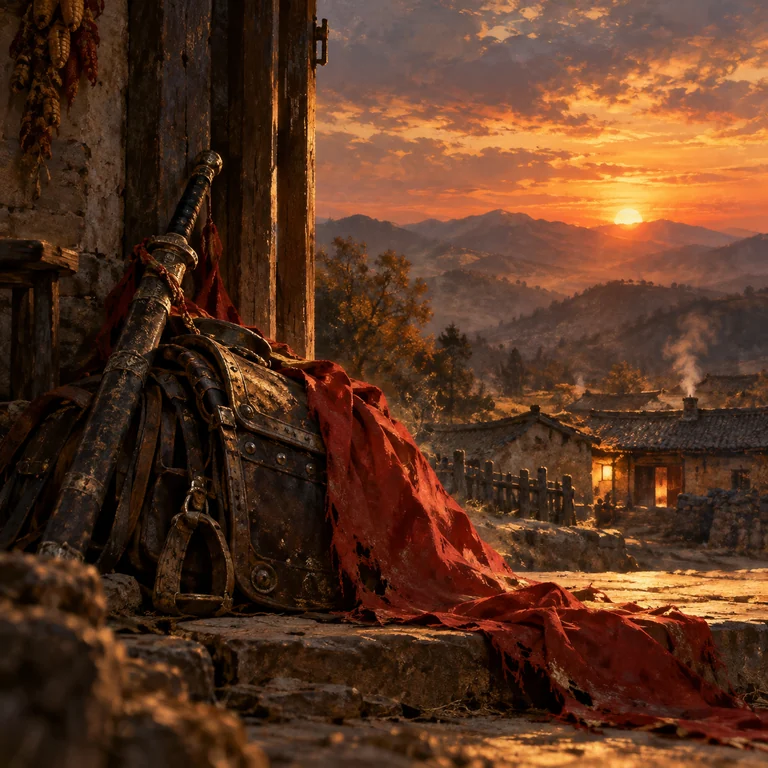
From a poem into a story
When the recruit Meng Shi receives his reward, he recognizes the red cord as coming from the home of a boy from his own village. According to the army rolls, that boy has just earned military honors; yet three days earlier, Meng Shi saw the same kind of red cord in a burial pit. Seeking answers about the reward, he heads toward the old camp everyone avoids and finds an old man deep among the reeds, branded as a deserter. Behind the old man is a group of children who tremble at the sight of Meng Shi’s scabbard.
Start readingAI-assisted writing · Fictional characters and events
