
On Early Plum Blossoms / Plum Blossoms in Full Bloom at the Yangzhou Judicial Officer’s Residence
Northern and Southern Dynasties・He Xun

Northern and Southern Dynasties・He Xun
In Rabbit Garden, the seasons mark their course,none startles us to their passing more than the plum blossom。
衔霜当路发,映雪拟寒开。— Bearing frost, it blossoms beside the road; reflecting the snow, it readies its flowers against the cold.
Branches stretch across Queyue Pavilion, blossoms surround Lingfeng Terrace.
At dawn it sheds Changmen tears; at dusk it detains a Linqiong cup.
It must know its blossoms will fall early,so it hastens to arrive with the first spring.
The animation remains in its original Chinese.
The animation is ready.
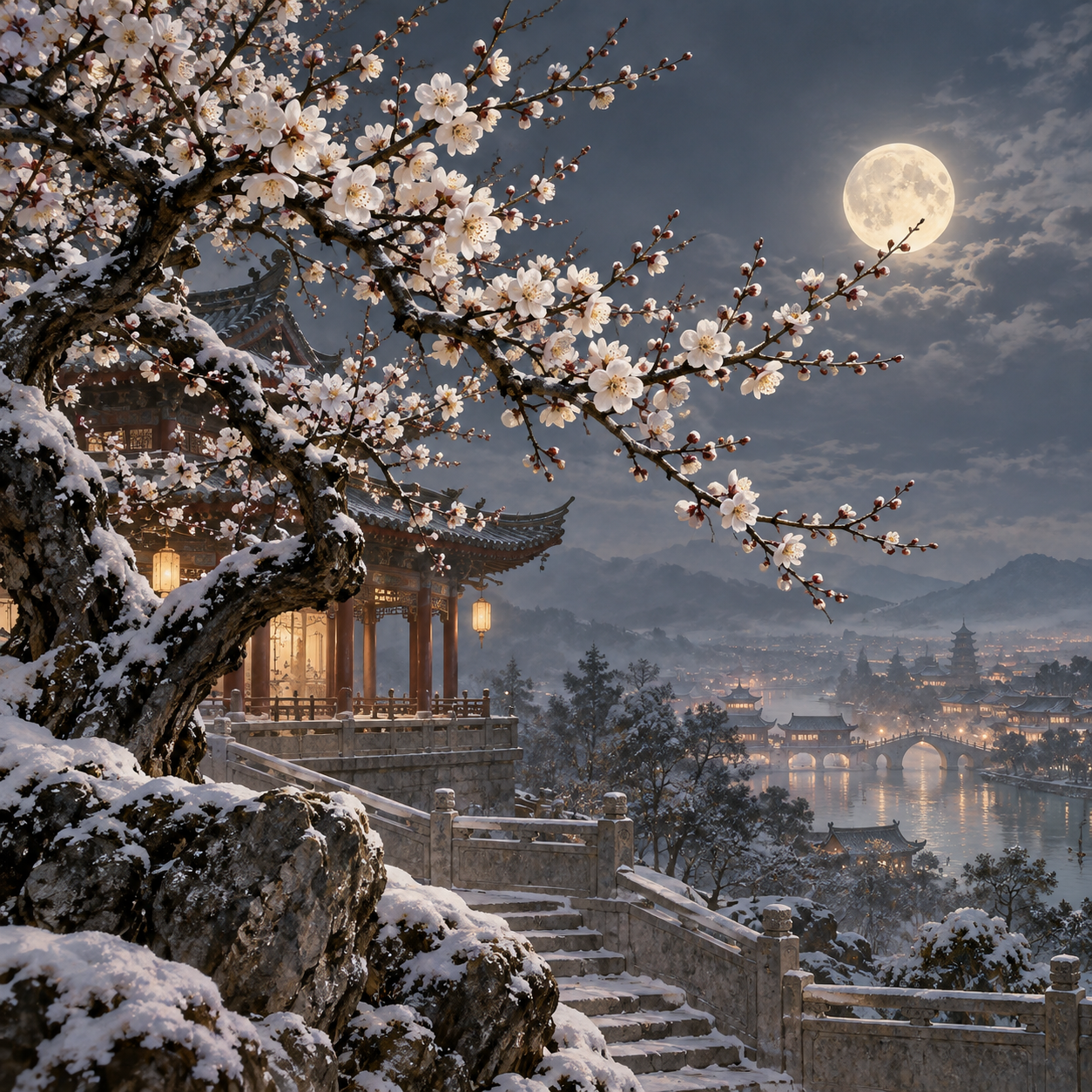
The garden's changing natural signs mark the passage of the seasons, and plum blossoms are the first to awaken us to their change. Bearing frost, they open beside the road, facing the snow as though deliberately confronting the bitter cold. Their branches slant beside Queyue Belvedere, their blossoms surround Lingfeng Terrace. At dawn they seem to shed tears like the woman in Changmen Palace; at dusk they seem to detain the cup of a drinker in Linqiong. Perhaps they too know that they bloom early and fade early, and so hasten to follow the first arrival of spring.
兔园: the name of Prince Xiao of Liang's garden in the Han dynasty, later used for princely gardens generally. 物序: the seasonal succession of natural phenomena. 惊时: to make one suddenly aware of the changing seasons.
衔霜: bearing frost. 拟寒: facing the cold, blooming into it. 却月观、凌风台: the names of towers and terraces evoke the garden setting surrounding the plum blossoms.
长门泣: invokes the story of the discarded Empress Chen living in Changmen Palace, comparing tears to dew on plum blossoms. 临邛杯: evokes the wine-related story of Sima Xiangru and Zhuo Wenjun in Linqiong, showing how the flowers entice people to linger.
上春: early spring. 早飘落: flowering earlier than other blossoms and also liable to fade early.
Reading guide: This celebrated early plum-blossom poem by He Xun portrays both the clear brightness of early flowers and the apprehension that they may wither. Also titled “Plum Blossoms in Full Bloom at the Judicial Administrator's Office in Yangzhou,” it helped shape the later literary allusion to “He Xun singing of plum blossoms.”
The opening emphasizes “惊” (surprise): plum blossoms open before many other flowers, reminding the observer that the season has changed. Frost, snow, terraces, and towers form the background, while spreading branches and movement around the blossoms bring the space to life.
The allusions to Changmen and Linqiong give the plum blossoms sorrow and attachment respectively, so the flowers are no longer merely unfeeling objects. The ending shifts from early blooming to early falling, adding appreciation of their brief flowering to the joy of welcoming spring.
Let words find a melody
From a poem into a story
Nineteen-year-old An Huai takes over his father’s post as a gardener. His first assignment is to coax the imperial garden’s early plum blossoms into bloom within ten days. The charcoal fire burns fiercely, yet the roots crumble at a touch. The steward asks only when the flowers will open; the fine silk his father sends seems to offer another way out. As the banquet draws closer, one word on the flower inspection report still awaits his brush.
Start readingAI-assisted writing · Fictional characters and events
