
The Western Stream at Chuzhou
Tang dynasty・Wei Yingwu

Tang dynasty・Wei Yingwu
I cherish the secluded grass growing beside the stream; above, orioles sing deep among the trees.
春潮带雨晚来急,野渡无人舟自横。— The spring tide, bearing rain, grows swift toward evening; at the deserted country ferry, a boat drifts crosswise on its own.
The animation remains in its original Chinese.
The animation is ready.
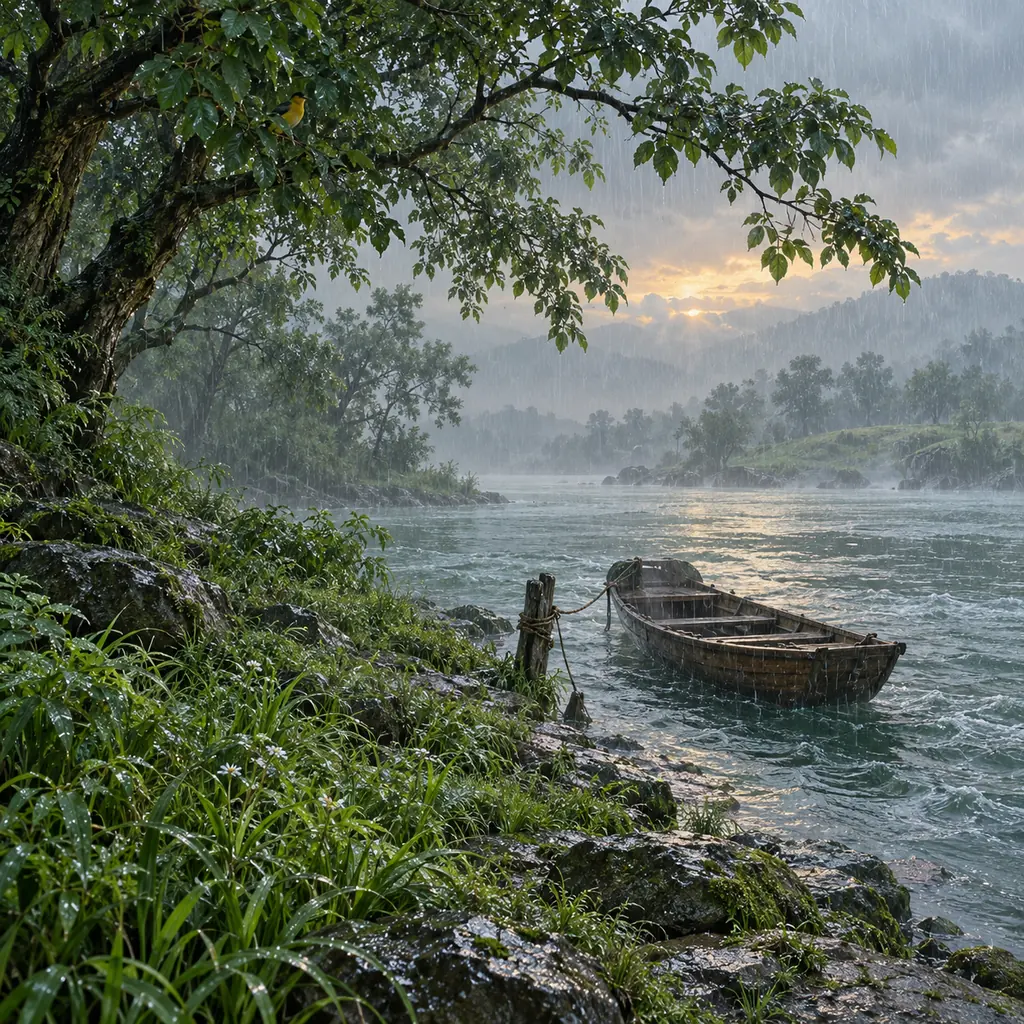
I especially love the quiet grass growing beside the stream; deep in the dense trees, orioles sing overhead.
Toward evening, the rain drives the spring-swollen stream still faster; no one is visible at the rural ferry, where a boat lies freely across the water's edge.
滁州: the area around present-day Chuzhou, Anhui. 西涧: the stream west of Chuzhou, identifying the place visited in the poem.
独怜: to be especially fond of. 怜 here does not mean to pity or feel compassion. 幽草: grass growing in a secluded place.
黄鹂: the oriole, also called 黄莺. 深树: deep within dense trees; its song may be heard without its body being clearly seen.
春潮: streams and rivers swollen by spring rain; it need not mean an ocean tide. 晚来急: the current grows swift toward evening.
野渡: a rural ferry crossing. 无人: no ferryman or traveler is visible; it does not mean the place has never had residents. 舟自横: with no one handling it, the boat lies crosswise or askew on the water; 横 is pronounced héng.
Reading guide: The poem turns a visit to a stream into two connected scenes: first, secluded stillness deep among the vegetation; then, a rustic ferry crossing as evening rain swells the water. Stillness does not mean an absence of sound, nor does the rushing current make the ending feel hurried. As you read, let your gaze move between high and low, near and far: the grass at your feet, birdsong overhead, the rising stream, and finally the boat with no one at its helm.
The opening “独怜” (“cherish alone”) immediately reveals the observer’s preference, but this affection is given to ordinary secluded grasses rather than famous flowers or rare plants. The grass lies low, while birds sit deep among tall trees; this arrangement of near and high gives the streamside space depth without crowding it. The orioles’ calls do not shatter the stillness but bring life to the unseen depths of the foliage. The reader seems first to find firm footing, then lift their head to listen.
The pace suddenly quickens in the final two lines. Spring waters rise and evening rain joins them; “带” (“bringing along”) combines the two flows, while “急” (“swift”) concentrates their force at the line’s end. Immediately afterward, however, come the absence of people and the boat lying crosswise on its own. Human activity recedes, leaving the boat in a relaxed, slightly slanting posture. The juxtaposition of rushing water and crosswise boat first creates a palpable natural tension, without being explained as a code for any particular political event. The whole poem states its love directly only once, at the beginning; afterward, colors, sounds, currents, and the positions of objects express its mood. It is therefore understated, yet never insubstantial.
Let words find a melody
From a poem into a story
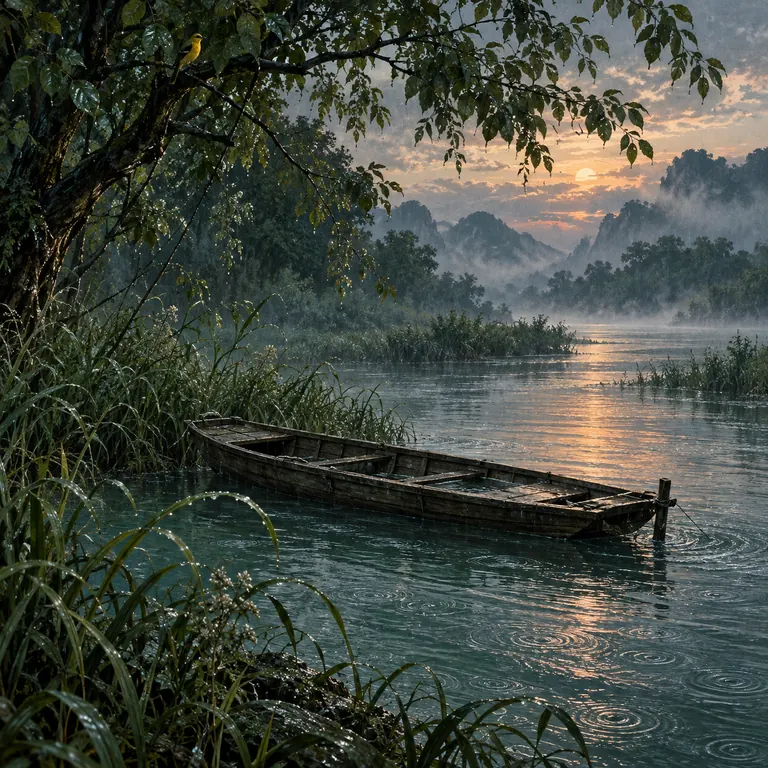
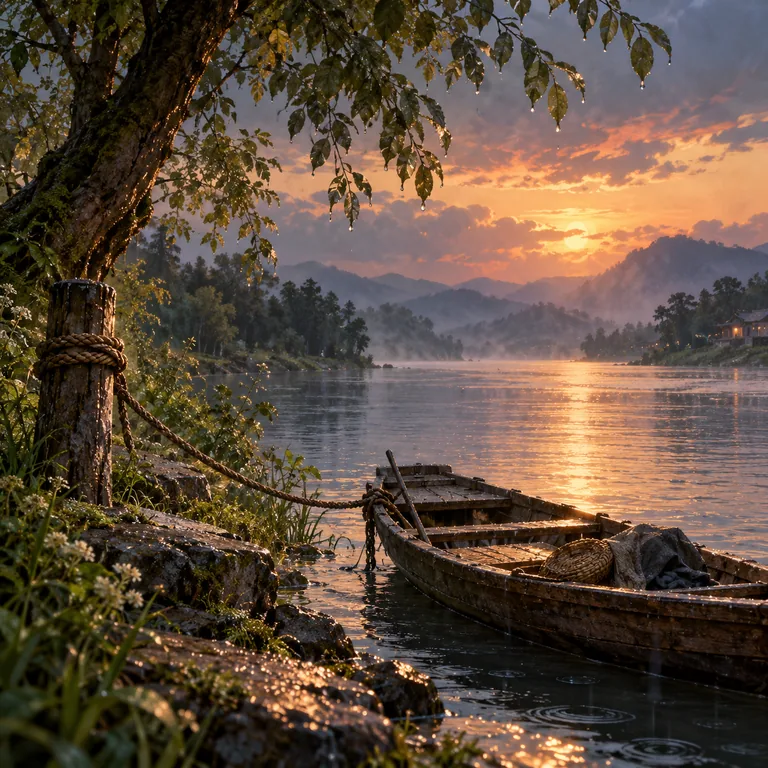
Before the lamps at Xu He’s funeral altar have gone out, Tong Shuang has already carried away the qin that was meant to be buried with her. She spent three years crafting Sparse Rain, and Xu He played it for seventeen more. She refuses to believe that a single clause in a will can decree its final note. Evening rain swells the western stream, the black sign announcing suspended crossings lies turned over on the bank, and Xu He’s husband has come after her. The qin rests on her knees; one mooring rope remains tied at the stern.
Start readingAI-assisted writing · Fictional characters and events
