
Lang Tao Sha · Seeking Wine from Wu Jianshan on the Double Ninth
Song dynasty・Wu Wenying

Song dynasty・Wu Wenying
Distant mountains stretch like long, green brows. The heights are desolate. The chrysanthemums are delicate and slender as Du Qiuniang. I wash the green cup clean, drawing water from the dew-damp well, and offer for now their secluded fragrance.
A black hat presses down on frost-white hair. The wind blows fiercely. The year's fine festival passes in the western chamber. How much sorrow lies in autumn colors and the cries of geese—all gathered in the slanting sun.
The animation remains in its original Chinese.
The animation is ready.
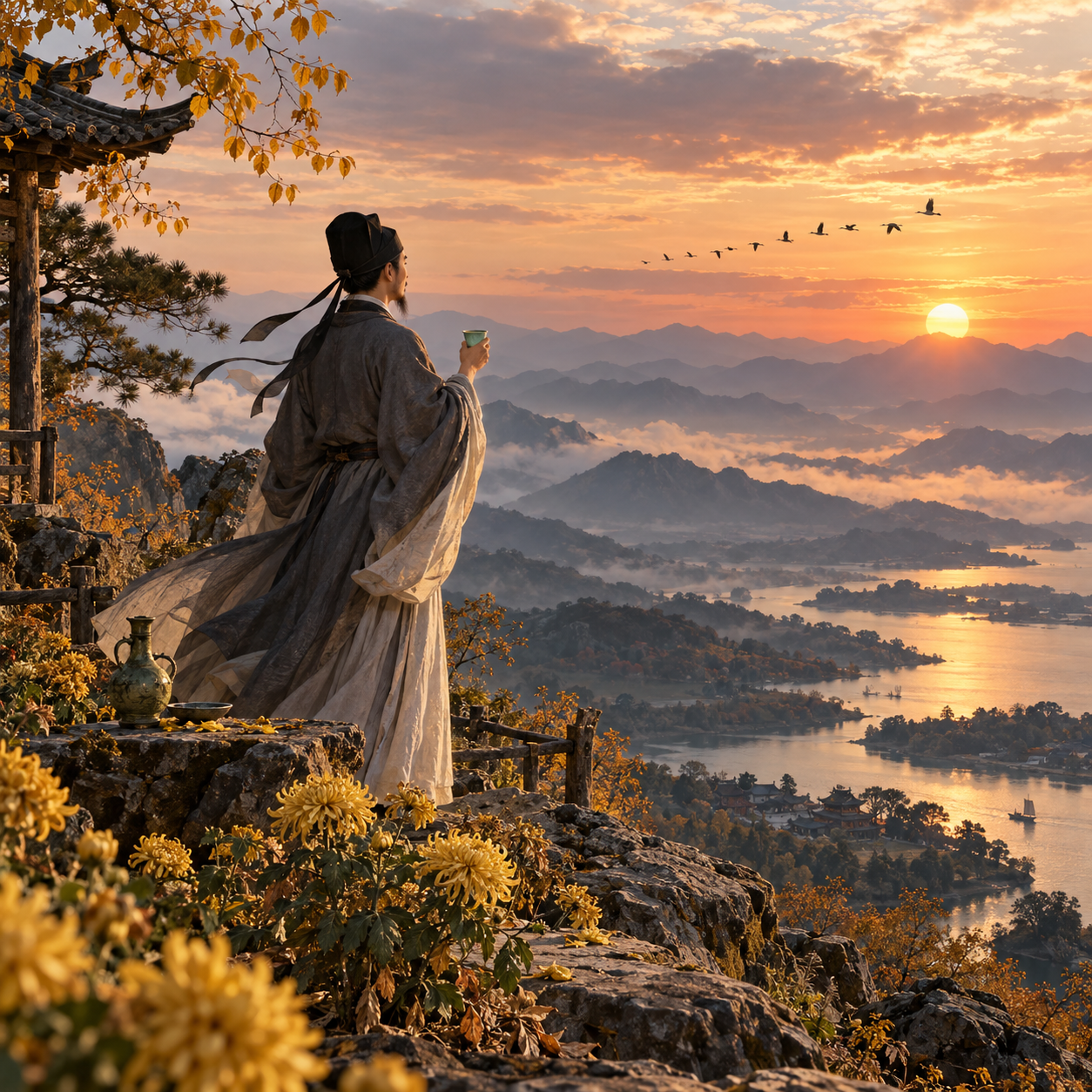
The distant mountains are blue-green, like long, dark-painted brows; yet looking out from on high, I feel only desolation. The slender chrysanthemums seem like Du Qiuniang. I wash a green cup, draw water from the open-air well, and arrange chrysanthemums in it, offering, for now, a faint fragrance.
A black hat holds down frost-white hair, while the autumn wind blows with unruly force. The yearly Double Ninth Festival is spent gathering with friends in the western room. How much sorrow the autumn colors and geese’s cries awaken—all of it dissolves into this slanting sunlight.
九日: the ninth day of the ninth lunar month, the Double Ninth Festival. 从吴见山觅酒: asking the friend Wu Jianshan for wine and gathering to drink together.
翠眉: women’s darkened eyebrows used as an image for distant mountains. 杜秋娘: Du Qiuniang, a woman of the Tang dynasty whose life Du Mu recorded in a poem; her image here conveys the chrysanthemum’s slenderness and a sense of approaching life’s end.
绿杯: a green cup, or an elegant name for a cup. 牵露井: drawing water from a well without a sheltering pavilion. 荐: to offer.
乌帽: a black hat, also evoking the story of Meng Jia losing his hat at the Double Ninth Festival. 吴霜: frost used as a metaphor for white hair.
Introduction: This lyric describes visiting a friend for drinks at the Double Ninth Festival. Climbing to a height, chrysanthemums, a black hat, and the cries of wild geese all evoke the autumn festival. The title’s “seeking wine” leads to more than a cheerful feast: it brings out the poet’s subdued reflections on the passing years.
The first stanza draws inward from distant mountains to chrysanthemums in a cup, moving from a vast, desolate scene to something small and refined. Comparing the chrysanthemum to Du Qiuniang gives the flower’s form a suggestion of human life and fate.
The second stanza brings in white hair and fierce winds, so aging is no longer merely implied. The ending gathers the visible autumn colors and the audible cries of geese into the setting sun. The sorrows are not explained one by one, but find expression in a concentrated, complete evening scene.
Let words find a melody
From a poem into a story
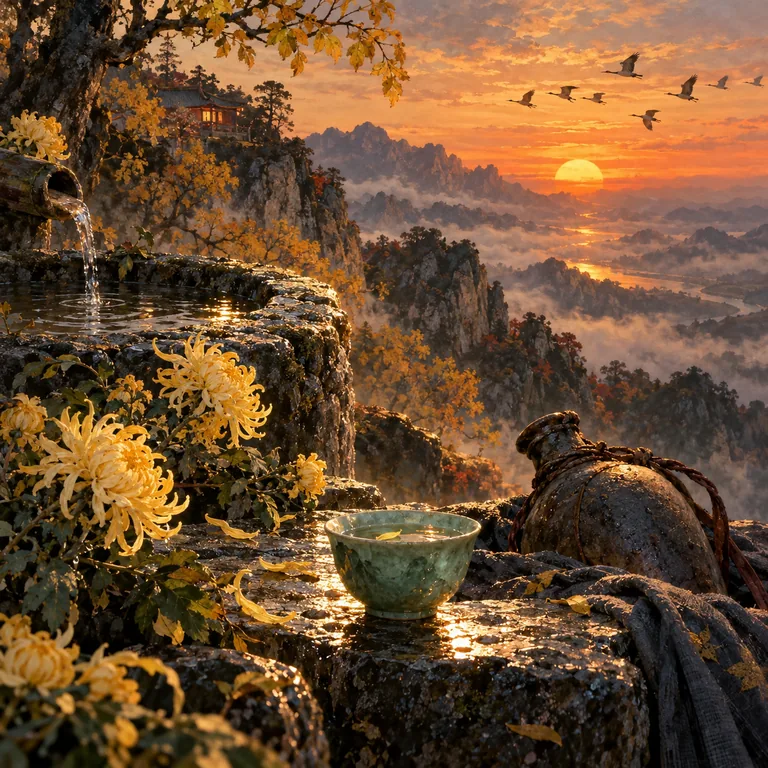
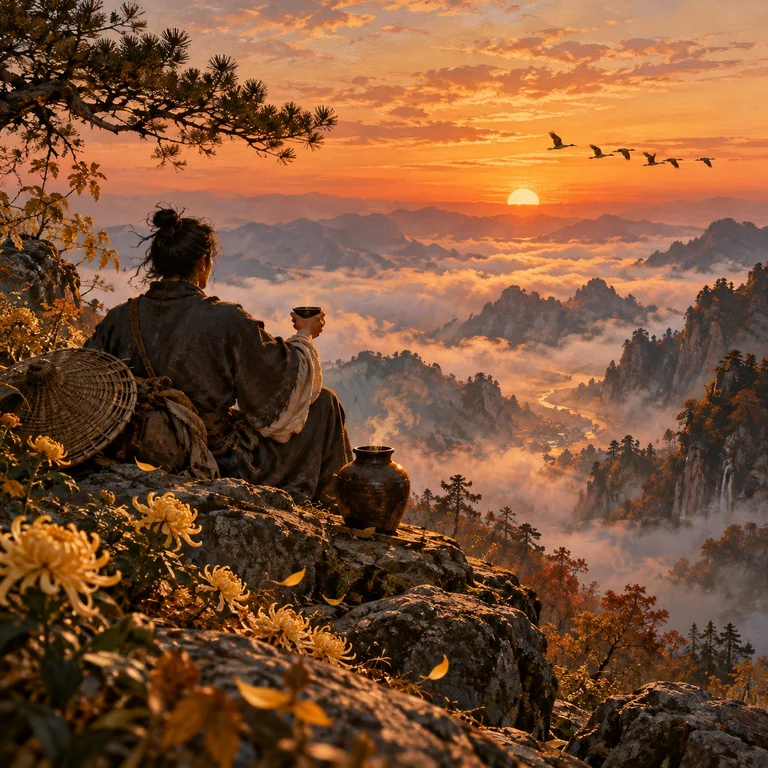
When the chrysanthemum wine for the Double Ninth arrives, Song Tang is putting away a green cup that has stood empty for years. The familiar scent of well water draws her onto the mountain road, but the white-haired person in the courtyard takes her for a stranger come to buy wine. The marriage pledge from thirty years ago still exists, yet the lives of the two households have each traveled far. Suddenly, she does not know how to begin the question she brought.
Start readingAI-assisted writing · Fictional characters and events
