
Hao Shi Jin · Wind Beyond the Curtain in the Fifth Watch
Qing dynasty・Nalan Xingde

Qing dynasty・Nalan Xingde
Beyond the curtain, wind before dawn,I endure the chill of morning. Only half the autumn quilt remains,embracing the waning moon that filters through the curtain.
How could these clear tears fail to freeze, when we part so lightly at the sweetest moment? I would tell again the sorrow of separation when dawn’s chill deepens.
The animation remains in its original Chinese.
The animation is ready.
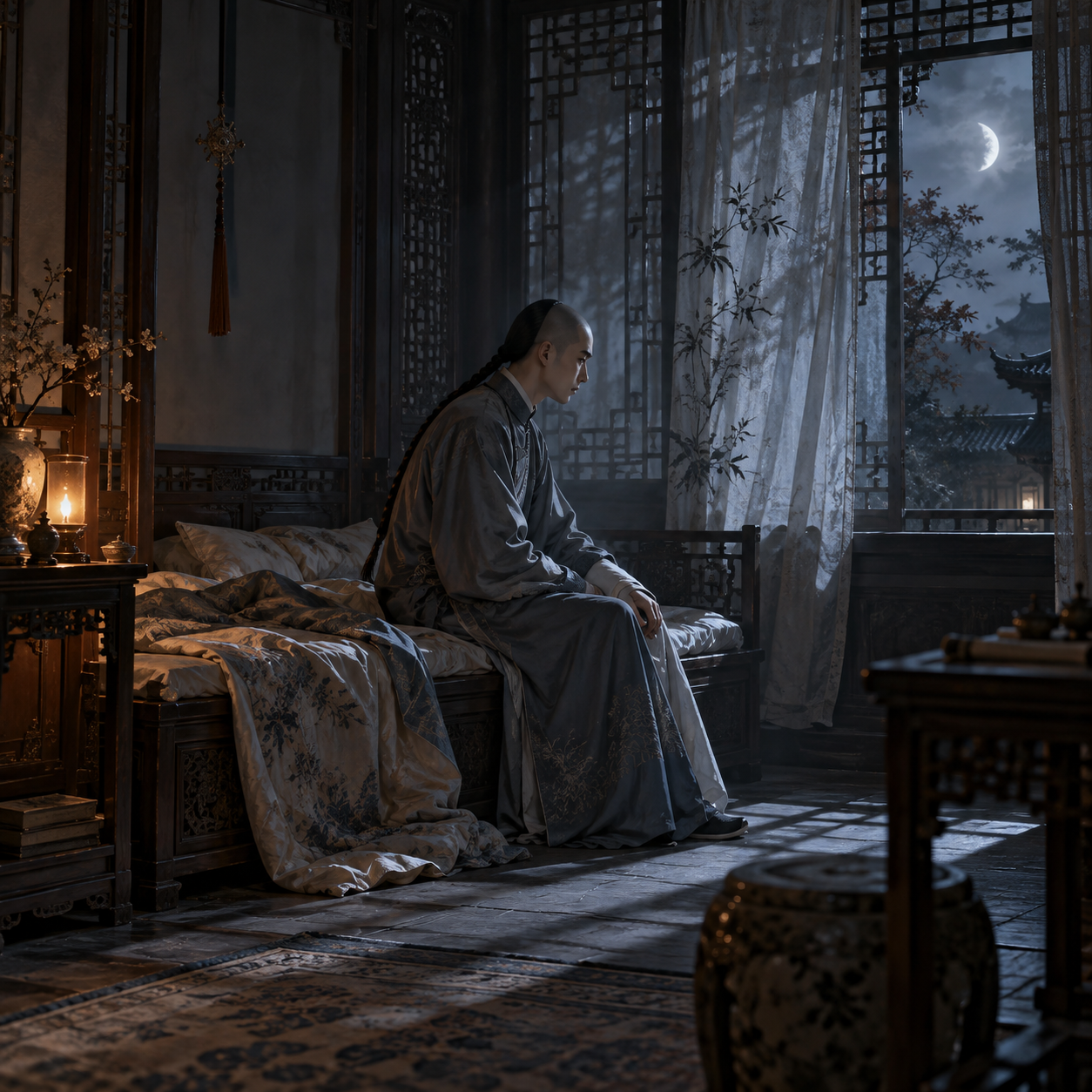
Beyond the curtain blows the wind of the fifth watch, the hour when dawn's chill must be borne. Only half the autumn quilt remains to hold, and the waning moon's cold light passes through the curtain into my embrace. How could my clear tears not seem to freeze? Just when our reunion was sweetest, we parted all too readily again. I want to wait until daybreak, then tell this dawn chill, in detail, of all my sorrow at parting.
五更: the night watch just before dawn. 消受: to bear or receive; here suggests something difficult to endure. 衾 (qīn): a quilt.
争教: how could one let; how can one allow. 好处: a beautiful moment, or a time when affection is at its strongest. 拟: to intend. 重说: to tell anew.
“秋衾一半” (half an autumn quilt) suggests sleeping alone; this line alone cannot establish whether the lyric was written specifically to mourn someone.
Reading guide: Nalan Xingde places the pain of parting within the cold hours of the fifth watch, just before dawn. The person addressed is unnamed. It is best understood through sorrow at separation and solitary sleep, preserving the work’s restraint without inventing a definite biographical story.
Wind comes from beyond the curtain, moonlight passes through it, yet the autumn quilt spread across half the bed brings no warmth. Each detail centers on “寒,” “cold,” making the absence of a companion tangible.
“泪成冰” (“tears turn to ice”) joins bodily cold with emotional coldness. That the speaker finally addresses the “晓寒” (“dawn chill”) shows there is no one to talk to; the personification adds no bustle, but deepens the solitude.
Let words find a melody
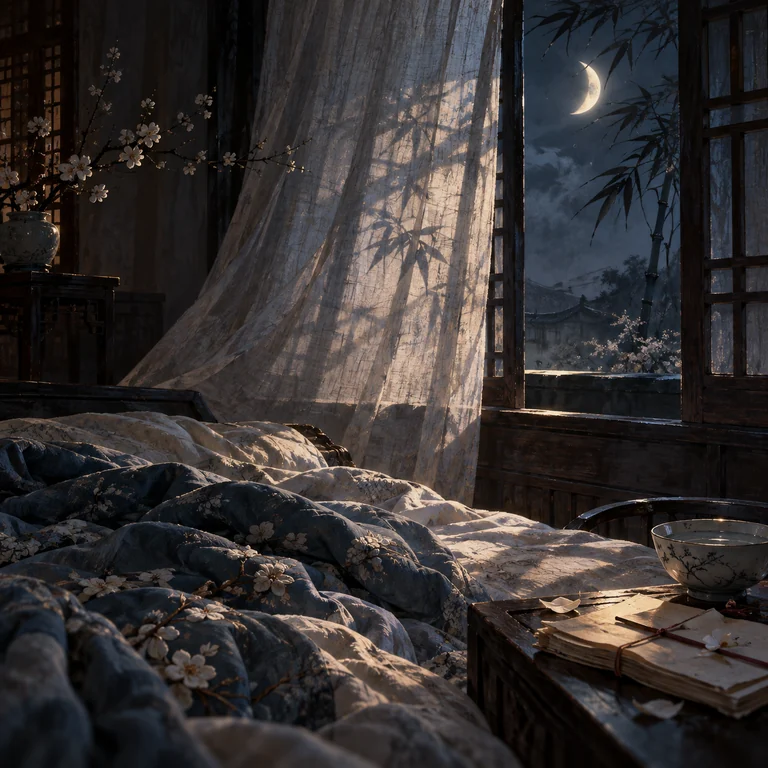
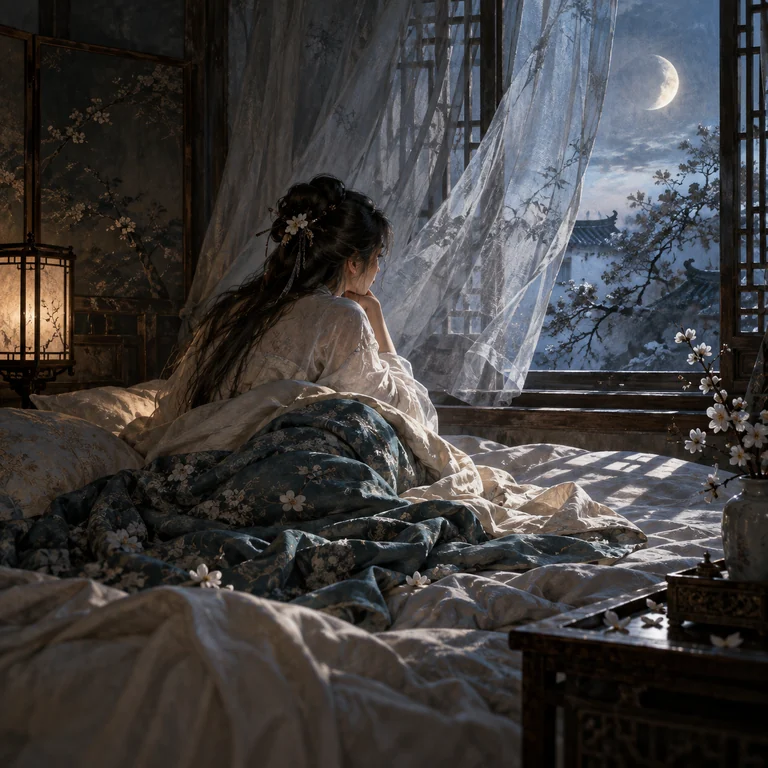
From a poem into a story
Xu Ling’s sewing needle pierces a letter of divorce, dated last autumn. Back then, she was too ill to rise, and her husband carried her on his back to seek treatment every day. Now he is to head north with officials tomorrow morning, having said only that he was going to check taxes on goods along the trade routes. With the paper spread beneath the lamp, she removes the thick socks and cough medicine she had packed, item by item, and asks why he has still been eating at home all this past year.
Start readingAI-assisted writing · Fictional characters and events
