
Presented to Liu Jingwen
Song dynasty・Su Shi

Song dynasty・Su Shi
The lotuses are spent, their rain-holding canopies gone, the chrysanthemums are faded, yet their branches still defy the frost.
一年好景君须记,最是橙黄橘绿时。— Remember the finest scenery of the year: above all, the season when oranges turn yellow and tangerines remain green.
The animation remains in its original Chinese.
The animation is ready.
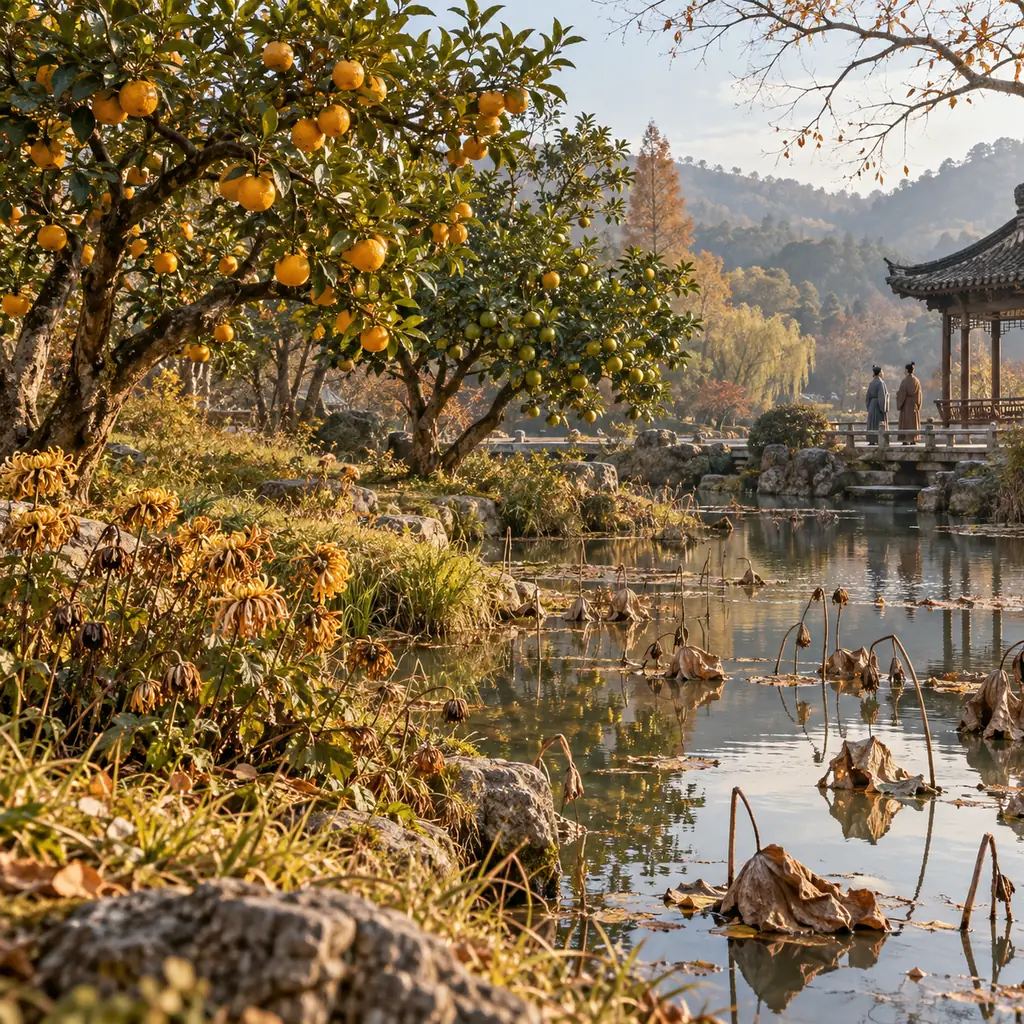
The lotuses have completely faded; even the leaves that once spread like umbrellas to catch the wind and rain are gone. Though the chrysanthemums have withered, their stems still stand upright against the cold frost.
Remember the fine scenery worth cherishing in the year; nothing surpasses this season, when oranges are golden and tangerines still green.
赠: to give; here, to present a poem. 刘景文: the poem's recipient; Jingwen is his courtesy name. The title identifies this as a poem presented to a friend, so it should not be treated simply as a short landscape poem without an addressee.
荷尽: lotus flowers have withered, leaving the pond in decline. 擎, pronounced qíng: to hold upward. 雨盖: a rain umbrella; here the spread lotus leaves are compared to umbrellas.
菊残: chrysanthemums have withered, rather than remaining in full bloom. 犹: still. 傲霜枝: stems that do not fall beneath the frost; “傲” (“defying”) gives them an unyielding bearing.
君: a respectful form of address for the recipient. 须记: should remember. 好景: scenery worthy of appreciation and cherishing.
橙黄橘绿: oranges have turned yellow while mandarins remain green, describing fruit trees in late autumn and early winter; these are not generic patches of orange and green, nor does the phrase imply snow covering the ground.
Textual variants: In the final line, 最是 (most of all) also appears as 正是 (precisely); the consulted volume 9 of the Annotated Poetry Collection of Dongpo reads 正是. The Imperial Anthology also has the variant 好处 (finest aspect). Following the source poem in the database, this page retains 好景 (fine scenery) and 最是, without altering the original to match variant readings.
Reading guide: This seven-character quatrain depicts flowers and fruit in late autumn and early winter, using the scene to convey affection and encouragement to a friend. With the lotuses gone and chrysanthemums withered, readers may expect the poem to dwell on decline, but the poet turns to chrysanthemum stems still standing and oranges and tangerines beginning to change color. Read fading and ripening as parts of the same season, and consider how fine scenery is rediscovered amid sparseness, without adding a heavy snowfall to the scene.
The first two lines have similar structures but different emotional coloring. The lotus leaves have lost their rain-bearing posture: what once spread wide is no longer there. The chrysanthemums have also withered, yet “犹” (still) holds the gaze on the stems that remain. “已无” (no longer have) contrasts with “犹有” (still have), turning the poem within seemingly similar scenes of decline. Defying frost does not make the chrysanthemums bloom again; it makes their visible uprightness after withering something worth attending to.
The final two lines acknowledge the lateness of the season yet directly call this the year's finest scenery. The yellows and greens of oranges and tangerines offer bright colors while suggesting that growth has reached the stage of bearing fruit; together with the withered lotuses and chrysanthemum stems, they form a complete seasonal scene, rather than erasing the autumn before us with an image of spring. The word “presented” in the title adds a human dimension to this way of seeing: consolation for a friend rests on pointing out the maturity and strength still worth cherishing in the present, rather than promising that everything will be restored. The intimate yet earnest tone of “remember” turns viewing the scene into a discovery the poet wishes to share, giving the poem's optimism a concrete, visible basis.
Let words find a melody
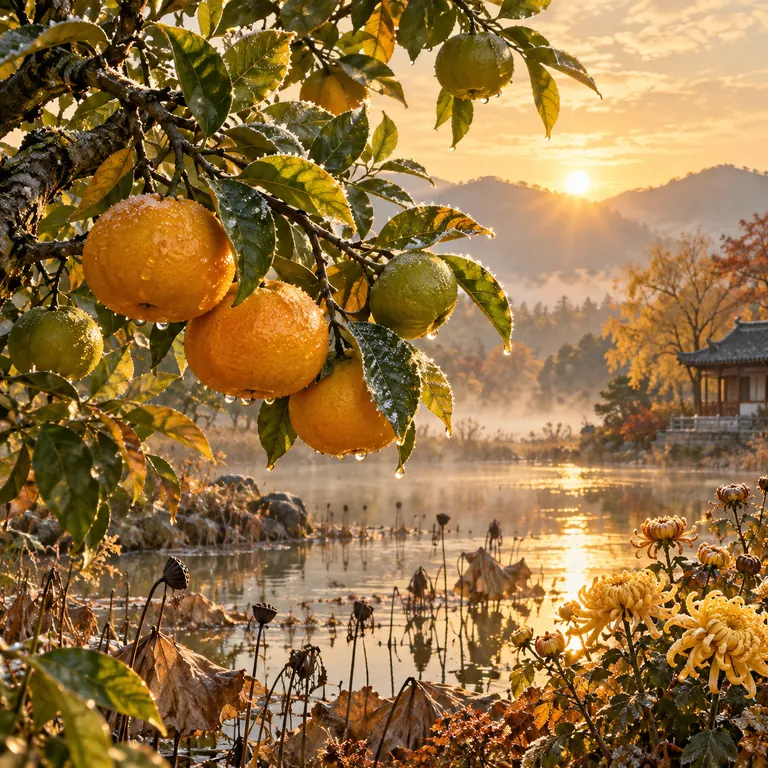
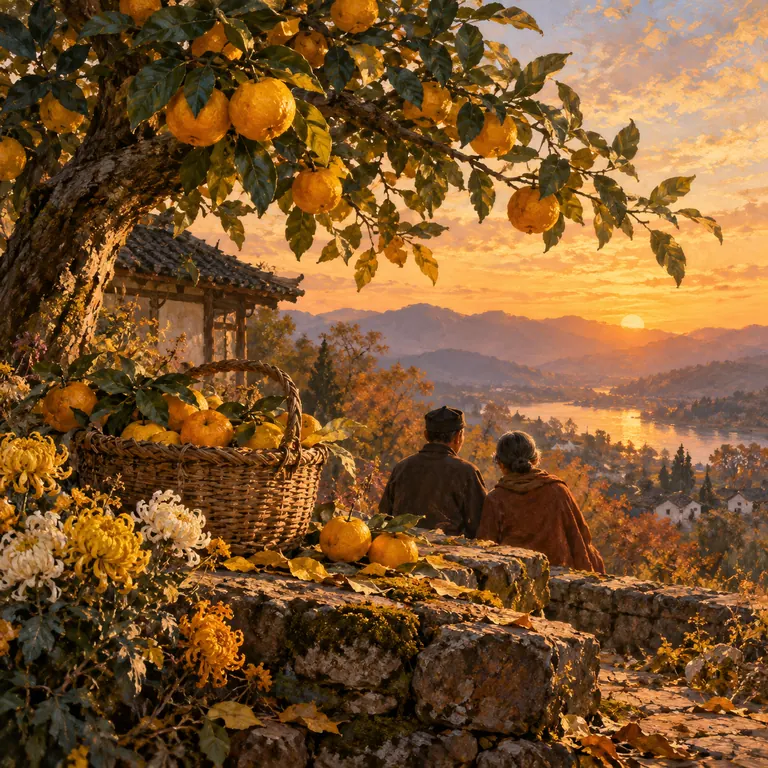
From a poem into a story
Song Heng has put on her wedding dress when the groom comes himself to persuade her not to marry him today. She is fifty-eight, and together they have already rented an orchard outside the city and even prepared the red cords for the cart; he says only to wait another year, until both sets of children can accept it. Yellow oranges lie beside green tangerines beneath the window, and the driver still waits at the alley’s entrance. They clearly planned the orchard and their future days together, yet now only her luggage is neatly packed.
Start readingAI-assisted writing · Fictional characters and events
