
The Jiang and Han Rivers
Tang dynasty・Du Fu

Tang dynasty・Du Fu
By the Yangtze and Han, a traveler longing for home; between heaven and earth, one impractical scholar.
A lone cloud and I are far away beneath the sky,through the endless night, the moon and I are equally alone.
Though the sun is setting, my heart is still strong,in the autumn wind, my illness seems to ease。
Since ancient times, old horses have been kept; they need not be valued for traveling long roads.
The animation remains in its original Chinese.
The animation is ready.
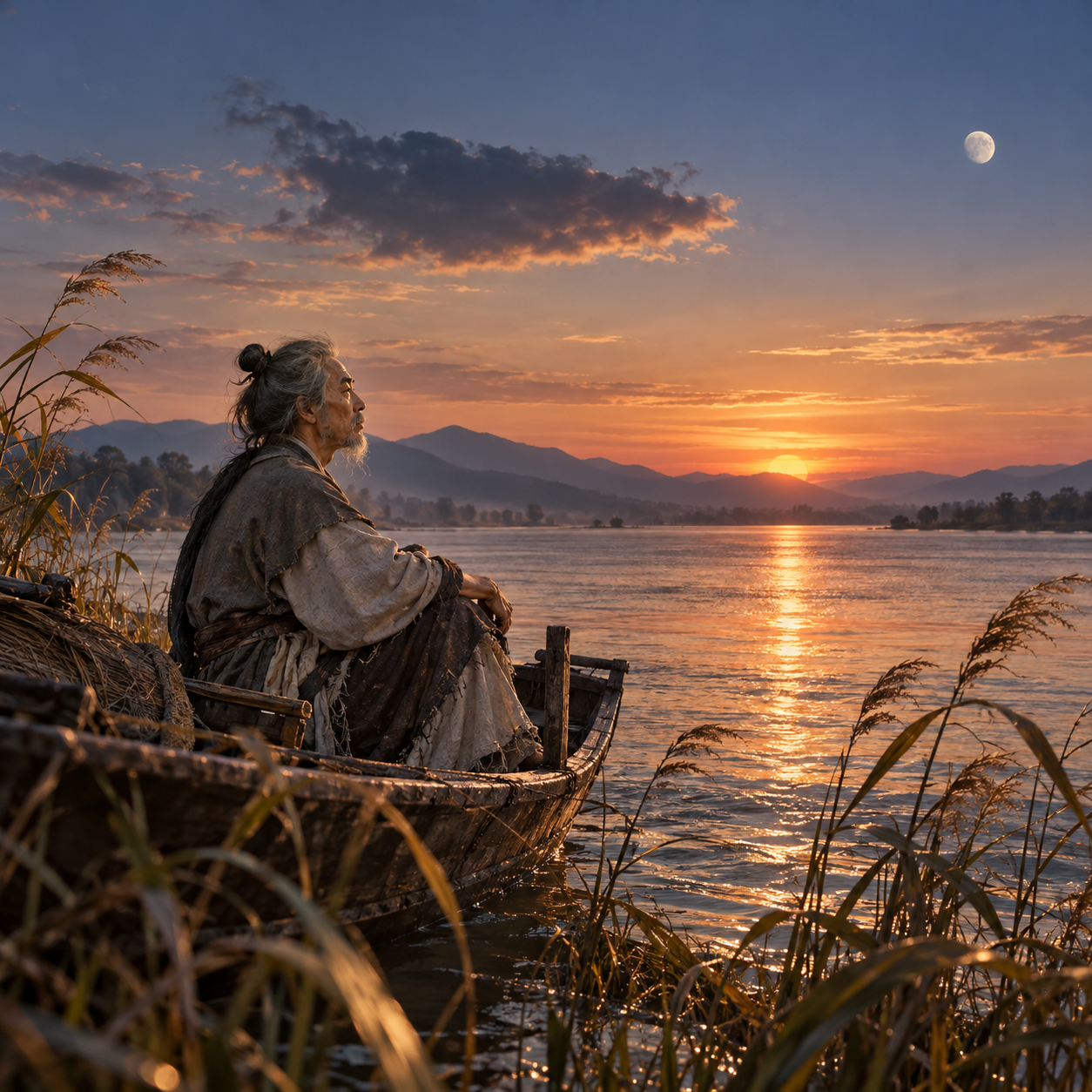
Wandering the Jiang and Han rivers, I am a traveler longing for home; beneath heaven and earth, merely a struggling, impractical scholar. A drifting cloud is as far from its resting place as I am; through the long night, the bright moon is as lonely as I.
Though I have reached life’s late years, my spirit remains vigorous; as the autumn wind blows, even my illness seems gradually to ease. The ancients had reasons to value an old horse’s experience and keep it; they did not necessarily require it to gallop long distances still.
江汉: the region of the Yangtze and Han rivers. 腐儒: an impractical, pedantic scholar, used by the poet self-deprecatingly. 乾坤: heaven and earth.
永夜: A long night. 落日: Both the evening scene before the eyes and a reflection of one's circumstances in old age. 病欲疏: Illness seems about to ease.
存老马: invokes the story of an old horse knowing the way, meaning that the aged still have their uses. 取长途: to require it to undertake a long journey.
Reading guide: This five-character regulated poem, written during Du Fu's wandering late years, reflects on his circumstances and aspirations. It conveys the helplessness of being unable to return home and the loneliness of age and illness, while insisting that he should not be regarded as entirely useless. The final couplet's comparison of himself to an old horse is central to understanding the poem's spiritual turn.
The first half diminishes the self through “思归客” (“a traveler longing to return”) and “一腐儒” (“a single pedantic scholar”), while making a wisp of cloud and the solitary moon projections of the poet's state of mind. The wider the world, the lonelier the wanderer appears.
The latter half finds strength in “心犹壮” (“the heart is still strong”). The metaphor of the old horse does not deny aging; it proposes another measure of a person, in which experience and resolve also have value. The ending thus becomes a measured affirmation of self amid adversity, rather than an empty boast.
Let words find a melody
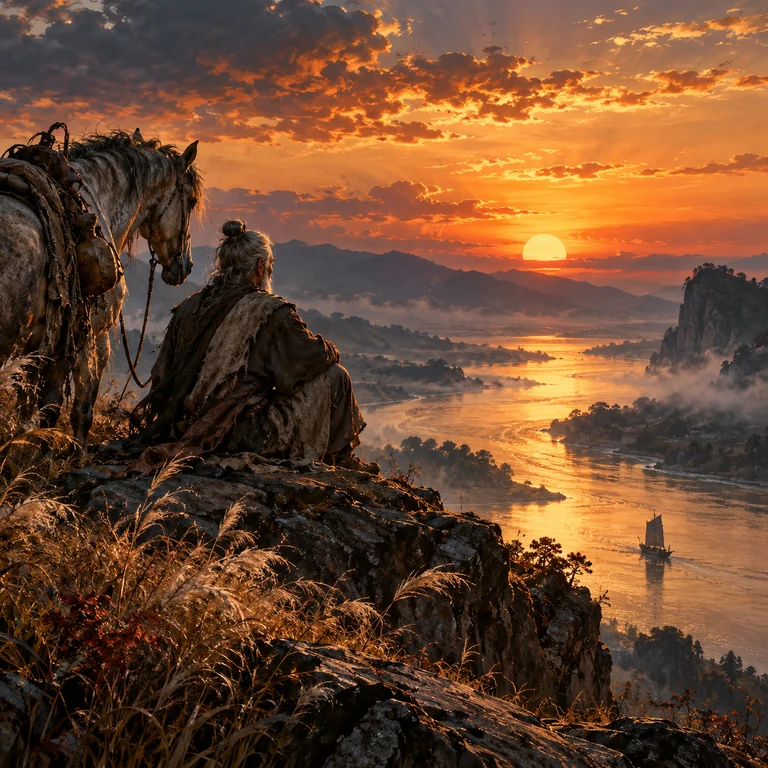
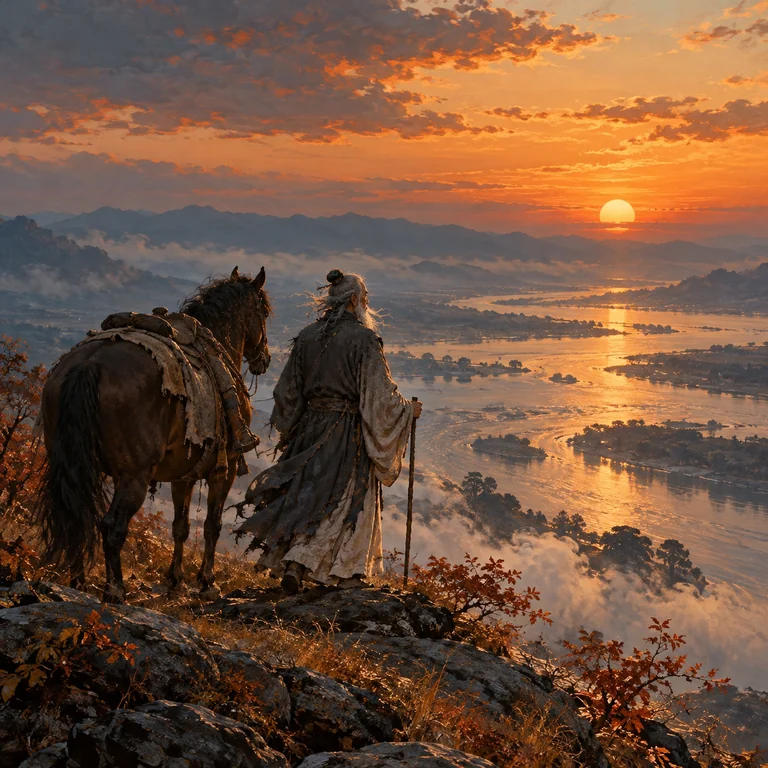
From a poem into a story
After thirty-six years as a river pilot, Uncle He has finally put away enough money to return home, and his apprentice’s new boat flies a red flag. Yet on the very night he is stranded at the wharf, a gong sounds for help at Luokou Shoal. The autumn waters are receding, and a landslide has altered the safe passage marked on the old river chart. A boatload of wounded soldiers, a heavy cannon, and his increasingly unsteady hands are all caught on a river where they cannot wait for dawn.
Start readingAI-assisted writing · Fictional characters and events
