
In the Mountains after Snow
Qing dynasty・Zheng Xie

Qing dynasty・Zheng Xie
At dawn I open the door: snow fills the mountains; the snowfall has cleared, clouds are pale, and sunlight is cold.
Before the eaves can drip, the plum blossoms freeze; such pure solitude is far from ordinary.
The animation remains in its original Chinese.
The animation is ready.
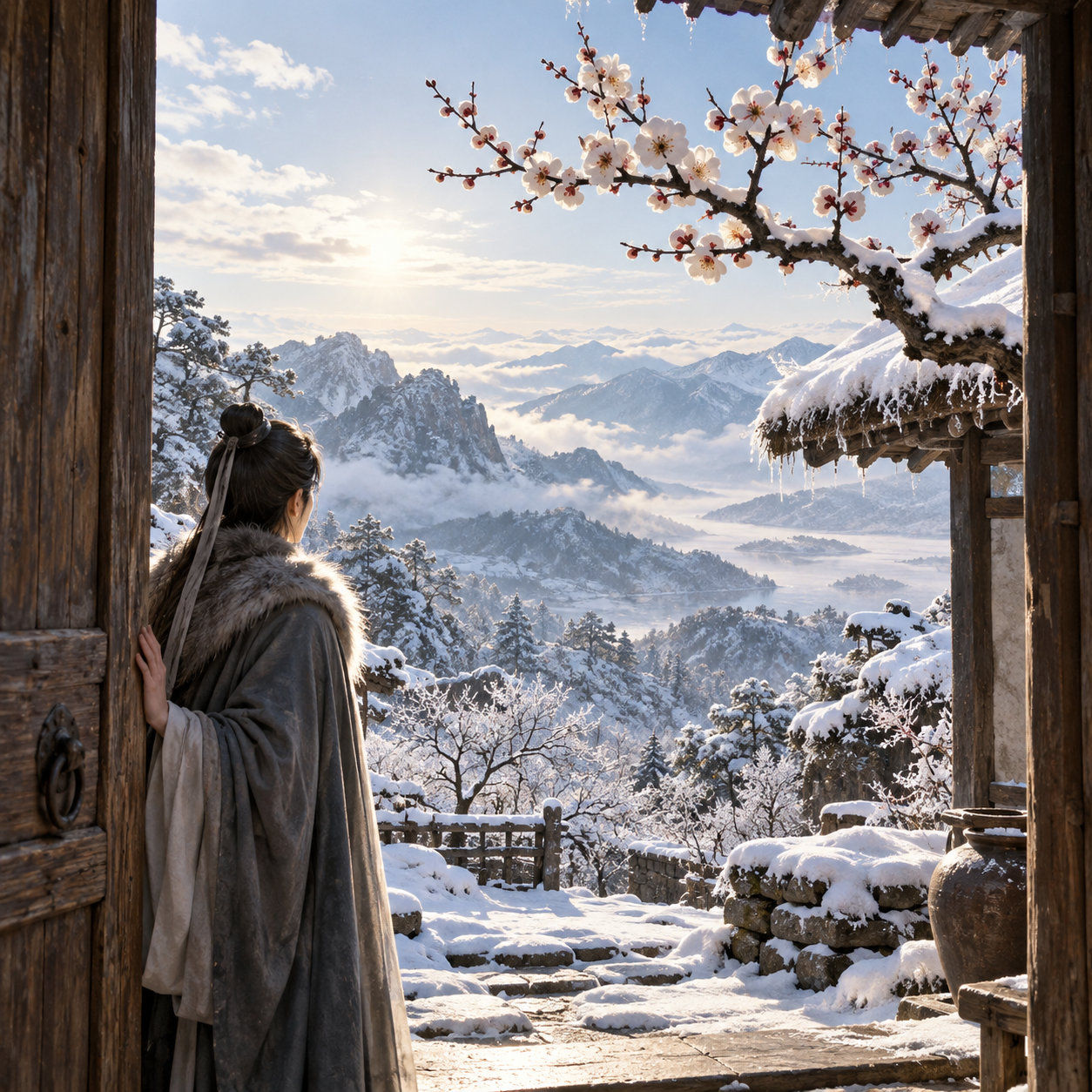
Rising in the morning, I push open the door and see the mountains covered in white snow; the sky has cleared after the snowfall, the clouds are thin, yet sunlight still carries a chill. The snow on the eaves has not yet melted into drops, and plum blossoms too are held in the frost. This lofty, solitary purity is truly extraordinary.
檐流: water flowing from the eaves from melting snow or rain. 未滴: no dripping; here it shows that the temperature remains low and the snow has not melted. 清孤: a lofty, solitary purity of character.
不等闲: Unusual; not to be taken lightly. “梅花冻” describes the plum amid ice, snow, and cold; it does not mean that the entire plant has frozen to death.
Reading guide: Zheng Xie depicts a pure mountain setting through what he sees on opening his door after snow. The poem narrows from a snow-covered mountain to the eaves and plum blossoms, finally naming “清孤” (aloof purity), linking the natural scene with an aesthetic sense of character.
“雪晴” (clear skies after snow) seems to promise warmth, yet it is followed immediately by “日光寒” (the sunlight is cold). Visual brightness and bodily chill coexist, making the world after snow seem lucid and austere.
The eaves have not begun to drip: a small sign of the cold. The final line praises more than snowy whiteness; it values the aloof purity revealed in this setting. The language is plain and restrained, but its weight falls on the three characters “不等闲” (“far from ordinary”).
Let words find a melody


From a poem into a story
After the snow clears, Ding Xiu goes into the mountains to replace a beam. Three trails of footprints in the courtyard lead to the doorway, yet Old Cen insists he lives alone. He brings out two bowls, then hurriedly takes one back; from above the beam comes breathing so faint it can scarcely be heard. Ding Xiu had wanted only to collect his wages and pay his debts, but several men in gray arrive from below carrying debt contracts. Their leader, Steward Shen, holds the debt Ding Xiu’s father left behind.
Start readingAI-assisted writing · Fictional characters and events
