
Song of the Traveling Son
Tang dynasty・Meng Jiao

Tang dynasty・Meng Jiao
Thread in a loving mother’s hand becomes clothing on her wandering son.
Before he leaves, she sews stitch upon stitch,fearing he will be slow to return。
谁言寸草心,报得三春晖。— Who could say that the heart of a little blade of grass can repay the sunshine of all three months of spring?
The animation remains in its original Chinese.
The animation is ready.
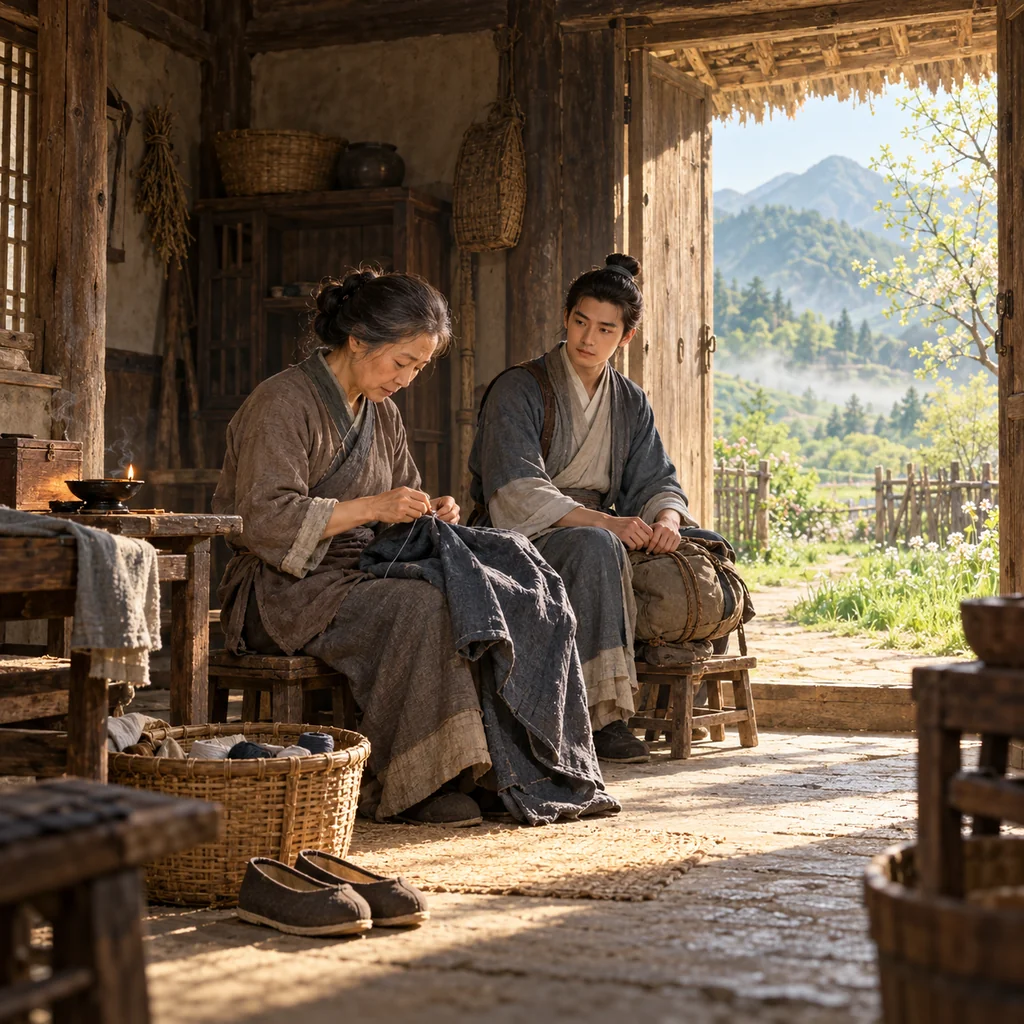
A loving mother holds needle and thread, sewing clothes for the child who will soon travel far away.
Before he left, she sewed stitch upon stitch, close and careful, fearing in her heart that her child would be gone a long time before returning.
Who can say that the small devotion of children, like a blade of grass, is enough to repay a mother's kindness, as vast as the sunshine of an entire spring?
游子: someone traveling far from home. 吟: the name of a poetic form, also part of the poem’s title. This poem is commonly read as a yuefu poem.
临行: just before departure. 密密缝: to sew with fine, close, sturdy stitches, showing the mother’s careful attention to the traveler’s clothing.
意恐: to worry inwardly. 迟迟归: to return only after a long time; the two reduplicated expressions 迟迟 and 密密 respectively describe the duration of her concern and the close stitching of the garment.
谁言: Who can say? A rhetorical question. 寸草心: The modest feelings of children likened to a tiny blade of grass; it does not mean that grass can actually speak.
三春: the three months of spring—early, middle, and late spring—here referring broadly to the whole season, not merely the third lunar month or three years of spring. 晖: sunlight. 三春晖 likens a mother’s profound kindness to the warmth and nourishment of spring sunshine.
Reading guide: The poem gathers the inexpressible concern between mother and child into a thread, a garment, and a busy interval before departure. The first four lines do not elaborate on their life histories; only the final two turn from a domestic scene to the metaphor of grass and spring sunshine. 三春 means the entire spring season. The emphasis is on the warmth and far-reaching scope of maternal kindness, so the phrase cannot fix the sewing to the third lunar month.
The opening couplet does not directly describe the mother’s toil; instead, it places thread and clothing in separate lines: the thread is in her hand, and the clothing will be worn by her traveling son. Between these two objects, care passes from one person to another. She need not utter a word asking him to stay; the stitches that continue until his departure have already left her feelings in his clothes. “密密” (“closely, closely”) has a continuous, finely measured rhythm, while “迟迟” (“slowly, slowly”) stretches time. Together, these repeated characters make both the present bustle and the waiting yet to come palpable.
The final couplet rises from concrete actions to metaphor without making maternal love an account that can be settled item by item. The grass is tiny, while the whole spring's sunlight keeps nurturing it; the distances between large and small, receiving and repaying, give the rhetorical question its force. Such writing needs neither a deathbed farewell nor a sudden disaster to bring tears: ordinary care is already weighty enough. The six lines sound close to everyday speech, yet their structure is tight: from objects to actions, from actions to unspoken worries, and finally to natural images that hold children's desire to repay a love they know they can never fully repay.
Let words find a melody
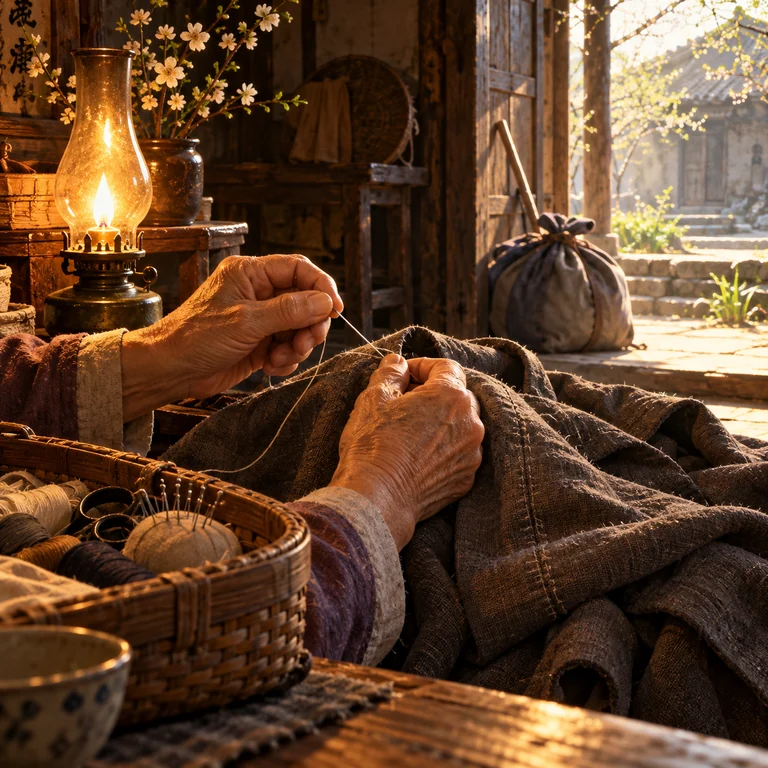
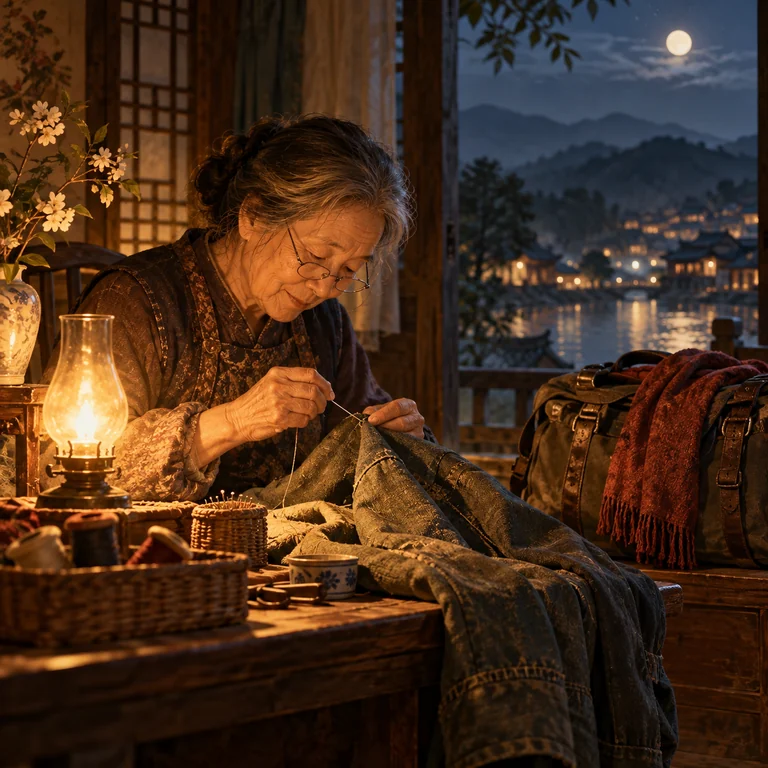
From a poem into a story
A needle threaded with red thread falls out of Tao Chuan’s scabbard, and his mother Lu Qiniang looks more distressed than if she had seen a broken blade. She has kept the escort agency going for half her life, waiting for her son to take over its caravans; after eight years escorting short routes, however, the job he most wants is tailoring clothes. Next month’s twelve freight carts cannot fall behind schedule, and the cuff of his mother’s riding coat, mended six times already, has split again. He secretly takes it beneath the lamp, unsure which stitch to unpick first.
Start readingAI-assisted writing · Fictional characters and events
