
On the Willow
Tang dynasty・Wu Rong

Tang dynasty・Wu Rong
自与莺为地,不教花作媒。细应和雨断,轻只爱风裁。— It offers the orioles a dwelling of its own, needing no flowers to make the match. Its fine strands seem to break among the threads of rain; so light, they love only the wind's trimming.
Gently brush the brocade screens, do not hide Bronze Sparrow Terrace. Among Baling's countless trees, at dusk I return from a farewell.
The animation remains in its original Chinese.
The animation is ready.

The willow itself offers orioles a resting place; it needs no flowers to introduce it. Its slender branches seem about to break along with the threads of rain, and its supple form delights most in the wind’s shaping. You are suited to brushing against splendid brocade screens, but do not block the view from before Bronze Sparrow Terrace. Those countless willows at Baling, at dusk, accompany people returning from farewells.
为地: to provide a dwelling place. 作媒: to introduce or act as a matchmaker. 和雨: together with threads of rain. 裁: to cut or trim; here describes the wind brushing the willow strands.
锦步障: brocade screens used to shield travelers from wind and dust; they also represent aristocratic life. 铜雀台: Bronze Sparrow Terrace, built by Cao Cao; later literature often associates it with palace women gazing into the distance and longing for someone.
灞陵: a place east of Chang’an associated with farewells and the tradition of breaking willow branches to see travelers off. 别离回: returning after bidding someone farewell.
Reading guide: Wu Rong writes of willows through associations with orioles, wind and rain, brocade screens, the Bronze Sparrow Terrace, and Baling. The poem’s focus gradually shifts from the slender delicacy of the branches toward the willow’s place in human life and memories of parting.
The first half does not directly praise the willow's color, but conveys its allure and suppleness through orioles choosing to roost there and wind and rain interweaving with its branches. “不教” (“will not allow”) gives the willow a touch of self-sufficiency.
The second half shifts the view from screens in wealthy households to farewells at dusk. Countless willows merge into a broad backdrop at the close, bringing the poem’s subject into human emotional experience and giving the soft branches the weight of parting sorrow.
Let words find a melody

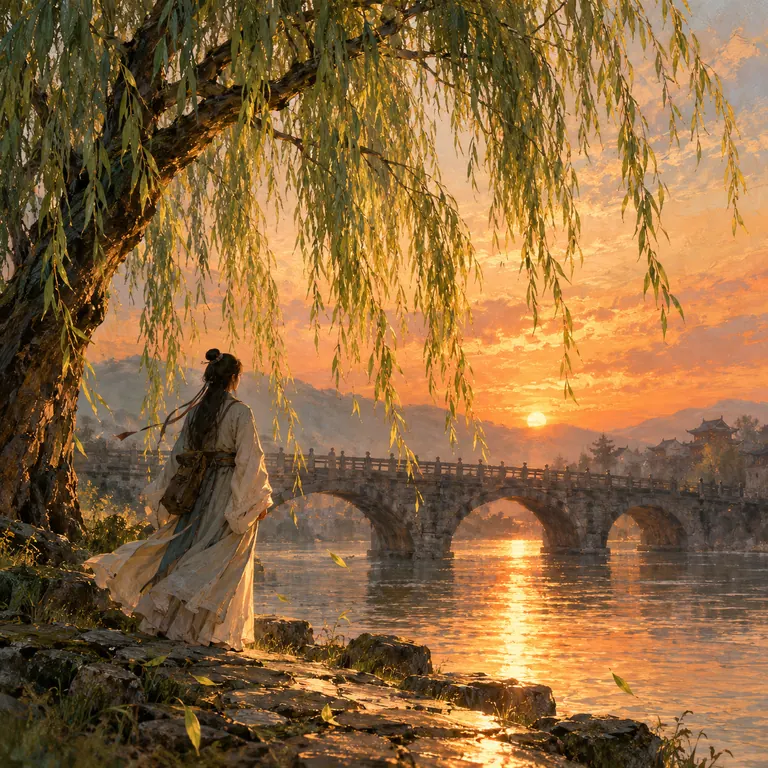
From a poem into a story
Liu Niang can sell the same willow branch three times. The blessings offered at Ba Bridge have always been her means of paying her debts. A distinguished visitor from the capital offers twenty taels to dig up the roots of the old willow behind her shop. This one deal would clear the debts her father left. She accepts the deposit and waits for clear weather to take up the axe, but a lame old man blocks the tree. After nightfall, a patch of ground behind the shop collapses, and a faint sound of water rises from below.
Start readingAI-assisted writing · Fictional characters and events
