
Gazing at Mount Tai
Tang dynasty・Du Fu

Tang dynasty・Du Fu
What is Mount Tai, greatest of mountains, like? Its green stretches endlessly across Qi and Lu.
Nature gathers here its divine beauty; shaded and sunlit slopes divide dusk from dawn.
Layered clouds rise, stirring my breast; I strain my eyes to follow the homeward birds.
会当凌绝顶,一览众山小。— One day I shall reach the highest summit and see all other mountains small beneath my gaze.
The animation remains in its original Chinese.
The animation is ready.
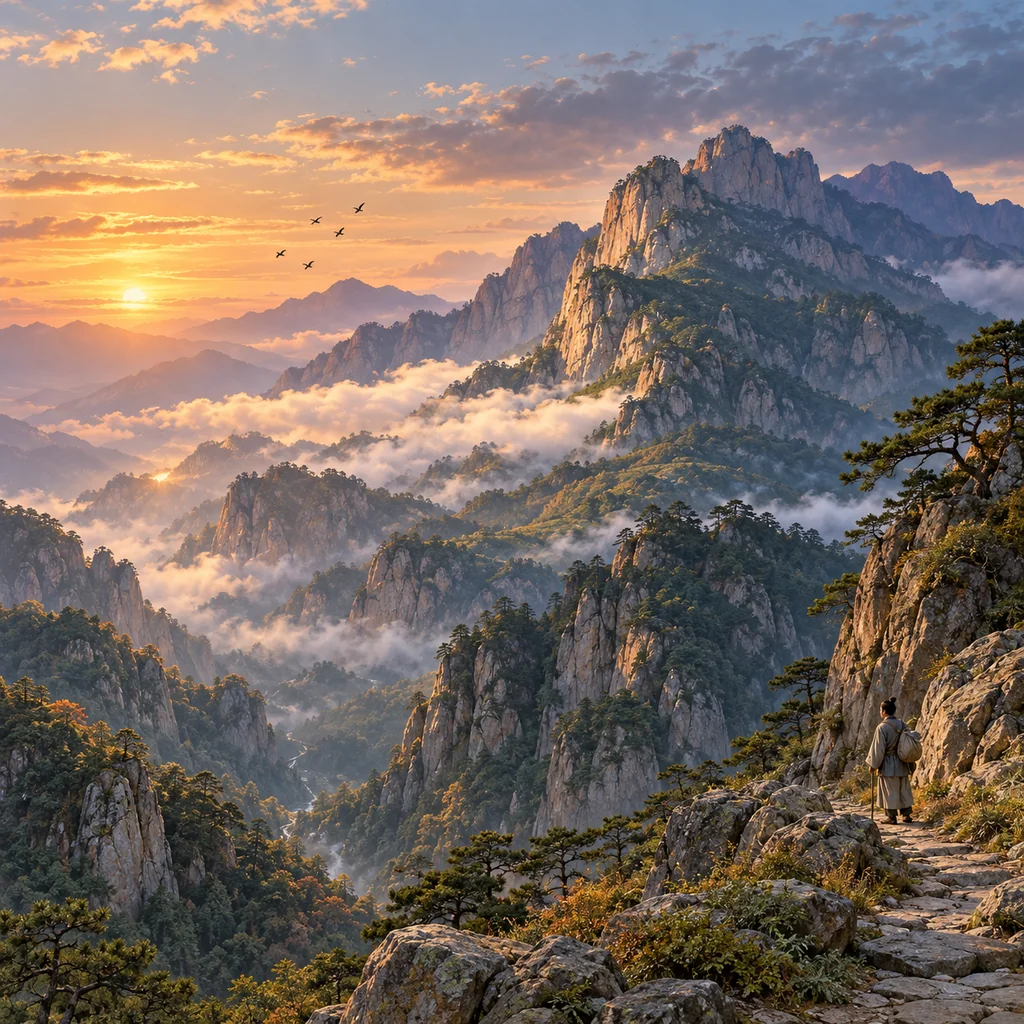
What grandeur does Mount Tai possess? Across the lands of Qi and Lu, its blue-green heights seem endless.
Nature gathers its wondrous beauty here; the sunny and shaded slopes divide light from darkness, as though separating morning from dusk.
Layers of cloud rise, stirring my heart; I open my eyes wide and gaze long after the birds flying back into the mountains.
One day I shall surely climb to the highest summit and look far out, making all the other mountains seem small.
岱宗: an honorific name for Mount Tai. 岱 means Mount Tai; 宗 conveys reverence or preeminence. 夫如何: “what is it truly like?”—an admiring, rhetorical question.
齐鲁: the region of the ancient states of Qi and Lu, used here to convey Mount Tai’s vast, far-reaching expanse. 未了: without end.
造化: nature. 钟: to gather together. 神秀: scenery of extraordinary beauty.
阴阳: here, the mountain’s shaded and sunlit sides. 割昏晓: the mountain’s height makes the contrast between light and dark on its two sides so striking that it seems to divide dusk from dawn; it does not mean the two sides are literally on different dates.
荡胸: to stir the heart and broaden the spirit. 曾云: layered clouds; here 曾 stands for 层 and is pronounced céng. Some transmitted versions directly use “层云.” This text retains “曾” from the checked source.
决眦: an exaggerated expression for opening one's eyes as wide as possible. 眦 means the corner of the eye. 入归鸟: to bring distant homeward birds into one's field of vision, suggesting a gaze that follows them for a long time.
会当: Shall eventually; must, expressing a firm aspiration. 凌: To ascend or climb. 绝顶: The highest peak. 小: To appear low and small, conveying the experience of looking far from a great height.
Reading guide: This five-character ancient-style poem centers on gazing at Mount Tai from afar, unfolding the vast mountain landscape between Qi and Lu while showing how its mass, clouds, and returning birds stir the observer. Its famous declaration about reaching the summit expresses an aspiration born of the scene before him; it should not lead us to read the entire poem as an account of an ascent already completed. Notice how the gaze shifts: first taking in the whole mountain, then distinguishing light and shade and tiny flying birds, before imagining heights not yet reached.
Rather than directly declaring Mount Tai magnificent, the opening leaves its wonder in the tone of a question. The next line extends the blue-green landscape between Qi and Lu, using a vast region to convey the mountain's scale. The reader first senses an entirety beyond the reach of the eye, rather than a single peak with definable bounds. “钟” (gather) concentrates nature's creative powers upon the mountain, while “割” (cleave) makes light seem a substance its mass can divide. Between stillness and action, the mountain's towering height acquires a visible measure.
With the clouds and returning birds, the distant scene begins to enter the body. Layers of cloud stir the breast, while the tiny birds compel the gaze to reach farther; landscape and observer are no longer separate. The final couplet turns from the actual view to a future ascent, giving the aspiration a firm foundation: the poet gains the strength to rise gradually through contemplating the mountain, rather than first declaring lofty ambitions and using the mountain as a backdrop. The final word “小” (“small”) depends on the viewpoint from above, expressing an imagined breadth of vision while preserving a vivid shift in scale between the person and the surrounding peaks. The poem does not hurry to describe an itinerary, yet its spiritual ascent is already complete.
Let words find a melody
From a poem into a story
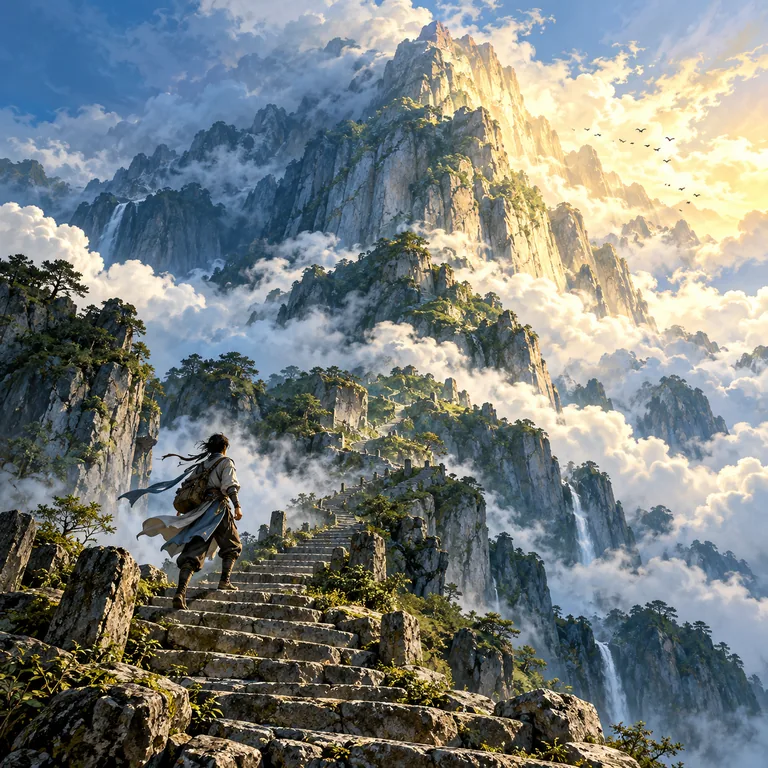
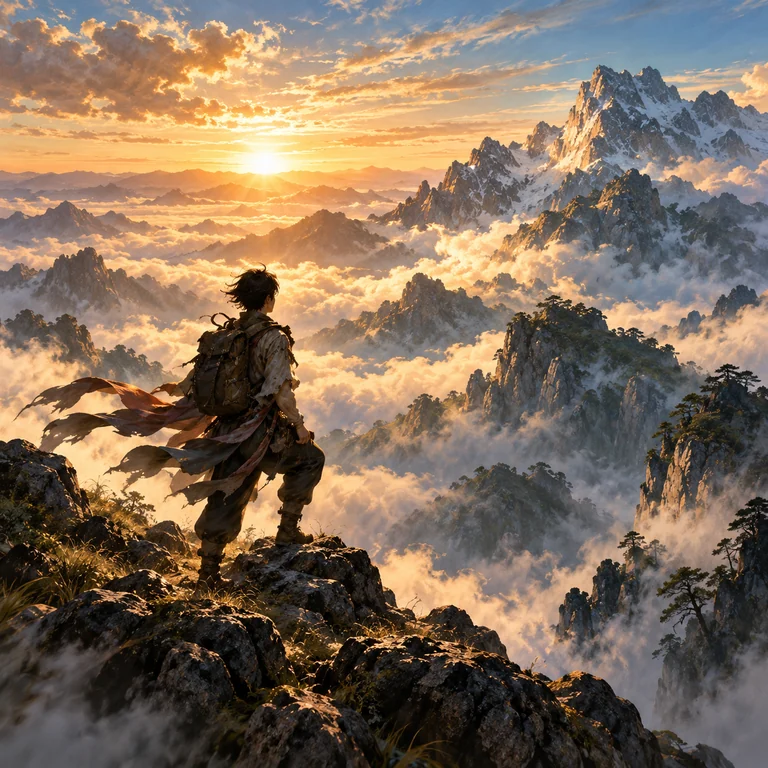
Song Yang has a new robe made for his ascent of Mount Tai and reads the mountain guide seventeen times, only to begin the climb with a lie: he has been here before. A stranger immediately lowers his short staff and says he will follow him, making it all the harder to betray his uncertainty. Afternoon sunlight still falls on the mountain’s southern side, but clouds already fill its far side. The guide shows only one pine with a spreading crown, yet pines stand beside both paths ahead, and his companion tests every slightly hollow-sounding stone step with particular care.
Start readingAI-assisted writing · Fictional characters and events
