
Lament of Changxin Palace
Tang dynasty・Wang Changling

Tang dynasty・Wang Changling
By the ornate well, the parasol tree's autumn leaves turn yellow; the pearl curtain stays lowered as frost comes in the night.
The incense cage and jade pillow have lost their luster; lying down, she hears the clear water-clock in the southern palace mark the long hours.
高殿秋砧响夜阑,霜深犹忆御衣寒。— From the lofty palace, autumn pounding stones ring late into the night; in heavy frost, she still worries that the emperor's robes are cold.
By silver lamps and blue-green latticework, sewing ceases; once more she looks toward the enlightened ruler in the golden city.
Broom in hand at dawn, as the golden palace opens, she wanders awhile with her round fan.
My jade-fair face fares worse than the color of a winter crow,which still brings back sunlight from Zhaoyang Palace.
Long I ponder how truly ill-fated I have become; I dream of the sovereign, then wake and doubt.
Lights blaze in the western palace: she knows there is drinking tonight; along the covered passage, she clearly sees another receiving favor.
In Changxin Palace, the autumn moon shines bright; below Zhaoyang Hall comes the sound of cloth being pounded.
In White Dew Hall, traces of fine grass appear; within the red silk curtains, feeling is more than one can bear.
The animation remains in its original Chinese.
The animation is ready.
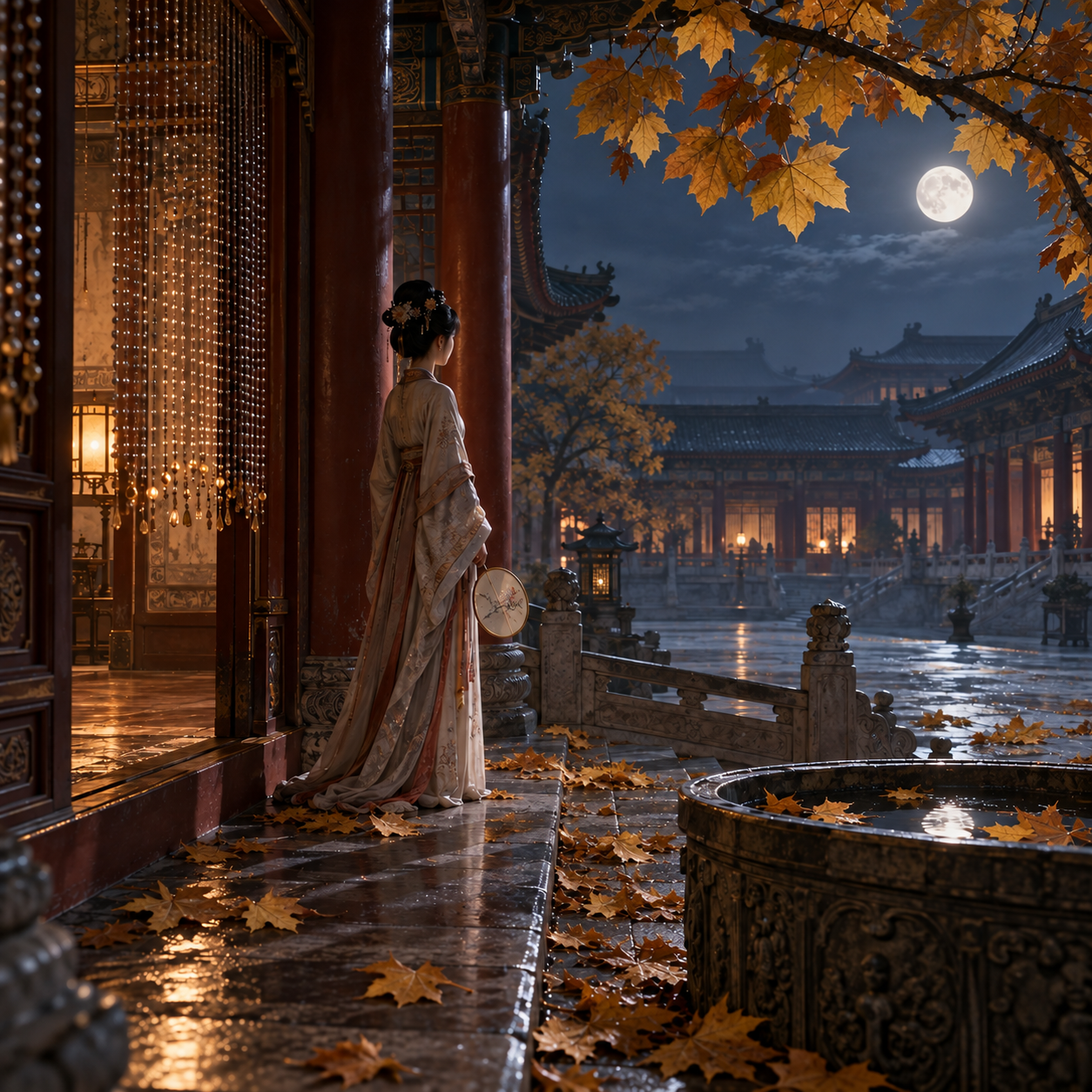
I: The autumn leaves of the parasol tree beside the well have yellowed; the pearl curtain remains unrolled as night frost quietly falls. To sorrowful eyes, the incense brazier and jade pillow have also lost their luster; lying in the palace, I hear only the clear, lingering drip of the water clock in the Southern Palace.
II: The sound of pounding cloth comes from the lofty hall; it is already deep into the night. The frost is heavy, and she still wonders whether the ruler's clothes are warm enough. She has stopped cutting and sewing beside the silver lamp and carved window, yet still turns to gaze toward the palace city where he resides.
III: At daybreak the palace gates open, and she takes up her broom for duty, then wanders alone for a while with a round fan. Her lovely face is deemed less worthy than a jackdaw’s plumage, for the jackdaw can still fly here carrying sunlight from Zhaoyang Palace.
IV: After long reflection, I truly seem a person of ill fortune; I see the sovereign in a dream, yet on waking I am filled with doubt. Seeing the western palace brightly lit, I know a nighttime feast is underway, and vividly recall the days when I received his favor along the elevated passageways.
V: The autumn moon shines clear over Changxin Palace, while the sound of pounding clothes comes from beneath Zhaoyang Hall. Fine grass has begun to appear at Bailu Hall, yet within the red gauze curtains love knows no end; neglect on one side and favor on the other deepen the sorrow of palace life.
长信: Changxin, the name of a Han palace, associated with the story of Consort Ban's withdrawal after losing imperial favor. Tang poetry uses Han palaces to portray the circumstances of palace women; its lines should not be equated individually with actual court records.
金井: an elaborately decorated well. 熏笼: a frame placed over an incense brazier to dry clothes and provide warmth. 清漏: the clear sound of a water clock marking time. 夜阑: late at night.
秋砧: the stone blocks used for pounding cloth in autumn, and the sounds they make. 御衣: the emperor’s clothes. 青琐: ornamented palace windows or gates. 奉帚: serving with a broom, describing humble duties in the palace.
团扇: a round fan; traditional poems of palace resentment often compare lost favor to an autumn fan cast aside. 昭阳: the name of a Han palace, here representing the residence of someone favored. 玉颜: a beautiful face.
复道: Passages between palace buildings, arranged on multiple levels or connected overhead. 白露堂: White Dew Hall, the name of a palace hall. The final poem contrasts the neglected palace hall overgrown with grass with the red silk bed curtains of imperial favor.
This page includes five seven-character quatrains, with translations corresponding to each poem in the original order.
Reading guide: This sequence of palace lament poems draws on Han-dynasty palaces and imagery associated with Ban Jieyu to portray the feelings of a woman who has lost imperial favor, through long nights, labor, waking from dreams, and distant gazing. Each of the five poems presents its own scene; together they depict the emotional predicament created by the unequal distribution of favor.
The poem rarely voices its “怨” (“resentment” or “sorrow”) directly. Instead, it emerges through details such as time passing too slowly, objects losing their color, and disbelief on waking from a dream. In the second poem, continued concern for the warmth of the emperor’s clothing sets the figure’s deep devotion against the reality of neglect.
The third poem compares a jade-like face with a winter crow, reversing the usual gulf between beauty and ugliness: a bird able to approach the emperor becomes an object of envy. This seemingly unreasonable comparison reveals the imbalance of the woman’s situation. The final poem contrasts two palace residences, grounding personal sorrow in visible differences of space.
Let words find a melody
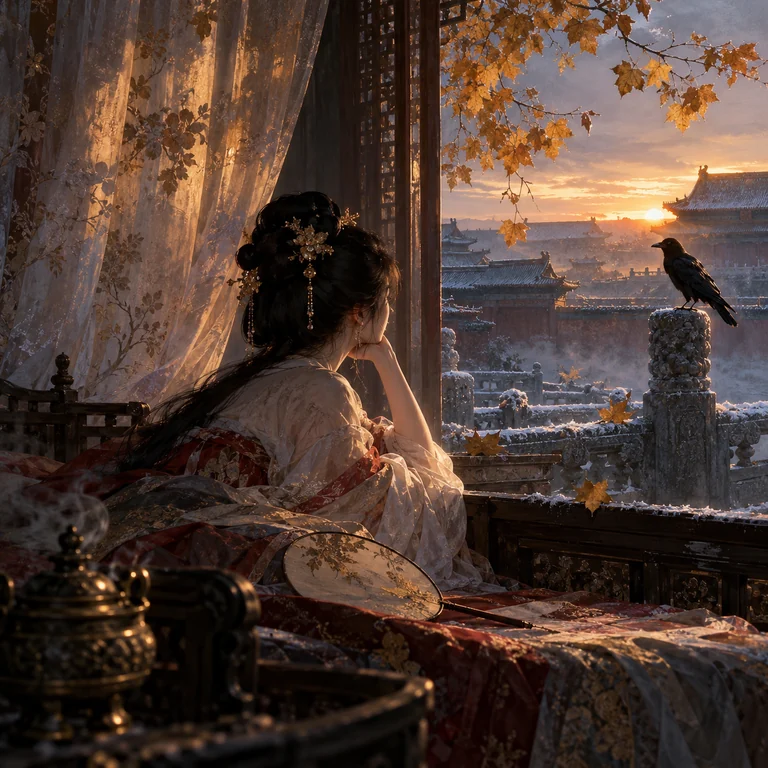
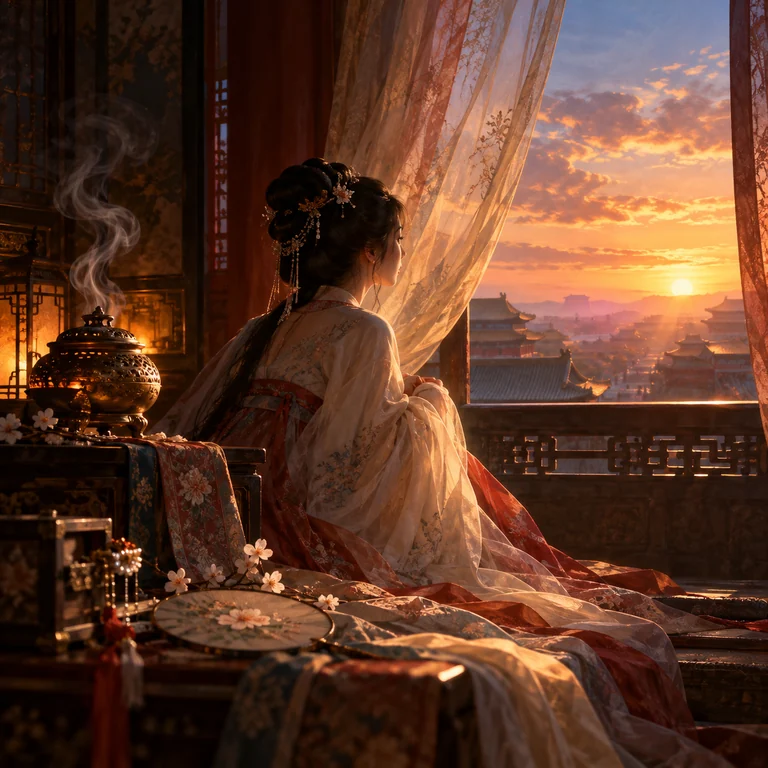
From a poem into a story
As Xie Heng counts the thirty-seventh strike, the water-clock chamber suddenly falls silent, though the water gauge keeps moving. She opens the old registers: whenever the laundry baskets leave the palace, one stretch of entries in the latter half of the night is always written in unusually dark ink. Following the trail to the western corner, she encounters a young girl who should not be hidden in a basket. Just then, the summons to the front hall she has awaited for twenty years arrives. The appointed audience falls precisely when the next load of laundry baskets is due to leave the palace.
Start readingAI-assisted writing · Fictional characters and events
