
A Spring Day
Tang dynasty・Fang Gan

Tang dynasty・Fang Gan
Spring departs and returns as though by appointment; when the sun is high and sleep grows longer, it is time to return. Though it uses fine rain to hasten the reed shoots,
却用东风染柳丝。重雾已应吞海色,轻霜犹自剉花枝。— Yet it uses the east wind to dye the willow strands. Dense mist must already have swallowed the sea's colors; light frost still cuts at the flowering branches.
Now the wanderer is drunk on flowers, lying tipsy among them, surely unaware.
The animation remains in its original Chinese.
The animation is ready.
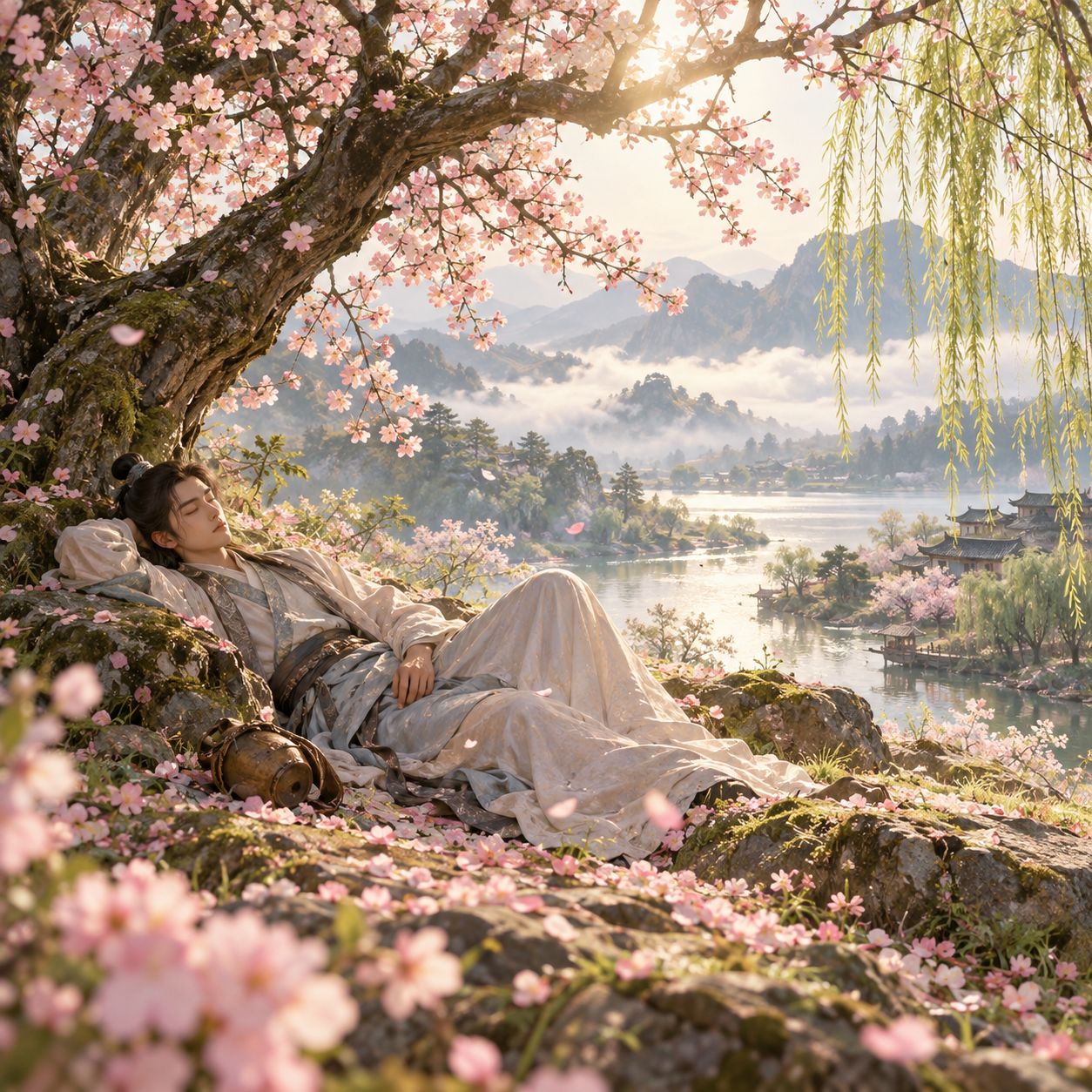
Spring seems always to come and go by appointment; as the sun rises higher, I grow sleepier, and once again spring is returning. Fine rain urges tender reed shoots to grow, and the east wind greens the willow strands again. Thick mist seems to have swallowed the distant sea’s color, yet light frost still harms the flowering branches. Now I, an idle wanderer of the hills, am drunk for the flowers; even if I lay intoxicated among them, I fear I would know nothing of it.
有期: having a fixed season or appointed time. 归时: corresponds to spring’s coming and going; the translation retains the seasonal sense of spring’s return without identifying it as a particular homecoming by the author.
芦笋: Tender reed shoots, not necessarily the plant known today as the vegetable asparagus. 剉 (cuò): To bruise or damage. 犹自: Still. 野客: A person of the wild countryside, the poet's term for himself.
The line breaks on the source page do not fully correspond to the verse lines; read the poem as eight consecutive seven-character lines.
Reading guide: Fang Gan depicts spring growth coexisting with lingering cold, ending in the leisurely scene of lying drunk among flowers. The poem does not portray spring days as uniformly warm; fine rain, dense mist, and light frost combine to create a more complex experience of the season.
“催” (“urge on”) and “染” (“dye”) describe spring's force acting on plants, while “吞” (“swallow”) and “剉” (“damage”) describe the obscuring and harmful effects of mist and frost. The two groups of verbs create tension, giving the spring scene variety.
The final couplet returns the closely observed scenery to someone intoxicated by flowers. Rather than explaining spring, the poem records a person's passage within it from observation to self-forgetful absorption.
Let words find a melody
From a poem into a story
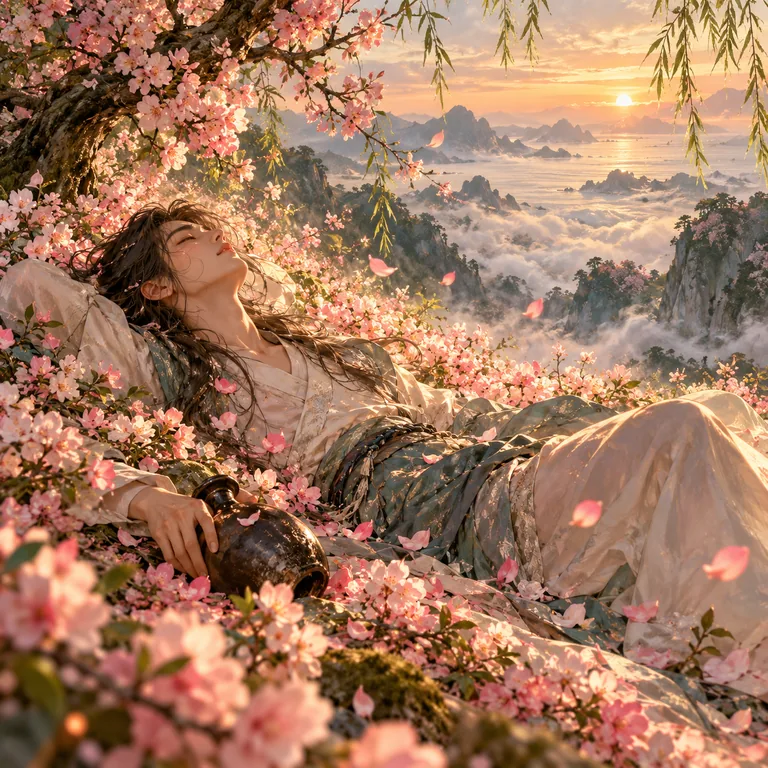
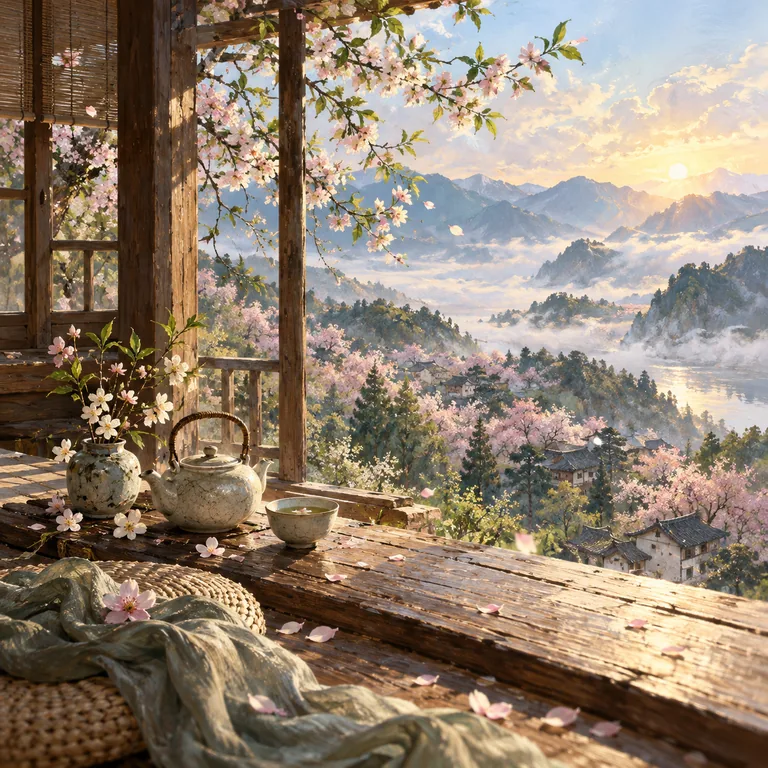
After Xu Jue sneaks a cup of spring wine, a little peach tree grows from the flatbread tucked against his chest. At the feast, the person undoing his clothing is his father, dead for seven years. Someone below the mountain waits for him to return home and brew wine, yet in the mountains there always seems to be a reason to stay another half day. New flowers appear as the old ones fade; when the food is gone, another round of wine arrives. At the end of the table sits an old man who never agrees to touch his chopsticks.
Start readingAI-assisted writing · Fictional characters and events
