
Seeking a Recluse but Not Finding Him
Tang dynasty・Jia Dao

Tang dynasty・Jia Dao
Beneath the pine I ask the boy, he says his master has gone gathering herbs.
He is somewhere on this mountain,but deep clouds hide his whereabouts。
The animation remains in its original Chinese.
The animation is ready.
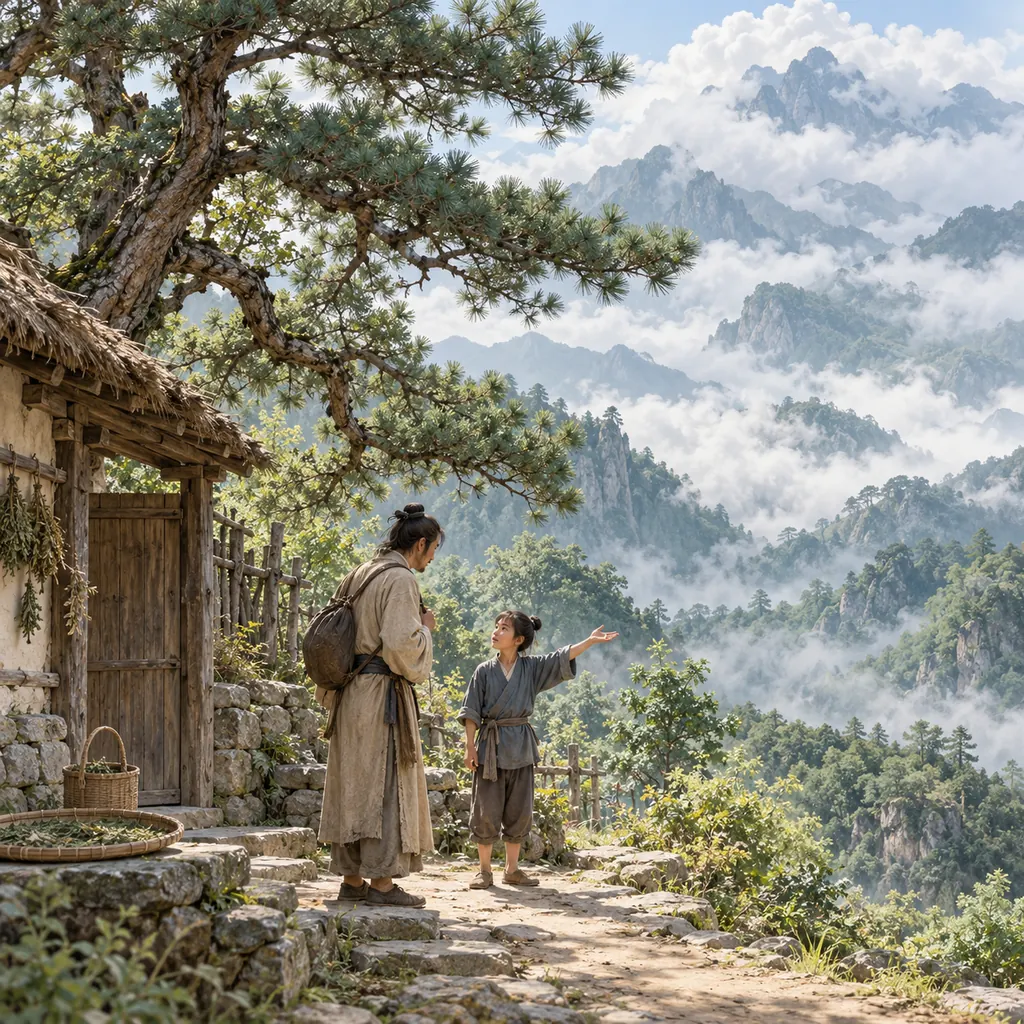
Beneath a pine I ask a young boy where his master has gone; he says his master has gone out to gather medicinal herbs.
He is somewhere on this mountain, but its clouds are so dense and deep that even the boy does not know exactly where he has gone.
寻: to seek out or visit. 隐者: a recluse. 遇: to meet; 不遇 means failing to meet the person one has come to visit.
松下: beneath a pine tree, establishing where the exchange takes place. 童子: here, a young person attending the recluse; this alone does not establish a precise identity, age, or name.
言: to say or answer. 师: the master, referring to the recluse being visited. 采药: gathering medicinal herbs. 去: has gone, indicating that the master is already away.
只: right within, only within this range. 此山: the mountain before the speaker; no verifiable mountain name is given.
云深: clouds lie thick and deep in the mountains. 处: a particular place. 不知处: not knowing where exactly he has gone; it does not identify a mountain path by which he can be found.
Title and attribution: This page uses the commonly accepted title “寻隐者不遇” (Seeking a Recluse but Not Finding Him) and attributes the poem to Jia Dao. Volume 574 of the Complete Tang Poems lists it under Jia Dao, with the note “一作孙革《访羊尊师》诗” (also attributed to Sun Ge as Visiting Master Yang); volume 473 also lists it under Sun Ge as “访羊尊师” (Visiting Master Yang), noting “一作贾岛诗” (also attributed to Jia Dao). These are differences in transmitted titles and attribution. The common attribution cannot establish the year of composition, the visitor's experiences, or the recluse's biography.
Reading guide: The person being sought never appears, yet the exchange beneath the pine gradually makes his mountain life palpable. The visitor asks a question in the first line, and the boy’s answers about his master follow: first, that he has gone to gather herbs; then, that he is still on this mountain; finally, that deep clouds conceal his precise whereabouts. This page follows the common attribution to Jia Dao while retaining the alternative recorded in the Complete Tang Poems, where it is titled “Visiting Master Yang” and attributed to Sun Ge. No unverified date or biographical story is added on that basis.
This five-character quatrain contains only twenty characters, yet its narrative advances clearly. A question beneath the pine connects the visitor, the boy, and the absent master. “言师采药去,” he says the master has gone gathering herbs, omits the full conversation and preserves only the essential answer. The last two replies also allow readers to reconstruct the visitor's further questions about where the master has gone. These omissions make the poem feel like a casually recorded fragment without losing the exchange between its figures.
“只在此山中”—“He is somewhere on this very mountain”—briefly narrows the search, seeming to give hope a foothold; “云深不知处”—“The clouds are deep; I do not know where”—immediately turns that closeness into something impossible to locate. The mountain has not become distant, nor is the man necessarily difficult to meet: the barriers are merely deep clouds and a moment’s uncertainty. The ending preserves the disappointment of an unsuccessful visit while leaving room for mountain life to elude an outsider’s gaze. The pine and herb gathering may suggest a secluded life, but the poem never says that the recluse deliberately avoids visitors, much less that he becomes an immortal. Though he never appears, the scene and the answers remain, and the meeting that never takes place gives the poem its lingering resonance.
Let words find a melody
From a poem into a story
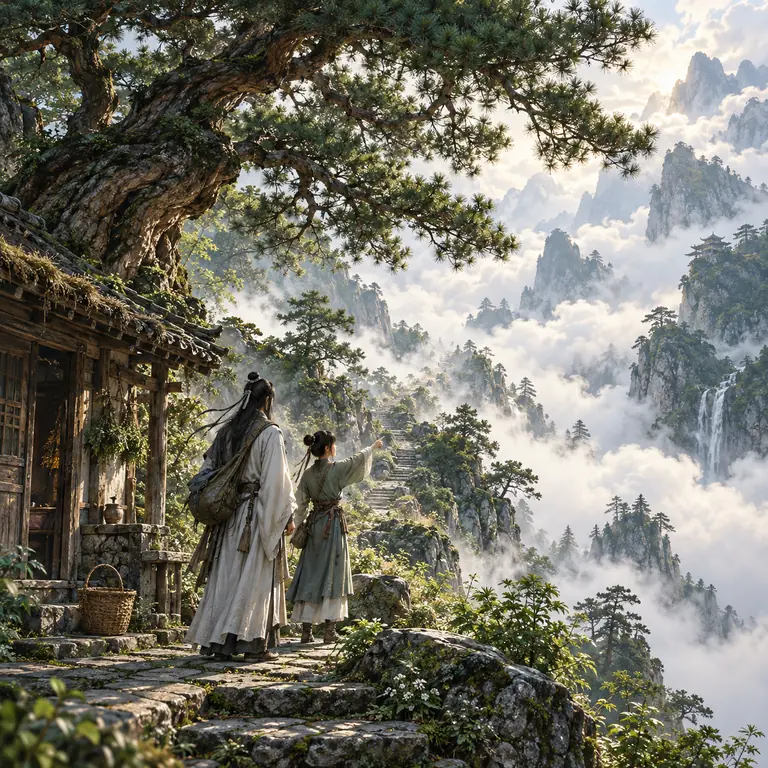
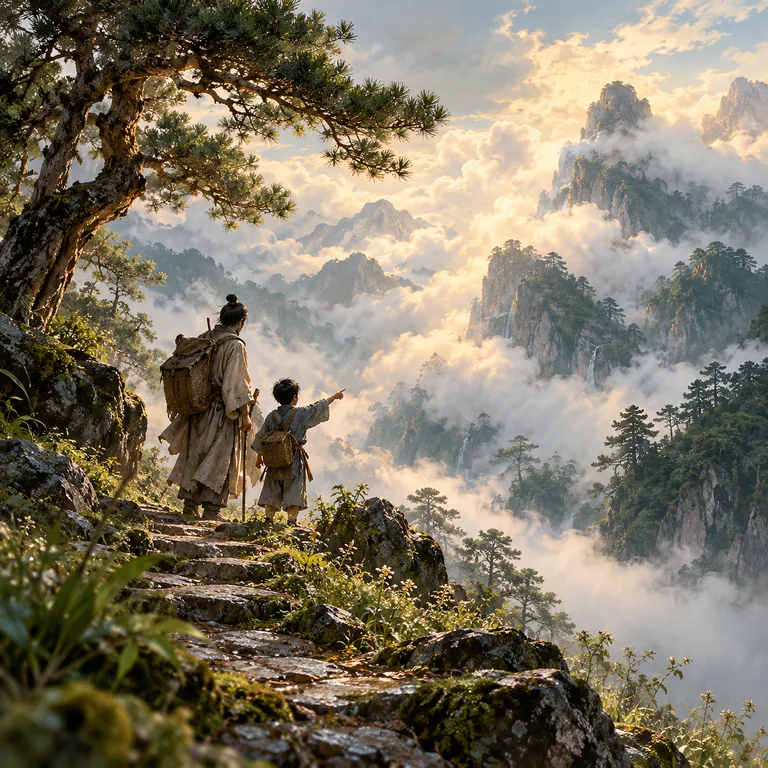
Du San knows the tracks of missing cattle and horses, yet after searching a seventh mountain path he still has not found Master Ye. The Wen family wants the recluse to give the inaugural lecture at their new academy. If Du San succeeds, all future searches for missing people from six trading depots will be his. The young man beneath the pine says only that his master is gathering herbs, while each neighbor points in a different direction. At last, a faint trail emerges in the mist, but the shoulder-carried sedan has also arrived at the foot of the mountain, long ankle-binding straps draped beside it.
Start readingAI-assisted writing · Fictional characters and events
