
A Novel of Craft and Society in a Historical Setting
A Signboard Without a Scent
Ku Wuji · AI Writing · 10213 characters · about 11 min
The first delivery was eight sprays, four pale red and four ivory. Gu Qing separated the blossoms with old paper. As she passed the newly built curved wall, the basket grazed the edge of a brick, and she turned to look at once. The wall had dried enough to touch, but a grain of sand at the edge had caught the wrapping. She turned the paper around. In the past she would have arranged every flower facing out where people could see it.
Xu Tan selected the goods outside the counting room. She looked at all eight sprays and kept seven. The remaining ivory spray she set by the window, saying the color was a shade too dark in a ring at the base of the petals. Gu Qing held it close and saw that she had got pale red on her hands while curling the edges. After wiping it off, she had thought it barely showed. She was about to say white plum blossoms naturally had that little bit of red, then saw the clean white of the other sprays and took that one back, saying she would make up the difference next time.
The accounting room still had no proper cabinet, and the ledger pages were weighted down inside an old food box. When Wen Jichang came in and saw the silk plum blossoms in a vase by the window, he touched the petals and asked if they could have a little fragrance. Visitors were bound to ask when they came close, he said. That familiar word no longer embarrassed Gu Qing as it had in the West Market. She simply explained that she could make the color, but had no way to keep the scent of real plum blossoms in silk.
“What about soaking it in fragrance?” he asked.
“The scent will change, and so will the silk. Being able to smell it now doesn't mean it will stay that way after delivery.”
Wen Jichang looked at the flowers again, as if every promise the craftswoman held back took a little dignity out of his gift. Beside him, Xu Tan separated the seven stems they had accepted. Merchants came to talk about the price of rice, she said, and a table full of sweet fragrance would be too much. Besides, the flowers were payment for work on the wall. Nobody had hired her to perform magic. Gu Qing almost laughed, but held it back lest it look like she was using a wife's words against her husband.
Wen Jichang ended up moving the pale red spray to where he sat. Whatever his complaints, he kept it. He asked if the stem could be a little shorter, and Xu Tan said at once that they had already chosen the sample. A shorter one would be a separate job and need not change the next delivery. Gu Qing was suddenly very glad to hear her say it. In the West Market, people asking about flowers could toss in one more request as casually as anything, scarcely spending any more breath. She was the one who had to go home and stay up another night.
She brought one stem home, and her grandmother asked why she had one left over. Gu Qing said it was soiled and the buyer wouldn't take it. Shen Su accepted it and turned it slowly to the light, saying the customer had a sharp eye. Gu Qing had expected her to say it could be mended. A little annoyed, she pointedly set the stem farther away. Her grandmother made no effort to save face for her. She simply held some white thread against the center again and said she wouldn't mind that color if she were wearing it herself. Then she pulled the wooden pin from her hair and tried pinning the flower at her temple.
The ivory white against the gray hair made Gu Qing stop and stare. Usually she saw her grandmother's hands, her knees, and the old outer coat by the table. She seldom took such a good look at how a flower sat on her. Shen Su asked if it was crooked. Gu Qing reached out to straighten it, then suddenly laughed and said that if she wore it, Shopkeeper Wen would have even more reason to say it looked wrong on someone young. Her grandmother said, “Then tell him I'm still too young. No need to spare him that line.”
That day she did not let her grandmother roll petals for nothing. The remaining flowers had to be finished quickly. Her grandmother reached for a stem herself, saying she could help wind thread, though she would not thread a fine needle. Gu Qing kept back the flower that could not go into a customer’s order and asked whether she could count it as one flower’s pay for her. Shen Su said that if she wore a flower, it would be because she liked it, not in exchange for work. Then she added that if winding thread made supper late, Gu Qing would have to cook the hot meal. Gu Qing agreed, but in the end forgot once all the same. A little of the water on the stove had already boiled away when her grandmother tapped the rim of the pot with a wooden spoon to call her, and both of them laughed.
On the eleventh day of the twelfth month, the remaining thirteen stems were finished, including the replacement white plum spray, and delivered in two lots. Xu Tan ticked off the number each time. When she made the final mark, Gu Qing felt for her purse without thinking. It was exactly as light as before. The labor the twenty stems had paid for was already there in the wall. It hadn't come back as money for more silk. She looked up at the counting-room window, where Wen Jichang was showing a visitor the pale red spray and saying how true the color was, and that the person who made it lived just to the west.
The visitor was Yao Liao, who kept a flower shop in the East Market. She was older than Gu Qing, and when she came in she first gathered her cloak neatly so no rain shook onto the table. She handled the flowers differently from Xu Tan. She hardly bent the petals back, looking first at how the blossoms were arranged along the whole spray before slowly tracing the thread upward from the base. She asked if Gu Qing was Shen Su's granddaughter. Gu Qing said she was. Hearing her grandmother's name first gave her a feeling of kinship, along with a small regret she couldn't quite name.
As a child, Yao Liao had watched Shen Su make flowers. She'd later opened her own shop and now had three women who worked for her regularly. She made no offer to take all of Gu Qing's winter work in one go. She only asked whether Gu Qing could bring a few stems to the East Market tomorrow. Short or long would do. First they had to see who would buy them. Gu Qing nodded too quickly, and Yao Liao smiled. She told her to bring one more stem, one she didn't want to sell, so Yao Liao could see what Gu Qing herself liked.
All the way home she tried out the East Market shop's name in her mind. The sign read “蓼花记,” Liaohua Ji. It was a modest name, but it sounded like somewhere that could keep going, quite unlike the half brick she had to move away every day. She tidied the plum blossoms and camellias left over from her earlier stall sales, picked out twelve stems, and even dug out her good coat before she remembered it wasn't a festival. Her grandmother asked why she was suddenly looking for clothes. She said the East Market wanted to see her stock, then thought she had made it sound too much like an invitation and added that they only wanted to look. They might not buy.
Early the next morning, she went by way of the river bridge. Oiled cloth was already hanging to dry outside the Zhou family's umbrella workshop. Smelling its dry, acrid odor, she remembered the broken bamboo strip on Zhou Jiping's shoulder. He was not at the doorway. Only a woman in a short padded jacket was sorting umbrella handles by length. Seeing her look, the woman asked whether she had come to collect something. Gu Qing hurriedly shook her head and quickened her steps, making it seem instead as though she really had done something that needed explaining.
People at the East Market dressed more neatly than at the West Market. Even the delivery men often had an outer shirt to change into. Outside the shop, Gu Qing dusted off her skirt, then unwound the old cloth from her basket handle and slipped it into her sleeve before going in. Yao Liao was telling a worker that a flower box needed rewrapping. When she saw Gu Qing, she cleared a piece of clean cloth by the counter. As Gu Qing brought out the flowers, she was suddenly afraid of getting even a trace of mud on the cloth and tucked the underside of her sleeve behind her without thinking.
Yao Liao saw how nervous she was and let her be. She sorted the flowers into two groups, one to sell as hair ornaments and the other for tabletop displays, to be offered only to regulars. Gu Qing’s favorite spray went into the second group. When she asked why, Yao Liao pointed to the blossom and said it leaned so far forward it might block the wearer’s view by her ear. In a vase it would look fine. Either use was as good as the other. Gu Qing held it up to her temple and found that she really could no longer see the corner of the counter. She laughed despite herself, and some of the sting of having it put in the second group wore off.
When they discussed the price, Yao Liao quoted a wholesale figure, different from what Gu Qing asked at the West Market. She said someone had to see to the display case, the boxes, the shop hands, and customers coming back when they’d been sold the wrong thing. If Gu Qing felt that everything the shop charged above her price was money taken out of her pocket, she could go on selling her own way. There was no need to force an arrangement. As Gu Qing listened, she saw the three women behind the counter, each with her head bent over her work. One kept unpicking a flower and winding it again, a pile of unusable thread ends on the table in front of her. Only then did Gu Qing understand how much went on beneath the shop sign while they waited for flowers to come in.
Yao Liao was willing to take twelve flowers at first, trying two designs. Gu Qing could return in five days to check the stock; sold pieces would be paid for, and unsold ones could be exchanged for other designs. Gu Qing did not agree immediately. She asked whether half the material costs could be paid upfront. Yao Liao said this was how they would do it the first time. Neither yet knew whether customers would take to them; if they sold consistently, they could discuss a regular arrangement. Gu Qing felt dissatisfied, but eventually selected eight for her and kept the other four, saying they would start with fewer this time.
Yao Liao looked up at her and, to Gu Qing's surprise, let the offer stand. She simply told the clerk to put down eight stems. When he came to the supplier's name, he asked whether to write the Shen household or the Gu household. Gu Qing said “Gu Qing,” louder than before. The woman winding thread behind the counter glanced up at her and then lowered her head again. A little surge of joy came over Gu Qing. Those two characters belonged to her and to the work she'd made. They could stay here with the eight flowers for five days.
Yao Liao saw her out and said the shop didn't put everyone's name on things. The boxes would still say Liaohua Ji. Gu Qing's steps faltered for a moment. She understood, but she was still unwilling to take back all the pleasure she had just felt. She said only that she knew, and as long as the right name was on the record, that was enough. Yao Liao nodded and told her to come on a dry day next time. You couldn't shake all the damp out of a silk flower box the way you shook out your clothes when you came in.
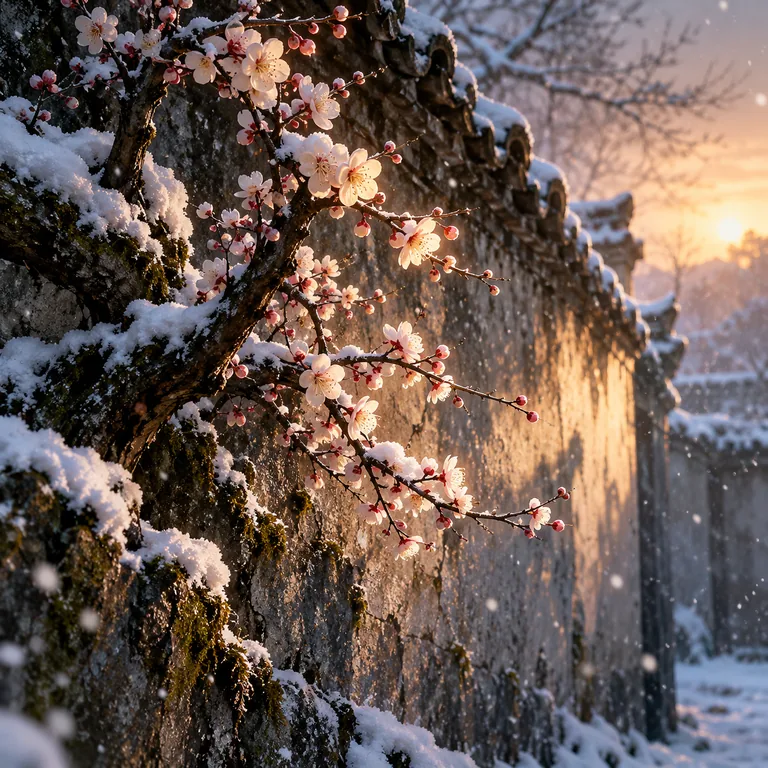
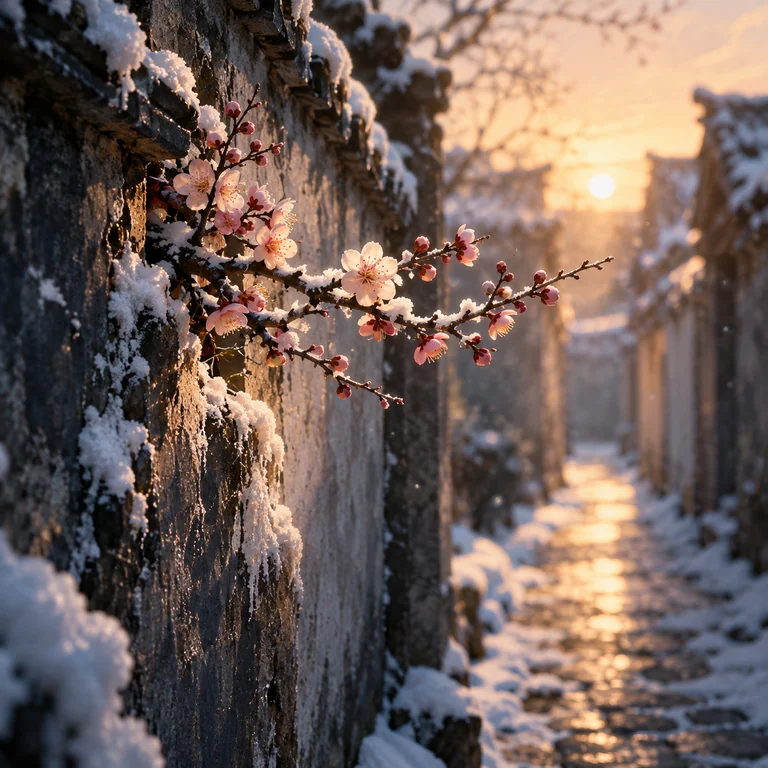
On her way back past the Wens', Gu Qing didn't knock again to ask anyone to talk up her flowers. The plum was in full bloom above the wall. She saw a visiting merchant reach for a branch and told him it was slender and to mind he didn't snap it, then pointed out the silk plum blossom in the Wens' counting room. The man smiled and asked whether he could go in to see the tree. Gu Qing glanced into her own courtyard. Her grandmother was sitting in a bright spot, unpicking an old bag. She only said he could see it over the wall and left the gate closed.
That night she told her grandmother about the eight stems she had left on consignment, and that she had put down her own name. Shen Su turned the flower pin in her hands and said the first time anyone called her Master Shen, she went home and forgot to salt the soup. The family had drunk it to the bottom of their bowls before they noticed. Gu Qing asked if she had been happy then. Her grandmother looked at the shadows on the window and first said it was nothing to make a fuss about. After a moment she added that yes, she had been happy. How could she help it? Gu Qing smiled too and set the four unsold stems beneath the window. There seemed to be a little more light in the room than usual, the sort she could speak of or leave to itself.
· End of chapter ·
Written with AI assistance, this original book expands on Wang Anshi’s “Plum Blossoms” and this site’s original short story “Spring Breezes Are Not for Sale.” The characters, commercial affairs, geography, and chronology are fictional; this is not a biography of the poet. It preserves the original story’s central choices concerning saving the tree, the scentlessness of silk flowers, and a grandparent and grandchild viewing lotuses.
Comments
Loading comments…
Have something to say?Sign in to comment →